Woman Refused to Pay Hospital Bills for Her Estranged Father’s New Child — After He Vanished for Years, Then Called the Child Her Sibling
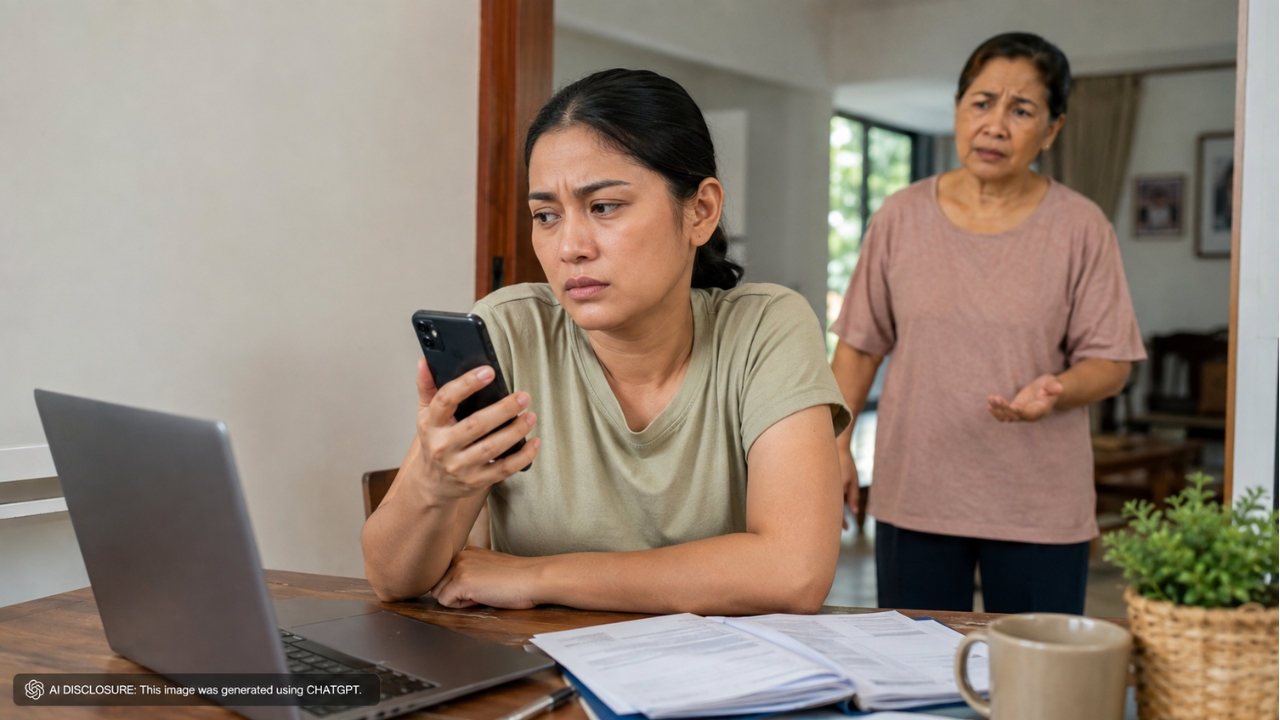
Photo credit: AI-generated image created using ChatGPT. Illustrative only.
When her father’s name flashed on her phone after years of silence, the first feeling wasn’t relief. It was disbelief. The woman, who lives in Southeast Asia in a country where divorce isn’t available, said the man who walked away from her family when she was a child suddenly reappeared with an apology—and a new family he wanted her to accept.
In the original post, she described how that reappearance quickly turned into a financial request: money for hospital bills after his child with another woman was hospitalized with dengue. When she refused, her father pushed back, calling the sick child her sibling. She shut that down, saying the child was a stranger to her—and now her own mother thinks she was too harsh.
He left when they were kids, and the silence lasted years
The woman explained that her parents married young because her mother was already pregnant. Years later, when she and her younger brother were still children, her father left. He told the family he wasn’t happy and that the marriage “shouldn’t have happened” because it was rushed.
After that, he vanished from their day-to-day lives. She said she didn’t hear from him directly again, only catching occasional traces of him through relatives who visited. Meanwhile, her mother became the one constant—working weekday shifts as a caregiver and washing other people’s laundry on weekends to keep food on the table.
Those years didn’t just reshape the household finances. They reset the family structure. In her telling, it became her mother, her brother, and herself against everything else, with no expectation that her father would return, much less ask for anything.
She built stability, and it changed the family’s trajectory
As an adult, she finished college and took a job at a call center for two years. She said she used that experience to move into remote work as a virtual assistant, where being paid in dollars stretched much further in her local currency.
That jump mattered. She wrote that she eventually brought the household to a place where they were “living comfortably.” Her mother no longer had to work, and her brother could attend private school—details that made it clear she wasn’t just contributing; she was carrying the family’s stability.
It also meant she became the person everyone looked to when money got tight. And when her father resurfaced, he didn’t just come back to reconnect. He arrived to reintroduce himself into a life she had already rebuilt without him.
The comeback included a “new wife” and a child she didn’t recognize as family
About a week before the hospital-bill call, her father contacted them out of the blue. She said he apologized and blamed immaturity for what happened. Then he introduced his new partner—who she pointedly described as a “glorified mistress,” since her parents’ marriage was never legally dissolved.
Along with the new partner came a child. The woman said the child tried to call her “older sister,” and she immediately corrected that framing. She told the child he wasn’t her brother, he was a stranger to her.
It was a blunt boundary, and she knew it. But from her perspective, the request wasn’t simply emotional—she was being asked to accept a rewritten family story where her father’s absence didn’t carry consequences, and where she now had obligations to people who weren’t around during the hardest years.
The call turned into a plea for money for dengue hospital bills
Then came the escalation. Her father called again, this time asking for money because the child had dengue and hospital bills were “piling up.” It wasn’t framed as a general update or a cautious request; she described it as begging.
She refused. She told him he and his partner could figure it out, the same way her mother had to figure life out when he left. She also repeated that she didn’t have another sibling.
The stakes are real: dengue can become serious fast, and hospitalization can be financially crushing, especially without savings. But her refusal wasn’t just about the number on the bill. It was about what paying would symbolize—stepping into a role her father abandoned, while he tried to rebrand his new child as her responsibility.
Her mother urged compassion, but the wound is still open
The hardest twist wasn’t her father’s reaction. It was her mother’s. She said her mom told her she’d been “a bit harsh” and should help because they’re still family.
That put her in a familiar position: carrying the weight, absorbing the discomfort, smoothing the mess. The same dynamic that existed when her mother worked multiple jobs now resurfaced emotionally—except this time, the request wasn’t about keeping their own household afloat. It was about rescuing the man who left and the family he formed afterward.
She wrote that she couldn’t bring herself to forgive him or his new family for what they “took” from her, her mother, and her younger brother. It wasn’t only money. It was time, presence, and the basic security of a parent who stays.
What people zeroed in on: obligation, boundaries, and who pays
Even without a long thread of quoted replies in the post, the pressure points are clear: is she obligated to pay for a child’s medical care simply because the child shares DNA with her father? Or is her father trying to outsource consequences—first by leaving, then by returning only when he needs cash?
One practical layer sits underneath the emotion. She lives in a country where divorce isn’t available, and she emphasized that her parents’ marriage was never dissolved. That detail fuels her anger at being introduced to a “new wife” as if the past can be neatly edited away, and it raises uncomfortable questions about how her father expects the family to recognize his new household while he previously ignored his old one.
At the same time, the child’s illness complicates the moral math. Dengue isn’t a lifestyle choice or a reckless decision—it’s an illness. But the woman’s line seems to be that compassion doesn’t automatically equal financial responsibility, especially when it’s coming through the person who walked away and only returned with an invoice.
For now, she’s left with a choice that doesn’t feel clean either way: hold the boundary and accept the backlash, or pay and risk opening the door to a future where her father’s emergencies become her permanent burden. And with her mother urging her to soften, the fight isn’t just with the man who left—it’s also inside the family that stayed.
Check out more from Now Rundown:
- A Party of 12 Came Back a Month Later Demanding Their $80 Tip Refunded — My Restaurant Made Me Pay It
- Her Coworker Kept Filing the Same Complaint About Her After Being Warned — Then She Filed a Counter-Report With Every Email Documented
- Siblings Demanded Half of Their Sister’s $11 Million Inheritance — She Refused Because They Never Visited
- The Kid I Bullied in Middle School Just Interviewed for a Job on My Team — He Bombed It and I Didn’t Hire Him

Abbie Clark is the founder and editor of Now Rundown, covering the stories that hit households first—health, politics, insurance, home costs, scams, and the fine print people often learn too late.