Woman Cut Off Her Parents After They Sulked and Ruined the Dinner Following Her Own PhD Graduation Ceremony
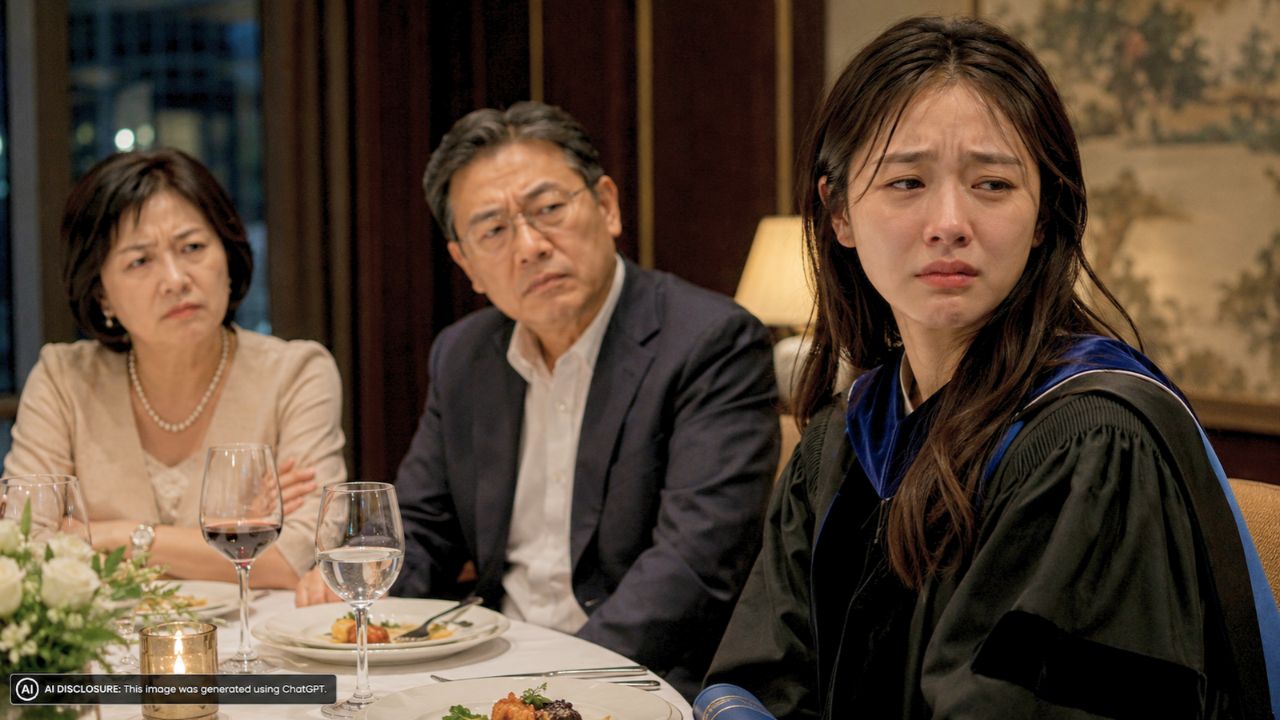
Photo credit: AI-generated image created using ChatGPT. Illustrative only.
By the time the photos were taken and the formalities were over, one new PhD graduate says she was already bracing for the real stress of the day: managing her parents. She had invited them to attend a major, highly formal graduation ceremony abroad—only to feel like they turned it into a referendum on her choices, her friends, and even her outfit.
In the original post, she describes a day that was supposed to celebrate four years of work, but ended with her in tears, skipping her own night out, and ultimately cutting off contact with her parents entirely.
A milestone day with “wedding-level” expectations
The woman explained that in the country where she’s working, a PhD graduation ceremony is a big deal—fancy, structured, and family-oriented. It wasn’t just a quick stage walk. There was a tribunal where she had to answer questions about her thesis, followed by a reception and a formal dinner.
She compared the whole thing to a small-scale wedding, with lots of moving parts and social pressure. That meant preparation, coordination, and being “on” in front of colleagues and guests. She invited her parents, not fully expecting them to come, but they did.
And that’s when a long-running dynamic became impossible to ignore.
The dependence that made everything harder
She says her parents are extremely dependent on her during visits, blaming it on not speaking the local language. In practice, she describes it as far beyond needing a little help navigating: they won’t go out without her and won’t even make breakfast unless she does it for them.
She lives with her boyfriend, and sometimes he helps, but she says her parents often insist that it “has to” be her. That would be exhausting on a normal week. In the days leading up to a major academic ceremony—when she had “a million things to do”—it became a flashpoint.
Instead of understanding she was preparing for a career-defining public event, she says her parents sulked about being “left alone” and complained they “had to stay at home all day.”
The ceremony went well—until dinner turned into damage control
On the day itself, the formal ceremony and thesis questioning went well. During the reception afterward, her boyfriend took charge of keeping her parents company so she could circulate and focus on guests.
Then came the dinner, where she says the tone shifted from needy to openly disruptive. Her parents complained repeatedly about the food, criticized her dress, and—most awkwardly—made loud negative comments about members of the tribunal.
While the tribunal didn’t speak her mother tongue, she says some other guests did, meaning there were people in the room who understood exactly what was being said. She and her boyfriend tried to shut it down first politely, then more forcefully, but she says her parents kept going.
At that point, the stakes weren’t just emotional. It was reputational. This wasn’t a private argument in a kitchen; it was happening around colleagues and peers on a night meant to reflect well on her and her work.
The night ended with an ultimatum: take us home or else
After dinner, she planned to go clubbing with friends—a normal release after a high-pressure day. Her parents wanted to go home, and she initially thought that would solve the problem. She showed them where to catch a bus that would take them directly to her home.
They refused. She says they demanded she go with them, rejecting both the bus plan and her boyfriend’s offer to escort them himself. In her telling, it wasn’t about safety or logistics. It was about control: it had to be her, and she wasn’t allowed to leave them alone so she could celebrate.
Trying to compromise, she decided she’d take them home and then return to her friends. But the ride became what she described as a “nightmare.” On the way, she says they insulted her continuously—her appearance, her friends, her attitude—accusing her of being ungrateful and complaining they had been left alone all day.
By the time they arrived home, she says she was crying and emotionally done. Instead of heading back out, she locked herself in her bedroom and called her boyfriend to say she couldn’t join the group anymore. In an update later, she clarified she stayed home not because her parents ordered her to, but because they had “ruined my mood so much that I did not even want to go out myself.”
Going no-contact the next morning—and the blowback
The next day, she brought her parents to the train station. She told them she was going no-contact because, in her view, they had cared so little about her achievement that they chose to wreck one of the biggest days of her life.
She left as they yelled at her. Afterward, angry texts followed—from her parents and from other family members—calling her an “AH and worse.” She responded by blocking their numbers.
Even at home, she didn’t get immediate validation. She wrote that her boyfriend felt she was overreacting, arguing she didn’t have to see them every day and that “family is family.” But after she explained more background, she says he ultimately supported her decision, while also acknowledging his own perspective: he lost his parents very young and would do anything to have family again.
She also added a detail that shaped how people viewed her parents’ behavior. They aren’t elderly or impaired. She said they’re in their mid-50s, physically fine, and “perfectly able” to use tools like Google Maps when they want to. They also live alone at home without assistance. In other words, this helplessness seemed situational—directed at her.
What people focused on: the pattern, the public sabotage, and boundaries
While the post centers on one ugly night, much of the reaction she described was about the pattern underneath it. The dependence wasn’t framed as a one-off travel problem; it sounded like an ongoing expectation that she function as their full-time guide, translator, and caretaker whenever they were near her.
People also zeroed in on the setting. A PhD ceremony dinner isn’t just a family meal—it’s a professional milestone where the wrong behavior can embarrass someone in front of mentors and colleagues. Her parents criticizing tribunal members loudly, within earshot of other guests who understood the language, read less like social awkwardness and more like reckless disregard.
And then there was the post-dinner escalation: refusing reasonable options to get home and insisting she personally escort them, even as she tried to salvage a small piece of celebration. For many, that was the clearest sign the conflict wasn’t about navigation. It was about making sure her attention stayed on them.
For her part, she wrote that her boyfriend and friends rallied around her afterward, texting to say they’d “re-celebrate next weekend.” It wasn’t a redo of the formal ceremony, but it was an attempt to reclaim the part of the night she lost.
For now, the practical reality is simple: she drew a hard boundary, and it came with immediate backlash from extended family. Whether the no-contact decision lasts or eventually changes, she’s treating it as protection—not punishment—after a day that should have marked the end of a long academic grind, but instead exposed how much emotional work her parents still expected her to do.
Check out more from Now Rundown:
- A Party of 12 Came Back a Month Later Demanding Their $80 Tip Refunded — My Restaurant Made Me Pay It
- Her Coworker Kept Filing the Same Complaint About Her After Being Warned — Then She Filed a Counter-Report With Every Email Documented
- Siblings Demanded Half of Their Sister’s $11 Million Inheritance — She Refused Because They Never Visited
- The Kid I Bullied in Middle School Just Interviewed for a Job on My Team — He Bombed It and I Didn’t Hire Him

Abbie Clark is the founder and editor of Now Rundown, covering the stories that hit households first—health, politics, insurance, home costs, scams, and the fine print people often learn too late.