Why 2026 is shaping up to be a high-stakes year for international aid appeals
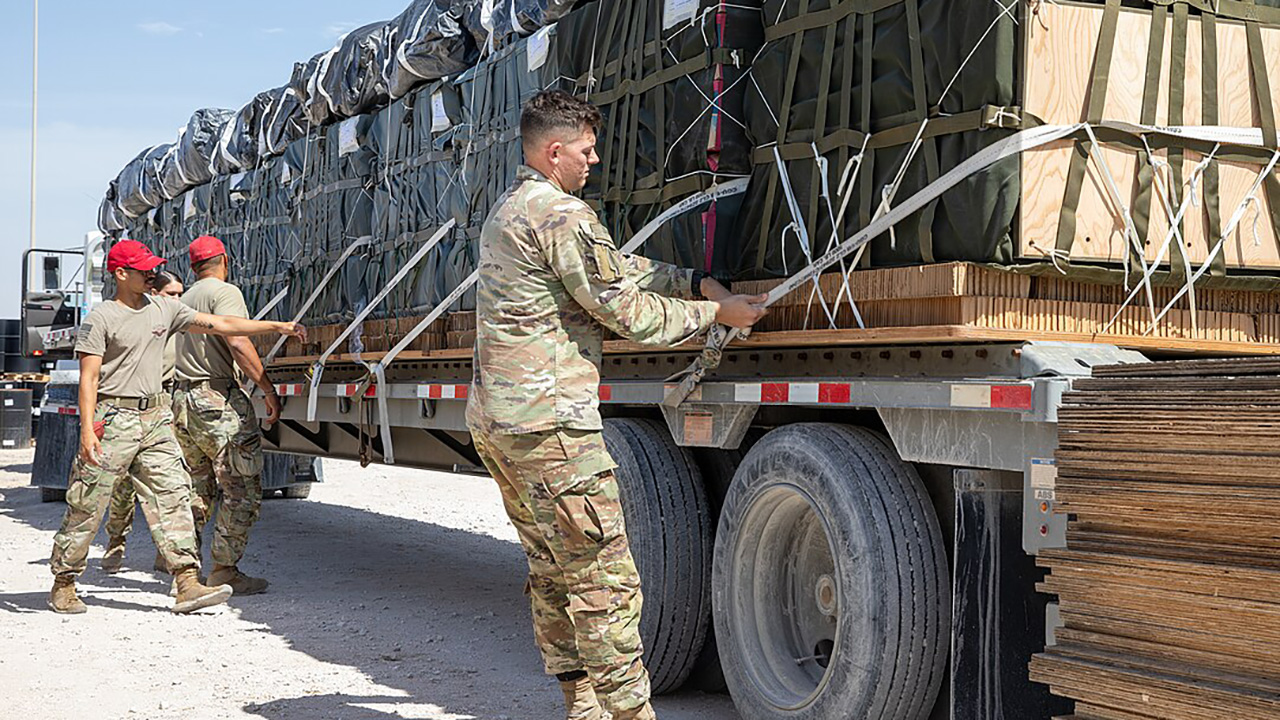
Photo credit: U.S. Army (Photo by Sgt. Mikayla Fritz), Public Domain/Wiki Commons
Humanitarian agencies are entering 2026 with record needs, tighter budgets, and a far more volatile political backdrop than a decade ago. You are looking at a year in which aid leaders talk openly about “brutal choices”, even as conflicts, climate shocks, and economic crises push more people to the edge. The result is a set of international appeals that carry unusually high stakes for the people they aim to protect and for the global system that funds them.
The scale of need behind the 2026 appeals
The starting point for understanding why 2026 matters so much is the sheer number of people who now depend on organized relief. As the new cycle begins, Trends in the official assessments describe a “world at breaking point”, with just over 239 m people in urgent need of humanitarian assistance and protection. That figure reflects overlapping emergencies, from protracted wars to climate driven disasters, that are escalating rather than easing. For you as a policymaker, donor, or citizen, it means the baseline of global distress is higher than at any point since coordinated appeals began.
To respond, the Dec Global Humanitarian Overview sets out a collective plan for 2026 in which humanitarians will aim to reach hundreds of millions of people across dozens of countries. The document frames the coming year as a “collective push to protect millions of lives”, with operations designed to cover an additional 27 countries compared with earlier cycles, a sign that crises are spreading into places that were previously more stable. When you see that level of ambition paired with such a high caseload, it becomes clear why the funding decisions taken over the next few months will reverberate far beyond any single emergency.
A record ask, then a sharp cut
On paper, the 2026 appeals look smaller than in recent years, but that headline can be misleading. Humanitarians initially mapped out needs worth $33 billion worldwide, a figure that reflects the true scale of life saving work required if every vulnerable person were to be reached. Yet, as donor fatigue and competing priorities became more obvious, The UN and its partners opted to present a leaner, “hyper prioritised” package that focuses on the most essential interventions. For you, that means the public number is already the product of hard trade offs before a single dollar is pledged.
The Dec reporting on the aid plans explains that The UN and its coordination arm have effectively trimmed their own ambitions, with the core humanitarian request cut to $23 billion to provide lifesaving assistance in the most critical contexts. One detailed analysis of the decision notes that the Cuts to the Humanitarian Aid Request to $23 Billion Amid Global Crises are framed as a pragmatic response to political reality, not a sign that needs have fallen. The same assessment warns that the critical challenge remains the widening gap between what is required and what is likely to be funded, a gap that will persist and likely grow if current patterns hold.
‘Brutal choices’ inside The United Nations
Behind those numbers sit very human decisions about who gets help and who is left waiting. As the Dec launch of the 2026 appeal made clear, The United Nations is already talking about “brutal choices” as it tries to stretch limited resources across multiple front line crises. By November of the current funding year, the system had received only a fraction of what it requested, even as conflicts and disasters multiplied across the globe. For you, that signals that 2026 will not be a year of expansion, but one in which agencies are forced to triage, scaling back food rations here to keep health clinics open there.
The same reporting highlights how traditional donors, including Western governments such as Germany, have pared back assistance, leaving core UN operations exposed. When the central humanitarian body is already underfunded before the new year starts, every additional shock, from a sudden cyclone to a new displacement crisis, risks tipping programs over the edge. That is why the language around the 2026 appeal is unusually stark: it is not only about raising money, but about whether the multilateral system you rely on can still function under sustained financial strain.
Top crises you cannot ignore in 2026
While the global figures are daunting, the stakes of the 2026 appeals are most visible in specific emergencies that are spiralling out of control. Dec analysis from The IRC sets out the top 10 crises the world cannot ignore in 2026, from entrenched conflicts to fragile states on the brink of collapse. These are places where health systems have already crumbled, schools have closed, and families are surviving on the edge of famine, and where any shortfall in the 2026 appeals will translate quickly into higher mortality and deeper instability.
One recurring pattern in these hotspots is the deliberate obstruction of relief. In several contexts, blockades cut off aid as armed groups restrict access, driving hunger and destabilizing communities that agencies like The IRC are trying to support. A companion analysis of the same list stresses that blockades cut off aid and are driving hunger and destabilizing communities, which means that even fully funded appeals may struggle to reach everyone in need. For you, that underscores why 2026 is not only about how much money is raised, but also about the political leverage and diplomatic effort required to keep humanitarian corridors open.
Refugees, displacement, and the UNHCR Global Appeal
Refugees and displaced people sit at the heart of the 2026 funding story, and their prospects depend heavily on whether specialized agencies can close their own gaps. The Dec UNHCR Global Appeal for 2026 outlines plans to protect, assist, and find solutions for people forced to flee, and notes that early donor support has already topped $1 billion. That early momentum shows there is still political will to back refugee responses, but it also masks a more sobering reality: the overall requirements are far higher, and the shortfall will leave millions without adequate shelter, education, or legal protection.
The 2026 Global Appeal presents a detailed picture of how UNHCR intends to use its resources, from emergency relief to longer term resilience programs, and stresses that flexible, unearmarked income is essential to respond quickly when new crises erupt. For you, the message is clear. Even with strong early pledges, widening funding gaps will leave millions exposed, and the choices donors make about earmarking and predictability will shape whether frontline teams can adapt to fast moving displacement crises over the next year.
A ‘New World Disorder’ and rising conflict risks
Beyond individual emergencies, the geopolitical context for aid in 2026 is unusually unstable. In a widely discussed essay, David Miliband argues that 2026 Will Mark a New World Disorder, with Credit given to Francesco Carta for capturing the mood of fragmentation and rising conflict. The analysis points to a world in which the guardrails that once constrained violence and protected civilians are eroding, while great power competition makes it harder to forge consensus on humanitarian access and protection. For you, that means the political risks surrounding aid operations are likely to grow just as needs peak.
If the past few years are any guide, the combination of climate stress, economic shocks, and the rise of conflict will continue to generate new emergencies faster than old ones can be resolved. In that environment, the 2026 appeals are not simply a technical exercise in budgeting, but a test of whether the international system can still mount a coherent response amid what some are calling a New World Disorder. The more fragmented the geopolitical landscape becomes, the more pressure you will see on neutral, needs based assistance to navigate contested spaces without becoming a pawn in broader power struggles.
Hyper prioritisation and the politics of scarcity
One of the most consequential shifts heading into 2026 is the move toward “hyper prioritised” appeals. Detailed coverage of the UN’s aid plans explains that the humanitarian coordination arm has deliberately narrowed its focus, asking for $23 billion in funding, the lowest ask since 2017, even though overall needs have climbed. According to the same Dec analysis, the UN’s humanitarian coordination arm has worked closely with the UN’s refugee agency, UNHCR, to identify only the most life saving activities for inclusion. For you, that means entire sectors, such as education or livelihoods, may be sidelined in official appeals even when they are critical to long term recovery.
A separate section of the same reporting notes that the “hyper prioritised” version of the 2026 appeals is asking for $23 billion in funding, the lowest ask since 2017, under the ruling Trump administration in the United States. That detail underscores how domestic politics in major donor countries shape what is considered realistic at the global level, and why humanitarian leaders have felt compelled to scale back their public requests. When you hear officials talk about doing “more with less”, this is the context: a politics of scarcity in which the bar for what counts as essential keeps rising, even as communities on the ground need broader support to rebuild their lives.
Donor resets and the $2 billion U.S. pledge
Within that constrained environment, shifts in the approach of key donors carry outsized weight. In late Dec, the United States announced that early in December it had pledged $2 billion in humanitarian support to the UN, a move that the State Department framed as part of a broader effort to sustain life saving programs despite domestic budget pressure. Reporting on the decision notes that the U.S. slashed its aid spending this year and that leading Western donors such as Germany also pared back assistance, which helps explain why the overall UN appeal had to be cut even as Washington tried to signal renewed engagement.
The Trump administration has presented this shift as a “humanitarian reset” in the UN system, arguing that a historic contribution is expected to shield tens of millions of people from hunger, disease, and the devastation of conflict while pushing agencies to move away from older, outdated grant funding models. In a Dec statement, officials stressed that This historic contribution is expected to deliver more lives saved for fewer taxpayer dollars by incentivizing performance and flexibility. For you, the message is that 2026 will not only test how much money donors are willing to put on the table, but also how far they can reshape the rules of the game for how that money is spent.
New funding models and conditions on aid
The structure of the new U.S. commitment illustrates how funding models themselves are becoming a battleground. Coverage of the pledge explains that it creates an umbrella fund from which money will be doled out to agencies and priorities, a key part of U.S. efforts to demand clearer results and greater adaptability from multilateral partners. According to one detailed account, the arrangement is designed to strengthen American soft power around the world while giving Washington more leverage to insist that agencies adapt or risk losing access to the fund. For you, that signals a future in which large donors increasingly tie their support to performance metrics and governance reforms.
At the same time, UN leaders are trying to frame the 2026 appeals as a test of global solidarity rather than a transactional bargain. In Dec, the Secretary General’s office issued Notes to correspondents, Delivered by Dujarric, Spokesman for the Secretary, General, warning that if current trends persist, extreme poverty could rise again by 2035 and urging governments to put “people over pain” in their budget choices. For you, that juxtaposition between conditional funding and appeals to shared responsibility captures the core tension of 2026: whether humanitarian aid will be treated primarily as a tool of influence or as a global public good that must be protected even when politics are rough.