Trump signs new AI order aimed at blocking a patchwork of state rules
Photo credit: United States Senate – Office of Dan Sullivan, Public Domain/Wiki Commons
President Donald Trump has moved to pull artificial intelligence policy firmly into Washington’s hands, signing a sweeping executive order that seeks to shut down state and local AI rulemaking before it can harden into a permanent patchwork. You now face a federal blueprint that promises clarity for companies and developers, while sharply curbing the power of governors, mayors, and city councils to write their own AI rules. The stakes are immediate for anyone building, buying, or deploying AI systems in the United States.
What Trump’s new AI order actually does
The executive order, titled “Ensuring a National Policy Framework for Artificial Intelligence,” directs the federal government to assert primary authority over how AI is governed across the country. In practical terms, you are being told that AI rules should come from a single national playbook rather than a mosaic of state statutes and city ordinances. The text frames United States leadership in artificial intelligence as a strategic priority and casts inconsistent local rules as a direct threat to that leadership, positioning the order as a tool to remove what it calls “state law obstruction” to a unified national approach.
In the order, the White House invokes its power over interstate commerce and federal spending to justify a centralized regime, presenting the new framework as essential to United States AI leadership. You are told that a single “NATIONAL POLICY FRAMEWORK FOR ARTIFICIAL INTELLIGENCE” will guide agencies, courts, and regulated entities, and that state rules that collide with this framework should give way. The order’s language is explicit that AI is not just another technology sector but a core element of economic and national security strategy, which the administration argues cannot be left to fragmented local experimentation.
Why the White House wants to stop a state-by-state AI patchwork
From the administration’s perspective, the most urgent problem is not a lack of AI rules but the risk that you will be forced to navigate dozens of conflicting ones. The White House has warned that a growing wave of state and local initiatives, from biometric surveillance limits to automated hiring rules, could create an “inconsistent and costly compliance regime” that slows investment and deployment. By casting the order as a way to protect “American AI innovation,” the president is signaling that Washington sees state experimentation less as a laboratory of democracy and more as a drag on national competitiveness.
The official fact sheet explains that Trump signed the Executive Order to protect American AI from what it describes as state and local AI laws that “stifle innovation.” You are told that the Attorney General must identify and challenge such laws, and that the federal government will use its leverage to discourage states from building their own AI compliance architectures. In this framing, the patchwork is not just inconvenient, it is a strategic vulnerability that could leave American firms behind rivals in countries that move faster with national rules.
How the order tries to preempt state AI laws
The core legal move in the order is an aggressive assertion of federal preemption, which is designed to give you one set of rules even if your operations span multiple states. The text instructs federal agencies and the Department of Justice to treat conflicting state AI statutes as obstacles to national policy and to seek to invalidate or override them where possible. It also signals that federal funding and regulatory approvals may be conditioned on compliance with the national framework, a lever that can pressure states to fall in line even where preemption doctrine is contested.
Legal analysts note that the order explicitly targets state AI laws that reach beyond their borders or impose unique obligations on AI developers and deployers that operate nationally. One detailed client alert describes how the White House is challenging state AI laws that attempt to regulate interstate AI services, including rules protecting artists and entertainers from unauthorized AI-generated likenesses. Another analysis explains that the order seeks to channel AI governance “through a federal policy framework,” signaling that state rules in areas like automated decision making, content moderation, or model transparency will be scrutinized for conflict with that federal policy framework.
The new AI Litigation Task Force and enforcement muscle
To make the preemption threat real for you, the order does not rely on abstract legal theory alone, it creates new enforcement machinery. A central feature is an AI Litigation Task Force inside the Department of Justice, which is tasked with identifying state and local AI rules that the administration views as inconsistent with national policy and then challenging them in court. For companies and public agencies, that means your local AI obligations could be pulled into federal litigation even if you are not a direct party, as the task force seeks declaratory judgments or injunctions against state enforcement.
According to one detailed overview, the AI Preemption EO directs this Litigation Task Force to coordinate with civil and criminal divisions, as well as with sectoral regulators, to ensure a consistent federal position in disputes over AI rules. Another analysis notes that The EO adds to other recent actions by the Trump Administration, including earlier revocations of federal AI guidance that were seen as too deferential to state regulators. For you, the message is that the federal government is gearing up not just to write AI policy but to litigate it aggressively.
States push back, led by California and other critics
State leaders who have spent the past few years crafting their own AI safeguards see the order very differently, and if you operate in those jurisdictions you are now caught in the crossfire. California’s Governor Gavin Newsom, a Democrat and vocal critic of the president, has accused Trump of bowing to the interests of large technology companies at the expense of residents who want stronger protections. For California and other states that have invested political capital in AI-specific privacy, labor, and consumer rules, the order looks like a direct attempt to strip them of their traditional role as first movers on tech regulation.
Reporting on the backlash notes that California Governor Gavin Newsom has framed the order as an overreach that undermines democratic accountability, arguing that communities closest to AI harms should be able to respond. Progressive policy advocates go further, warning that President Trump’s National Policy Executive Order Is an Unambiguous Threat to state authority beyond just AI, in part because it contemplates using federal funding as leverage against states that resist. If you rely on state-level AI protections, or if your business model is built around them, you should expect a prolonged tug-of-war rather than a quick resolution.
Congress’s stalled role and why the White House moved first
The executive order also reflects a vacuum on Capitol Hill that leaves you with executive action instead of comprehensive legislation. Earlier in the year, Congress considered but ultimately dropped a proposed moratorium that would have paused state AI regulation while federal lawmakers worked on a national bill. When that moratorium was stripped from a broader package, it signaled that there was no near term consensus on how to balance state innovation with national uniformity, even as AI systems spread rapidly into hiring, healthcare, policing, and consumer services.
One employment law analysis notes that the order comes after Congress dropped that moratorium on state AI regulation from the federal AI bill, leaving the administration to act unilaterally. Another detailed briefing explains that, in the absence of legislation, the December 11, 2025, EO, Ensuring a National Policy Framework for Artificial Intelligence, forecasts an aggressive federal posture aimed at securing American “global AI dominance.” For you, the result is that the most consequential AI rules of the moment are being written in the White House and agencies, not hammered out in bipartisan committees.
What this means if you build or deploy AI systems
If you are a developer, platform operator, or enterprise buyer of AI tools, the order is both a shield and a sword. On one hand, it promises that you will not have to reengineer your models or compliance programs for every state that passes a new AI bill, at least if federal courts accept the preemption theory. On the other hand, it invites more direct federal scrutiny of your systems, since the same national framework that knocks out state rules will also define how agencies evaluate safety, transparency, and discrimination risks. You are trading a patchwork of local obligations for a more centralized, and potentially more demanding, federal regime.
Several legal briefings emphasize that the order is likely to increase your exposure to federal regulatory and litigation risk in the near term, even as it aims to simplify the long term landscape. One detailed unpacking notes that In the near term, this fluid dynamic will underscore the need for adaptive compliance and governance programs and closer coordination between legal, technical, and policy teams. Another analysis explains that, per the order, the Trump Administration sees the United States in an AI arms race with adversaries, which it seeks to win by limiting state rules that “impermissibly regulate beyond state borders.” For you, that means national security and economic competitiveness arguments will increasingly shape the compliance expectations around your AI products.
Implications for workers, artists, and local communities
For workers, artists, and local communities, the order’s promise of uniformity may feel like a loss of tailored protections that you had hoped to secure through statehouses and city councils. Many of the most ambitious AI bills at the state level have focused on automated hiring, workplace monitoring, and protections for creative professionals whose likenesses and voices can be cloned by generative models. By targeting these laws for potential preemption, the federal framework risks flattening nuanced local responses to very specific harms, such as deepfake political ads in a particular state or AI scheduling tools that disrupt hourly workers’ lives in a given city.
One detailed client alert points out that the order is already being read as a challenge to laws protecting artists and entertainers from unauthorized AI uses of their work and identity. Another analysis warns that President Trump’s Executive Order preempting state AI laws and centralizing federal oversight is likely to be felt in areas far beyond core tech hubs, since it affects how local governments can regulate AI in policing, housing, and public benefits. If you are counting on local rules to curb algorithmic bias or protect creative labor, you now have to recalibrate your strategy to focus more on federal advocacy and litigation.
How you should adjust your AI strategy now
In the short term, you should treat the order as a signal to map your AI footprint against both state and federal requirements, rather than assuming that preemption will immediately wipe the slate clean. If you operate in jurisdictions that have already passed AI-specific laws, such as rules on automated hiring or transparency in consumer-facing algorithms, you should continue to comply while monitoring how the AI Litigation Task Force and courts respond. At the same time, you should begin aligning your internal governance with the emerging federal framework, since agencies will increasingly look for evidence that your models and deployment practices reflect national standards on safety, fairness, and accountability.
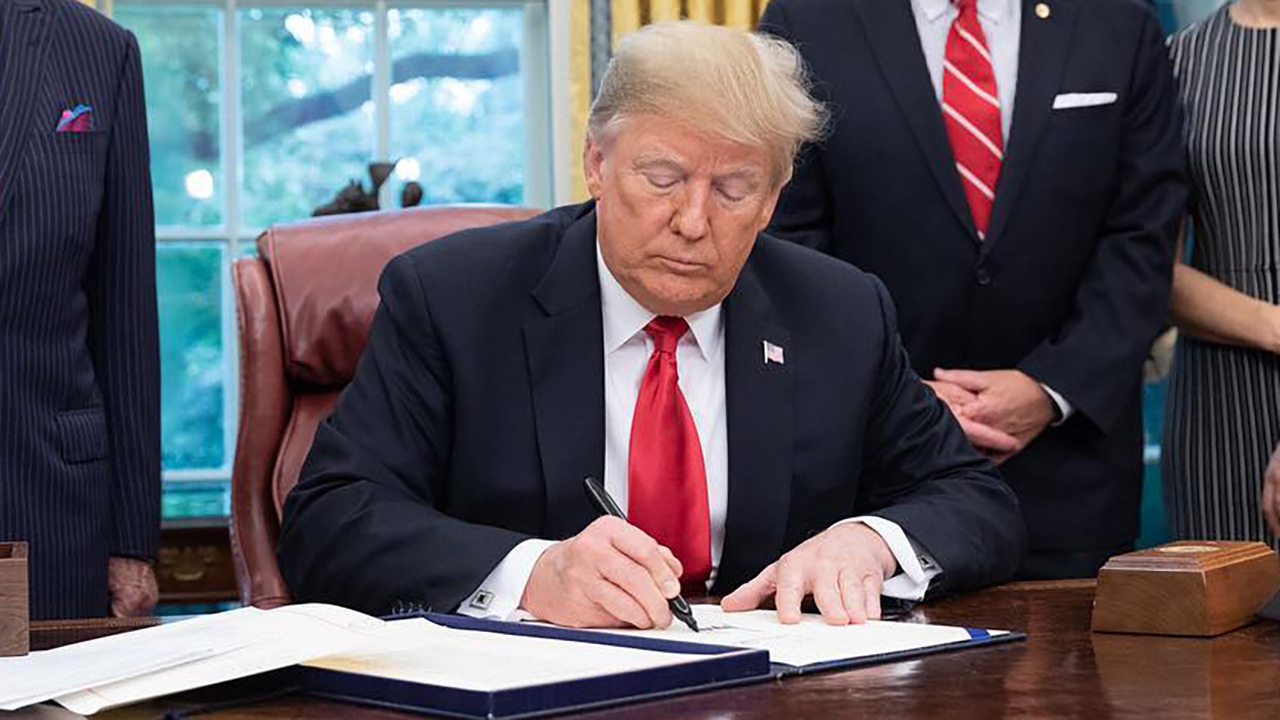
Policy and legal experts recommend that you build cross functional teams that can respond quickly as the federal government clarifies its expectations through guidance, enforcement actions, and litigation positions. Coverage of the signing ceremony notes that WATCH Trump signaled that the goal is to encourage innovation and growth for the technology, but the details of how agencies interpret that mandate will matter more than the rhetoric. Another report underscores that President Donald Trump wants the United States to remain a leader in AI technology, which means you should expect both pressure to innovate and scrutiny over how you manage the risks. The companies and institutions that adapt fastest to this new federal centric landscape will be best positioned to shape the rules that follow, rather than simply reacting to them.