The tech policy fight brewing for 2026 and why states are watching closely
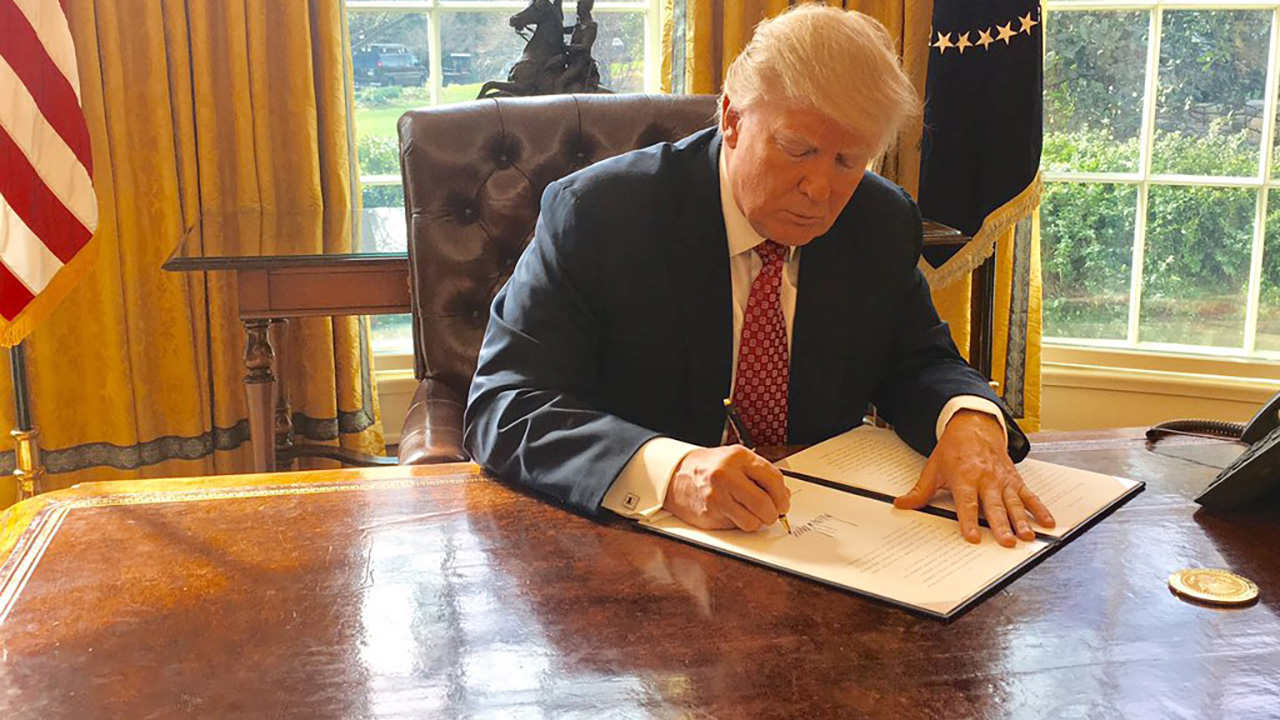
Photo credit: Sean Spicer (White House Press Secretary), Public Domain/Wiki Commons
Tech policy is about to collide with electoral politics in 2026, and you are going to feel the impact whether you work in software, run a small business, or just scroll social media. With Congress still deadlocked on sweeping rules for artificial intelligence, privacy, and online speech, state lawmakers and judges are stepping into the vacuum and setting up a high stakes clash with Washington. The fight taking shape now will determine who really writes the rules for the next wave of AI and data driven services, and how much room you have to innovate inside those lines.
As you look toward the midterms, you are watching two tracks move at once: a federal push from President Donald Trump to centralize AI strategy, and a patchwork of state experiments that are already reshaping how companies design products and handle data. The outcome will not just decide which party controls key committees, it will decide whether your compliance roadmap follows one national standard or a maze of conflicting state mandates.
The stalled federal center of gravity
You are heading into 2026 with no comprehensive federal privacy or AI statute, even after years of hearings and draft bills. Analysts note that, for better or worse, the United States is still operating under a familiar backdrop of fragmented rules, which leaves regulators leaning on sector specific laws and agency guidance instead of a single national framework for data and algorithms. That vacuum is exactly why state legislatures, attorneys general, and courts have become the primary engines of tech policy, even as businesses keep asking for one clear rulebook.
Policy experts describe three broad paths for the year ahead: more of the same incrementalism, a sudden breakthrough on a bipartisan deal, or a new pattern in which federal agencies and states effectively co govern digital policy. One analysis argues that Introduction to the 2026 landscape must start with the reality that Congress has not delivered a baseline privacy law, even as AI systems spread into hiring, housing, and health care. That same review warns that, although the federal government can still shape enforcement priorities, the real action is shifting to state privacy and AI bills that are easier to pass and harder for industry to ignore.
States as first movers on AI and privacy
Because Congress has not filled the gap, you are seeing statehouses treat AI and privacy as core consumer protection issues rather than niche tech topics. Commentators point out that, although the federal landscape is gridlocked, state privacy laws and AI specific statutes are proliferating, with legislatures experimenting on everything from automated decision making to biometric identifiers. One assessment notes that, although the current patchwork is messy, it has turned state privacy and AI rules into the primary drivers of policy in the year ahead, especially as more attorneys general test their authority to police unfair or deceptive algorithmic practices under existing law.
That same analysis highlights that, although the federal government still controls key levers like trade and national security, the most concrete protections for your data are emerging from state capitols. A detailed review of the state privacy landscape describes how legislatures are layering AI specific duties on top of general data rights, forcing companies to rethink how they train models, explain automated decisions, and respond to consumer requests. For you, that means compliance teams are increasingly treating the strictest state rules as the de facto national standard, even before Congress acts.
California’s aggressive AI turn
If you want to see where the next wave of AI regulation is being drafted, you are watching California. New California laws taking effect at the start of 2026 include measures that regulate artificial intelligence alongside health and labor rules, signaling that lawmakers now see AI as a cross cutting risk that touches everything from medical benefits to workplace surveillance. A roundup of New California statutes notes that these rules are framed as protections for Californians on issues that affect all Californians, which in practice means any company with users in the state must adapt.
California is also moving ahead with more targeted AI rules that go beyond general consumer protections. One policy agenda flags that California’s SB 243, which would tightly regulate AI systems that provide human like conversational support, is poised to become a national test case for how far states can go in constraining model behavior without stifling beneficial innovation. Legal analysts describe how California is pairing this kind of sector specific bill with broader AI safety and transparency requirements, effectively turning the state into a laboratory for rules that other jurisdictions may copy or challenge in court.
Data centers, energy, and the infrastructure squeeze
Behind the headlines about chatbots and image generators, you are also watching a quieter fight over the physical infrastructure that powers AI. In California, lawmakers ordered a study of how data centers strain the electric grid, but Its deadline means the findings will not likely be ready in time for lawmakers to use in 2026, which makes long term planning uncertain for utilities and cloud providers. Reporting on the data center energy study notes that the measure began as a plan to impose stricter rules on new facilities before industry lobbying narrowed it to a research project, delaying any binding standards.
In the face of this opposition, two key proposals stalled that would have forced data center operators to disclose more about their electricity use and pushed utilities to plan around AI driven demand. One account explains that In the wake of heavy pushback from Big Tech, a legislator agreed to revisit her electricity disclosure bill later, even though critics argue that voluntary measures often do not hold up to more careful or long term scrutiny. For you, the delay means that data center expansion will continue under older, looser rules at least through 2026, even as AI workloads drive up power needs and local communities demand more transparency.
Trump’s national AI push and the Genesis Mission
While states race ahead, President Trump is trying to pull AI strategy back toward Washington. Analysts tracking federal initiatives say that, by 2026, most states are expected to enact some form of AI rules, but Trump’s strategy, built around AI.gov and a program known as the Genesis Mission, is aimed at pushing more uniform national standards and expanding the global reach of American AI companies. A detailed overview of the Genesis Mission describes how the administration is using executive orders and international agreements to shape norms on safety, trust, and adoption, even without new statutes from Congress.
At the same time, the Trump administration and Republicans in Congress have drawn up proposals, thus far not advancing, that would reshape how federal agencies oversee AI and online platforms. One 2026 outlook notes that Lastly, Trump and key Republicans in Congress are exploring ways to limit what they see as overreach by independent regulators while promoting innovation, including proposals to change how content moderation and algorithmic transparency are handled. For you, that means federal tech policy in 2026 will likely be driven as much by executive authority over emerging technologies as by any new law that survives the legislative process.
Courts and the Florida social media showdown
Even as legislatures write new rules, you are watching courts decide how far states can go in regulating online platforms. In Florida, a long running battle over a 2021 law that restricts how social media companies moderate content is expected to reach a critical ruling in 2026, with a U.S. district judge set to decide whether key provisions violate the First Amendment. Coverage of the case notes that Social media platforms are at the center of one of Florida’s biggest legal battles to watch in 2026, alongside fights over guns and prisons, underscoring how tech regulation now sits alongside traditional culture war issues.
Another report from the News Service of Florida explains how an earlier ruling in the same dispute partially blocked the law, and an appeals court later upheld most of his ruling, setting the stage for a final round of arguments. The account notes that News Service of Florida described the case as a tech law fight that continues into 2026, with FLORIDA officials defending the statute and platforms arguing it violates their editorial discretion. For you, the outcome will signal how much leeway states like Florida have to dictate content rules for global platforms, and whether similar laws in other states will survive constitutional scrutiny.
Industry lobbying, PAC money, and the 2026 midterms
As the legal fights play out, you are also seeing tech money flow into the 2026 midterms in ways that could reshape who writes the next generation of rules. A November policy roundup notes that, as 2026 approaches, the AI industry is preparing for the upcoming midterm elections and beyond, with executives and trade groups mapping out which races could flip key committees or statehouses. That summary of the 2026 midterms explains that industry leaders are not just watching federal contests, they are also tracking state attorneys general races and ballot measures that could harden or soften AI and privacy rules.
At the same time, tech aligned political action committees are gearing up to influence those outcomes directly. One investigation describes how a PAC backed by Trump supporting tech moguls is treating the midterms as a path to lock in a deregulatory agenda for AI and online platforms, framing the contests as a referendum on whether lawmakers will follow Trump’s second term priorities. The report recounts how PAC strategists see the exchange of ideas in early campaign events as the opening skirmish in a broader battle that will play out across the country, with millions of dollars aimed at shaping tech policy votes. For you, that means the 2026 tech policy fight will be waged not only in hearing rooms and court filings, but also in campaign ads and primary challenges.
Patchwork pressure and the call for uniform rules
From the perspective of a national or global company, the growing patchwork of state AI and privacy laws is already a major operational headache. Analysts note that, to eliminate the fragmented approach of state by state AI regulatory requirements, the tech industry remains resolute in its push for a single federal standard that would preempt conflicting state rules. A detailed examination of why states remain the AI regulatory leader explains that, despite this lobbying, state lawmakers are unlikely to stand down unless Congress offers strong protections that match or exceed their own statutes.
Legal practitioners are already advising clients to treat California’s AI Regulation as a floor, not a ceiling, for compliance. One 2026 outlook highlights how California’s AI Regulation focuses on Safety, Transparency, HR Oversight, and algorithmic pricing, including an AI Safety Act with an effective date that will force companies to inventory and document specific AI models used in sensitive contexts. The same analysis notes that regulators are paying close attention to how each Algorithm used in hiring or pricing could trigger obligations under the Safety and Oversight framework, which means you will need deeper visibility into your own systems just to keep operating in key markets.
Why 2026 will be a tipping point
All of these threads are converging into a pivotal year in which you will no longer be able to treat tech policy as a distant concern. A review of recent state activity notes that New Bills to Watch include New AI proposals from Colorado, Florida, Massachusetts, Missouri, New York, and other jurisdictions, with researchers building a dataset to track how these measures evolve and which ones survive committee fights. That same briefing explains that New Bills in New York City will consider AI specific rules in 2026, underscoring how local governments are also stepping into the regulatory arena.
California offers a preview of how intense the next phase could become. One analysis of the 2026 outlook for AI rules in the state notes that Next year will see no end to the tension between protecting Californians from artificial intelligence harms and preserving the state’s role as a tech hub, especially as federal plans would hit California hardest if they preempt stricter local standards. The same review points to specific fights, such as efforts by Take San Francisco Democratic Sen Scott Weiner to keep AI systems from enabling cartel like behavior in rental housing and other markets, which illustrate how lawmakers are already targeting concrete business practices rather than abstract principles. By the time you reach the 2026 midterms, the question will not be whether tech is regulated, but who gets to decide the terms, and how quickly you can adapt.
IP, safety, and the expanding regulatory toolkit
Beyond privacy and speech, you are also seeing intellectual property and product safety law pulled into the AI debate. One legislative review notes that a recent bill directs the Consumer Product Safety Commission to establish a pilot program using artificial intelligence for product safety, signaling that traditional regulators are starting to treat AI as both a tool and a target of oversight. That same analysis of Consumer Product Safety Commission related measures explains how IP legislation in 2025 set the stage for broader debates about executive authority over emerging technologies, including how agencies can respond when AI systems generate infringing or dangerous content.
For you, this means that AI governance in 2026 will not be confined to a single omnibus bill or a handful of state statutes. Instead, it will be woven through energy policy, labor law, consumer protection, IP, and safety regulations, each bringing its own enforcement tools and liabilities. Analysts warn that, although the current system is fragmented, it is also rapidly expanding, with states, federal agencies, and courts all asserting overlapping jurisdiction. As you plan for the year ahead, the most realistic strategy is to track these developments as a connected whole, rather than treating each new rule as an isolated compliance chore, because the tech policy fight brewing for 2026 is ultimately about who sets the boundaries for every AI driven decision you make.

Abbie Clark is the founder and editor of Now Rundown, covering the stories that hit households first—health, politics, insurance, home costs, scams, and the fine print people often learn too late.