Teenager Refused to Spend Her Late Father’s Inheritance on Her Brother-in-Law’s Surgery — After Her Sister Already Blew Through Her Own Share
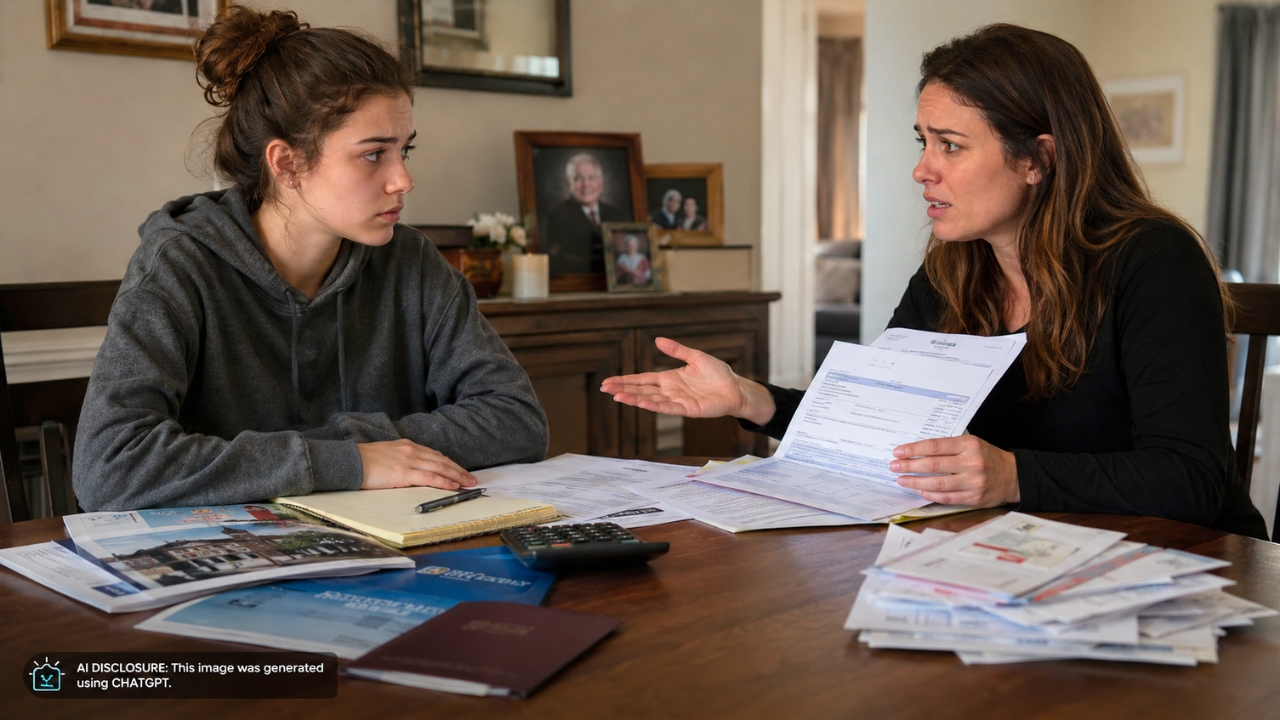
Photo credit: AI-generated image created using ChatGPT. Illustrative only.
An 18-year-old planning for college says she’s being pressured to hand over the money her late father left her—this time to cover a major surgery for her sister’s chronically ill husband. She refused, and the fallout has been loud, emotional, and relentless, laid out in the original post describing the family standoff.
On paper, it’s an argument over a medical bill. In real life, it’s about grief, resentment, and two sisters who were already distant before money and illness pulled them into the same fight.
A father’s inheritance became two very different lifelines
The teenager said she and her 27-year-old sister lost their dad a year ago. Their mother was never involved in either of their lives, and their father was the only parent they had.
He left inheritance money to both daughters. The younger sister has been treating her portion as a future fund—specifically, tuition. She said she’s always wanted to become a doctor and is planning to use the money for college, even though she’s taking a gap year before applying.
Her older sister, she claimed, used her own share quickly—buying new cars and renovating her house. That spending choice matters now because it removed the cushion that might have absorbed the current emergency.
Housing, distance, and a brother-in-law who crossed lines
The sisters weren’t close even before their father died, but the younger one describes the relationship deteriorating further after the older sister married a man with chronic health problems.
According to the post, the brother-in-law was allowed to make backhanded comments about their dad and even mocked the father’s illness. The teenager said he caused a scene at the funeral, and she felt that his behavior was excused because he was sick.
The rift wasn’t just emotional. The teen said she currently lives with her aunt because her brother-in-law “didn’t let” her stay with her sister. That detail raised the stakes: she wasn’t just feeling unwanted, she was physically displaced from what might have been her closest immediate family option after losing her only parent.
The ask didn’t come out of nowhere—until it did
Recently, the older sister started showing up more often at the aunt’s home. The visits, the teen wrote, centered on her husband’s declining condition. He has been in and out of the hospital with heart problems and needs surgery.
During these conversations, the sister repeatedly brought up the younger sister’s inheritance. The teenager said she tried to shut it down by cutting conversations short, but the topic kept resurfacing.
Eventually, the older sister stopped hinting and asked directly for money to help cover the surgery, promising to pay it back in less than a year. For the teen, the request landed like a trap: she described her inheritance as a “large amount,” but also the foundation for her future plans. Giving up a big chunk could mean not having the funds ready when it’s time to apply and enroll.
She also didn’t believe repayment was realistic. Between her sister’s earlier spending and the realities of medical expenses, she feared that the money would be gone for good—and she’d be the one left without tuition.
The refusal triggered a blowup—and a campaign of guilt
When the teen said no, she wrote that her sister had a meltdown at their aunt’s house, calling her heartless and cruel and accusing her of having no empathy.
The older sister framed it as a moral hierarchy: a husband’s health should come before education, she argued. She warned that without help, she could end up a widow and her child could grow up without a father. The teen said she pushed back, insisting that her brother-in-law’s poor health wasn’t her fault—especially after being blamed and guilt-tripped.
The aunt didn’t fully step into the fight, but she did issue a warning. The teenager wrote that her aunt said she should be prepared for permanent damage to her relationship with her sister if she didn’t help now.
After the argument, the pressure didn’t stop. The older sister began sending texts and pictures of her family, presenting them as the life the teen was “saying no to”: a happy, healthy household with a healthy husband and father. The teen admitted she cried and started questioning herself, worrying she was being selfish and failing as a sister and aunt.
What other people zeroed in on: the cars, the “loan,” and the reality of not getting it back
Even in the limited reactions included in the post, the practical pushback was blunt. One friend advised the teen not to hand over the money, warning that if she did, she’d likely never see it again—and that it could derail medical school.
That same friend pointed to the older sister’s spending choices: if there are new cars and renovated spaces, those are assets that can be sold, traded, or refinanced. The argument wasn’t that the brother-in-law shouldn’t get care, but that the burden shouldn’t automatically shift to the youngest person in the family, especially one who’s trying to build a stable path.
The “pay you back in less than a year” promise also set off alarm bells in the way people tend to read family loans. The teen’s concern was simple: once the money leaves her account, she loses control. If the sister can’t pay it back—because of ongoing care, debt, job instability, or another hospitalization—there’s no easy undo button.
And there’s another layer: the teen is 18, newly adult, and already living with an aunt because her sister’s household wasn’t open to her. To her, the request didn’t feel like family looking out for family. It felt like family showing up only when her bank balance became relevant.
A family emergency with no clean answer
The older sister is panicked about a heart surgery and what it could mean for her husband and their child. The younger sister is staring down tuition bills and the possibility of losing the one financial safety net her father left her.
What makes the conflict so sharp is how much history sits underneath the ask: the brother-in-law’s behavior around their father’s illness and funeral, the teen being unable to live with her sister, and the older sister having already spent her own inheritance on major purchases.
Now the teenager is left balancing two fears at once—fear of being seen as the person who didn’t help, and fear of giving away the only real chance she has to pay for the education she’s been planning toward for years. And while her sister’s texts try to turn the decision into a picture-perfect before-and-after, the teen seems to understand that if she hands over the money, she may be giving up more than cash. She may be giving up her future leverage, too.
Check out more from Now Rundown:
- A Party of 12 Came Back a Month Later Demanding Their $80 Tip Refunded — My Restaurant Made Me Pay It
- Her Coworker Kept Filing the Same Complaint About Her After Being Warned — Then She Filed a Counter-Report With Every Email Documented
- Siblings Demanded Half of Their Sister’s $11 Million Inheritance — She Refused Because They Never Visited
- The Kid I Bullied in Middle School Just Interviewed for a Job on My Team — He Bombed It and I Didn’t Hire Him

Abbie Clark is the founder and editor of Now Rundown, covering the stories that hit households first—health, politics, insurance, home costs, scams, and the fine print people often learn too late.