Stepmother Told Her Stepdaughter Her Old Dress and Heirloom Rings Would Go to Her Own Biological Kids Someday, Not Her
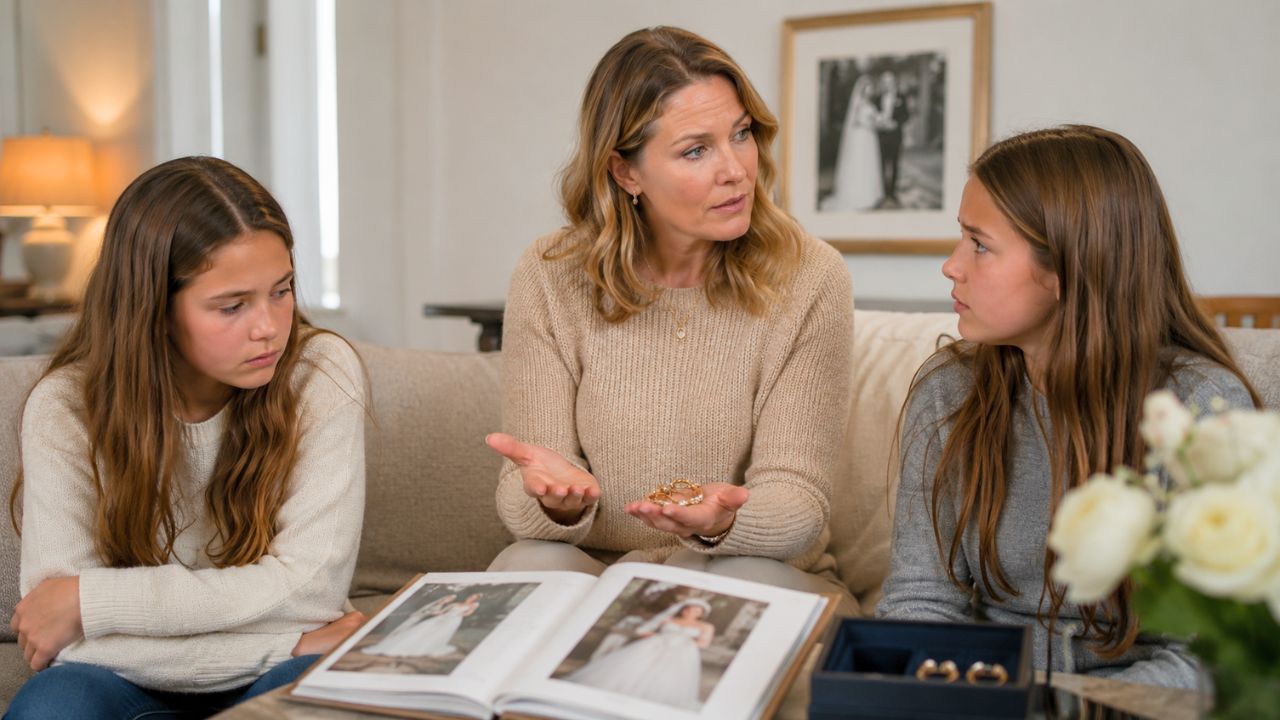
Photo credit: AI-generated image created using ChatGPT. Illustrative only.
It started as a cozy, domestic moment: a woman preparing a photo book for the baby she’s expecting, with two curious kids flipping through old memories beside her. But a few pages into wedding and engagement photos, the questions got specific—about the dress, the rings, and who would get them one day.
In the original post, the stepmother explained that her stepdaughters, ages 13 and 11, lit up when they saw pictures from her wedding to their dad. The older girl asked if she still had the wedding dress, then barreled ahead before an answer even landed, imagining how she’d “look like” her stepmom on her own wedding day. The mood only shifted when the conversation turned to heirlooms.
A sweet question turned into a family line in the sand
After the dress came the rings. The stepmother told the girls her rings had belonged to her great-grandmother and had been adjusted to fit her style. Her stepdaughter asked if she could have them for her wedding when she was older.
That’s when the stepmother said she “softly explained” she would prefer her biological daughter get first dibs on her things. In her mind, the stepkids’ mother would likely have family items to pass down to them. The answer didn’t come out as a harsh no, but it landed that way anyway. The girls, she wrote, seemed sad.
The message didn’t stay in the room
The kids went back to their mom’s home and, as the stepmother suspected, repeated what they’d been told. Not long after, their mother called—angry and direct—questioning why “some new kid” should get something over her kids.
The stepmother tried to clarify the policy: her biological children would have first choice, and if they didn’t want the dress or rings, then it could be “free game” after that. She also repeated her assumption that the girls’ mom would have something meaningful to pass down.
That’s where the conversation tightened. The girls’ mother said she didn’t have heirlooms, didn’t have a wedding, and her family didn’t save items like that. The stepmother’s response was blunt: she couldn’t help with that, and her biological kids would still get first dibs.
The husband backed her, but the house got louder
At home, the fallout wasn’t evenly spread. The stepmother wrote that “everyone’s mad” except her husband, who agreed with her. They said they would talk to the kids, but the emotional damage was already done—two preteens had asked for a future connection and felt turned away.
The stepmother also admitted she felt bad, even while standing firm. Her reasoning wasn’t just sentimental; it was rooted in identity. She said she wouldn’t want to give the items away if her biological kids might want them because the heirlooms are “connected to them” and “apart of their DNA.”
That framing matters because it turns a household question—who gets what—into something sharper: who belongs where, and how officially. In blended families, kids are often listening for clues about whether “step” means temporary, conditional, or second place. In this case, the clue came wrapped around a dress and two rings.
The real stakes are future weddings, but the damage is now
No one is getting married tomorrow. The kids are 13 and 11, and the baby hasn’t even arrived yet. But heirlooms don’t function like ordinary objects. They’re symbols, and symbols create long memories.
The stepmother’s approach also creates a timeline where the stepdaughters have to wait through a process they can’t control: first, the biological children grow up; then they decide whether they want the dress or rings; only then could the stepkids be considered. That may sound practical to an adult thinking about inheritance, but to children it can translate into, “You’re not really in line.”
There’s also a logistical reality underneath the emotion. If the stepmother keeps the items until her biological daughter is grown, that could be decades. By then, relationships may have shifted, priorities changed, and the stepdaughters may no longer feel comfortable asking—or may not be close enough to want the items at all. A choice meant to preserve tradition can, in the meantime, sour day-to-day family life.
What people zeroed in on: timing, wording, and the “DNA” line
The post didn’t include a rundown of replies, but the pressure points are obvious from the facts presented. Many readers tend to focus on how adults talk about inheritance in front of children, especially children who already live with two households and two sets of rules.
The “DNA” justification is also the kind of phrasing that tends to raise alarms because it can sound like a ranking system inside a family. It’s one thing to say, “These came from my great-grandmother, and I want them to go down my direct line.” It’s another to explain it as biological entitlement in front of kids who are biologically connected to their dad but not to her.
Practical-minded reactions in situations like this often point to a middle path: separate the emotional reassurance from the final decision. A parent can say, “I love that you want to share traditions with me,” without promising the item. They can also create new traditions—like a piece of jewelry chosen together later—without giving away a great-grandmother’s rings. But none of that works if the message the kids hear is simply, “Not you.”
Where it leaves this family
The stepmother seems committed to her boundary: biological children first, stepchildren only if the bio kids decline. Her husband is on her side, and the children’s mother is clearly not. The stepdaughters are stuck in the middle, carrying the emotional weight of an adult policy they didn’t ask to negotiate.
The next conversation—“we said we would talk to them”—is likely the one that determines whether this becomes a lasting wound or a moment that gets repaired. Because the objects at the center of it are replaceable in the practical sense. The feeling of being excluded in your own family, especially at 13 and 11, is not.
Check out more from Now Rundown:
- A Party of 12 Came Back a Month Later Demanding Their $80 Tip Refunded — My Restaurant Made Me Pay It
- Her Coworker Kept Filing the Same Complaint About Her After Being Warned — Then She Filed a Counter-Report With Every Email Documented
- Siblings Demanded Half of Their Sister’s $11 Million Inheritance — She Refused Because They Never Visited
- The Kid I Bullied in Middle School Just Interviewed for a Job on My Team — He Bombed It and I Didn’t Hire Him

Abbie Clark is the founder and editor of Now Rundown, covering the stories that hit households first—health, politics, insurance, home costs, scams, and the fine print people often learn too late.