Neighbor Built a $4,000 Fence Without Asking First — Then Demanded the Other Neighbor Pay Half
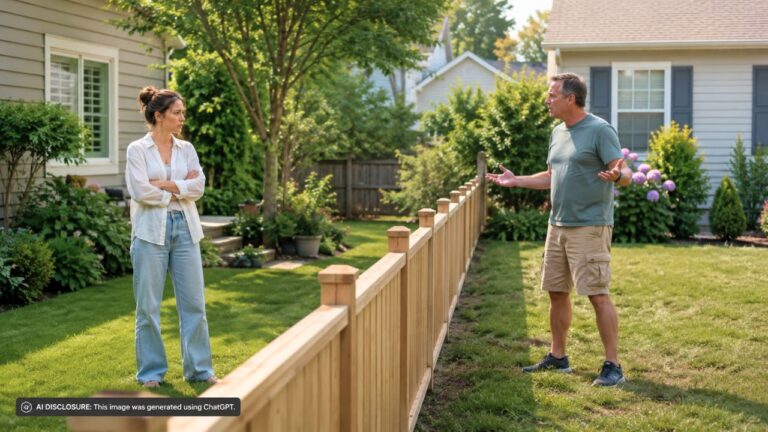
Photo credit: AI-generated image created using ChatGPT. Illustrative only.
It started as a quick backyard chat between two people who were only ever “wave and nod” friendly. One neighbor walked over with a plan: they wanted a fence, soon. They had kids, they were thinking about getting a dog, and they wanted to close in the back yard where the two properties meet.
The other neighbor didn’t object to the idea of a fence at all. They just didn’t want to pay for one they didn’t need. But the conversation didn’t stay simple for long, and what followed left them dealing with an awkward silence next door and the kind of lingering tension that can make stepping outside feel like stepping into a cold room.
A fence plan turned into a money conversation fast
In the telling shared in the original post, the fence pitch came with a running commentary about how expensive everything was. The neighbor talked about installation costs, circled back to how much it would run, and even mixed in complaints about another nearby neighbor—someone the poster said they personally had “no problem with.”
Then came the ask: would the poster “go in” on the fence? The answer was no. The poster said they were fine without a fence, but if the neighbor wanted one, they should go ahead and build it.
That could have been the end of it. Instead, the cost complaints continued, and the conversation shifted from “we want a fence” to “we want you to help pay for it,” even after the first refusal.
The property line question made it feel riskier
After hearing another round of frustration about what a fence would cost, the neighbor floated a new plan: they would install it themselves. That might have sounded like a compromise at first—until they tried to turn the discussion into a handshake agreement about where, exactly, the property line was.
They pointed to a line in the yard and pushed for an on-the-spot deal: “let’s agree that this line right here is our property line.” That was the moment the conversation stopped being about privacy and started being about boundaries in the literal sense.
The poster suggested bringing in a surveyor to make sure the fence would be placed correctly. The neighbor, again, complained about the price. And once again, they brought up splitting costs. Once again, the poster declined.
The neighbor ended the exchange with “ok well we’ll figure something out,” and walked away. The fence wasn’t the only thing hanging in the air.
The “friendly wave” disappeared, and the atmosphere shifted
In the weeks after that backyard conversation, the poster said the tone next door changed noticeably. The casual waves stopped. The neighbor began moving in and out of the house quickly, avoiding eye contact and keeping interactions to a minimum.
It wasn’t open confrontation. It was the kind of low-grade freeze-out that’s hard to call out without sounding paranoid. But it was obvious enough that the poster picked up on it and felt the message: refusing to share the fence expense had consequences, even if nobody said so directly.
And that’s where the stress tends to live with neighbor disputes. You can be “whatever” about it in theory, but in practice you still share a property line, a view, and a daily routine. The question the poster kept coming back to was simple: were they in the wrong for not paying?
Why the cost dispute wasn’t just about money
On paper, splitting a fence can sound like a clean, neighborly arrangement. In real life, it depends on who wants the fence, where it’s going, and whether both people actually agree—before anything gets built.
From the poster’s perspective, the neighbor’s plan came with two pressure points: money and placement. The neighbor wanted financial help for a project the poster didn’t want, and they also wanted an informal agreement on the property line instead of using a surveyor.
That combination can put someone in a tough spot. Paying for “half” can start to feel less like generosity and more like buying into decisions you didn’t make: the type of fence, the exact location, and the long-term maintenance expectations that might follow.
Even if everyone stays polite, a fence built on the wrong side of a property line can become an expensive, emotional mess later. The poster’s instinct to suggest a survey wasn’t just nitpicking; it was a way to avoid the kind of dispute that escalates from awkward looks to formal complaints and years of resentment.
Most reactions centered on consent, not courtesy
The post itself was labeled “Not the A-hole,” reflecting how the feedback leaned: you don’t owe money for a project you didn’t ask for. The poster didn’t block the neighbor from building a fence. They simply said they didn’t want to fund it.
There was also an implied warning in the way the story was told: when someone is already bristling at the idea of paying for a surveyor, they may be tempted to place a fence wherever it’s easiest or cheapest, then treat that line as fact. That’s exactly how small neighborhood issues turn into big ones.
People tend to get practical quickly in these disputes, because the stakes aren’t abstract. A fence changes how you use your yard. It can affect landscaping, gates, access for maintenance, and future home sales. Even if the neighbor never says another word, the fence itself becomes a permanent “relationship status update” between two households.
What the poster was left with: a cold shoulder and an open question
By the end of the account, there’s no dramatic blow-up—just a slow, pointed withdrawal. The neighbor’s friendliness evaporated after they didn’t get the agreement they wanted, and the poster was left wondering whether standing firm was unfair or simply normal.
That’s what makes the story recognizable. Sometimes the biggest neighbor fights aren’t shouted across driveways. They’re delivered through silence, avoidance, and the subtle suggestion that you’ve failed some unwritten test of cooperation.
For now, the line in the yard is still the line, at least until someone starts digging post holes. And the poster’s choice—declining to pay, and urging a survey before anyone builds—sits at the center of the tension: a boundary set early, before a fence turns into a bigger problem than either neighbor expected.

Abbie Clark is the founder and editor of Now Rundown, covering the stories that hit households first—health, politics, insurance, home costs, scams, and the fine print people often learn too late.