Man Refused to Lend His Car to His Broke Sister-in-Law After Her Own Car Broke Down — His Wife Pushed Back
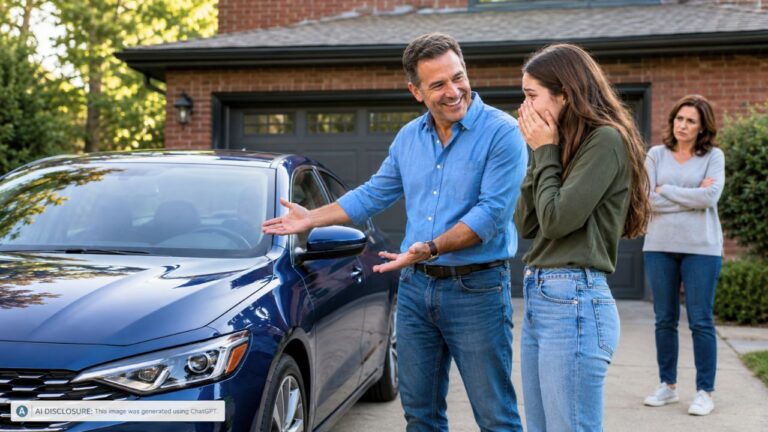
Photo credit: AI-generated image created using ChatGPT. Illustrative only.
When his sister-in-law’s car gave out for good, the family request seemed straightforward: could she borrow one of his extra vehicles until she got back on her feet? He has two cars and mostly rides a motorcycle, so his wife figured the answer would be yes. Instead, he flatly refused, setting off a fight at home that turned into a bigger argument about trust, money, and who takes care of what.
In the original post, the man explained that his wife’s sister is suddenly without transportation after her car became undrivable and “not worth repairing.” She still needs to get to work, but can’t afford to buy a replacement right now. She’s been relying on Lyft, but he says that’s not sustainable and she’ll either need a car soon or a different job closer to home.
A broken-down car turned into an immediate work problem
The sister-in-law’s problem isn’t a minor inconvenience. Without a working car, she’s staring at a basic, real-world cliff: if she can’t reliably get to work, she could lose income and fall even further behind.
The man’s wife saw his unused vehicles as the obvious bridge solution. He has more than one car and tends to use a motorcycle most of the time, so lending a car sounded like the quickest way to keep her sister employed while she saves for a new one.
But he didn’t view it as “unused.” He viewed it as something that still needs attention, monitoring, and care—especially because the cars are older and can develop problems that aren’t obvious if you don’t know what to listen for.
His “no” wasn’t about mileage—it was about maintenance
He said his refusal came down to one thing: he doesn’t trust his sister-in-law to take care of a borrowed car, or to cover costs if something happens. His reasoning was blunt: she couldn’t afford to maintain her own car, and he believes her lack of maintenance is part of why she ended up in this position.
He pointed to a detail that stuck with him. He said her car had been making “weird sounds for months,” but the issue was ignored until it became undrivable. To him, that wasn’t just bad luck—it was a warning sign of how she might treat any vehicle put in her hands.
He also emphasized that his cars are older, which makes them less forgiving. They require someone who knows what “normal” feels and sounds like, and who will notice changes early, not months after a problem starts.
Then his wife brought up a sore point: his friends borrow his vehicles
What escalated the disagreement was the comparison his wife made. She pushed back by pointing out that he “rarely hesitates” to let friends borrow his vehicles. If he can do it for them, why not for her sister when the need is more urgent?
He answered that, too. He said his friends are “mechanically inclined enough” that he’s not too worried about them ignoring warning signs or being careless with maintenance. In other words: it’s not lending that he objects to, it’s lending to someone he believes won’t protect the car—or be able to make things right if it breaks.
That explanation didn’t land with his wife. She framed it as him valuing a “cheap car” he “barely even drive[s]” over her sister’s ability to earn a living, especially when he’s been generous with others in the past.
His compromise came with a catch his wife didn’t want
Trying to move the conversation forward, he offered a workaround: his sister-in-law could borrow his wife’s car, and his wife could borrow his. That would keep the sister employed without putting his older vehicles in the hands of someone he doesn’t trust to monitor them.
But his wife rejected it immediately. Her car is newer and “much nicer” than his, and she didn’t want her sister driving it.
That refusal became its own flashpoint. To him, it proved his point: if his wife wouldn’t trust her sister with the nicer car, why was she insisting he trust her sister with his cars? He took it as evidence that the argument wasn’t really about fairness—it was about whose property was expected to absorb the risk.
Meanwhile, the practical problem didn’t disappear. The sister-in-law is still getting to work through ride shares, but the clock is ticking if she can’t keep paying for it.
What people zeroed in on: risk, responsibility, and who pays when something breaks
The post included a clear verdict tag: “Not the A-hole.” Even without a long comment section included in the source material, the framing makes it easy to see why readers might land there.
At the center is a question that comes up in a lot of families: is a borrowed car a favor, or a financial liability? Lending a vehicle isn’t just handing over keys. It’s insurance exposure, wear and tear, maintenance, and the possibility of damage that the borrower can’t afford to repair.
There’s also the uncomfortable reality the man put into words. If someone is already struggling to afford a car, they’re unlikely to be able to handle a surprise tire replacement, brake work, a tow bill, or collision repairs—especially on short notice. And if the lender ends up paying, that “temporary loan” can turn into an open-ended obligation.
At the same time, the wife’s perspective also has a clear through-line: this isn’t about convenience. It’s about her sister getting to work. When a family member’s livelihood is on the line, drawing a firm boundary can look cold, even if it’s rooted in financial self-protection.
The fight isn’t really about a car—it’s about trust inside the marriage
Underneath the transportation problem is a relationship problem. His wife sees inconsistency: he’ll help friends, but not her sister. He sees unequal risk: his wife wants him to shoulder the downside while refusing to put her own newer car on the line.
And once that kind of imbalance is voiced out loud, it’s hard to un-hear. If she thinks he’s choosing property over family, resentment builds. If he thinks she’s asking him to take a risk she won’t take herself, he’s going to dig in even harder.
For now, his sister-in-law is still piecing together rides to work, and the family is left with a tense standoff: he won’t lend his older car, she won’t offer her newer one, and the person caught in the middle is trying to stay employed long enough to buy another vehicle. The next move—whether that’s a different commuting plan, a job shift, or a rethink about who can responsibly borrow what—will likely decide whether this stays a family argument or becomes a longer-term fracture.
Check out more from Now Rundown:
- A Party of 12 Came Back a Month Later Demanding Their $80 Tip Refunded — My Restaurant Made Me Pay It
- Her Coworker Kept Filing the Same Complaint About Her After Being Warned — Then She Filed a Counter-Report With Every Email Documented
- Siblings Demanded Half of Their Sister’s $11 Million Inheritance — She Refused Because They Never Visited
- The Kid I Bullied in Middle School Just Interviewed for a Job on My Team — He Bombed It and I Didn’t Hire Him

Abbie Clark is the founder and editor of Now Rundown, covering the stories that hit households first—health, politics, insurance, home costs, scams, and the fine print people often learn too late.