Grandparents Removed Her From the Will After She Missed One Thanksgiving
Photo credit: Nowrundown.com
She found out in the least dramatic way possible: a casual phone call that started with weather talk and ended with her stomach dropping.
One minute, her grandmother was asking whether her new apartment had enough closet space. The next, she was saying that “things needed to be updated” after last year’s holiday, and that her granddaughter shouldn’t expect anything “until trust is rebuilt.” There was no shouting, no big reveal. Just a calm sentence that landed like a trapdoor.
The granddaughter—late twenties, steady job, usually the one who remembered birthdays—had missed one Thanksgiving. Not because she didn’t care. Because she’d been on the floor of her bathroom for two days with the flu, then trapped in a work situation that didn’t stop just because it was a holiday. She thought the family would be annoyed, maybe disappointed. She didn’t think it would rewrite her place in the family.
The problem started before the big blowup
Thanksgiving at her grandparents’ house had always been treated like a required appearance, not an invitation. They started planning in October, and by early November there were texts about arrival times, what to bring, and reminders that “everyone is expected.”
Her grandparents were generous in a way that came with strings. They paid for big things—helped with a semester of college, covered a car repair once—then remembered it forever. Gratitude wasn’t enough; it had to look like loyalty, in the exact way they wanted.
Her parents had learned to manage it by smoothing things over. Her aunt played along enthusiastically. Her older brother lived farther away and was treated like a visiting celebrity when he showed up, which he did only when it was convenient.
She was the one nearby, the one who could pop over on a Sunday, pick up a prescription, or fix the printer. So the expectations for her weren’t just higher—they were constant.
The Thanksgiving she missed became “proof”
That year, the week of Thanksgiving went sideways fast. She’d been pulling long days at work to cover for someone who quit, then woke up on Tuesday with a fever and a cough that made her ribs hurt. By Wednesday night she was barely keeping water down.
She sent a message to the family group chat saying she wasn’t coming and that she was sorry. She offered to drop off the pie she’d promised after the holiday, when she could stand up for more than five minutes.
Her grandmother replied with a short “Feel better.” Her grandfather didn’t respond at all. No one asked if she needed anything, but her aunt did text a few hours later asking if she could still send over the recipe for the sweet potatoes “since you’re not bringing them.”
She slept through most of Thanksgiving and assumed it would blow over. Two days later, she started seeing photos posted online: her grandparents at the head of the table, smiling, with captions about “family who shows up.” In one picture, her place setting wasn’t there. It was like she’d never existed.
They didn’t just punish her—they announced it
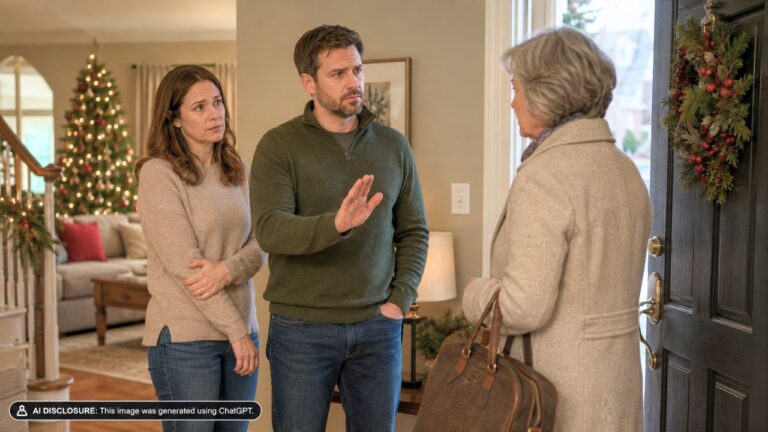
Christmas came and felt different. She was invited, but the vibe was colder, the conversations clipped. Her grandmother made a point of telling everyone how “fragile traditions are” and how “one missing person changes the whole mood.”
In January, her mom called to ask if she’d “done something” to upset her grandparents. Her mom didn’t sound angry, just wary, like she was calling from the edge of a storm.
That’s when she learned her grandparents had been telling people their granddaughter “chose her job over family” and that she’d “made a statement” by skipping Thanksgiving. They framed it like a deliberate snub, not an illness and exhaustion.
Then came the money part. Her grandparents weren’t wealthy in a flashy way, but they owned their home outright and had savings. For years, they talked about leaving something for each grandchild. It was never guaranteed, but it was discussed often enough that everyone knew it was supposed to be part of the family’s future.
Her grandmother’s phone call finally made it official: she’d been removed from the will.
The phone call that made it impossible to pretend
Her grandmother didn’t say it with cruelty. That was what made it sting. She spoke like she was describing a practical decision, the way someone might change insurance plans.
She explained that they were “simplifying things” and “rewarding consistency.” She said it wasn’t about punishing; it was about “values.” Then she added that the door was open if her granddaughter could “prove” she understood what she’d done.
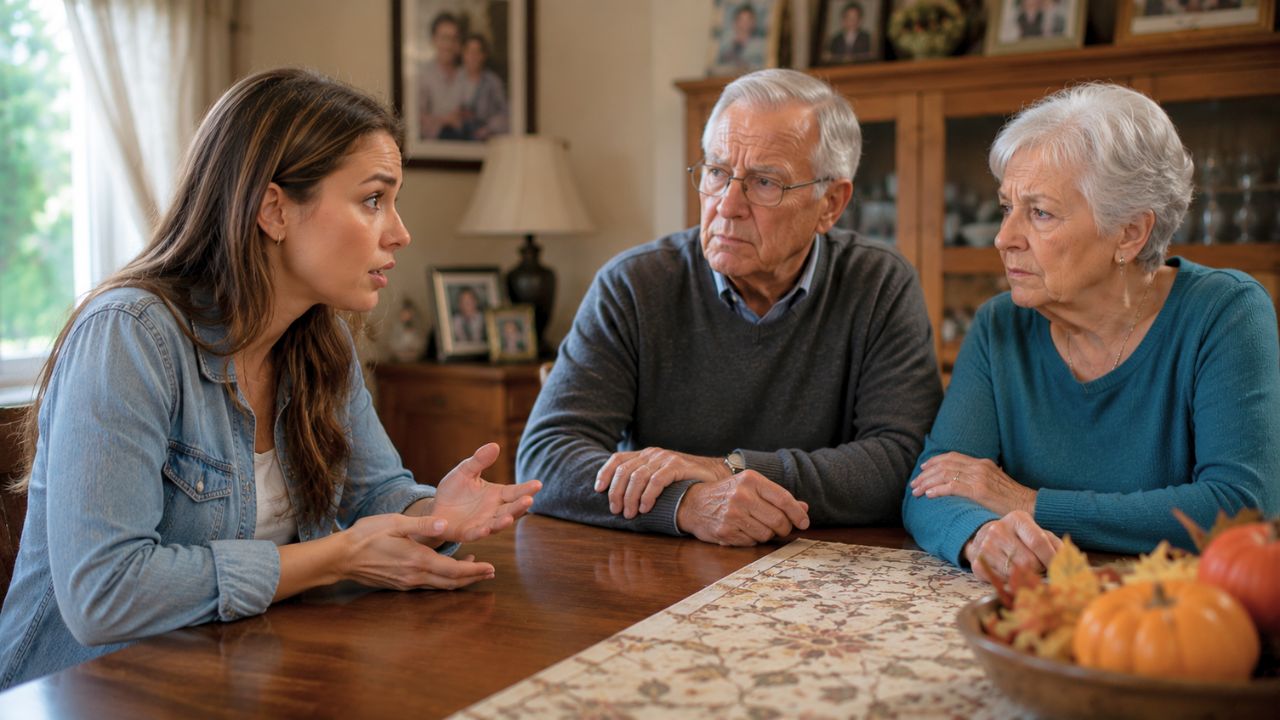
Her granddaughter tried to stay calm. She reminded her grandmother she’d been sick, that she’d offered to make it up, that she’d never missed a holiday before. Her grandmother brushed past it. In her mind, missing the day wasn’t the issue. The issue was disobedience.
Her grandfather got on the line for a moment and told her they were “done being taken for granted.” It was quick, rehearsed, and it sounded like a line they’d practiced together.
After the call, she sat staring at her kitchen counter, replaying it. Not because she cared about the money—though losing the possibility of help with a future home or student loans hurt—but because the message was loud and clear: her place in the family was conditional.
Everyone had an opinion, and none of it matched
When she told her parents, her dad went quiet in that way he did when he didn’t want to say the wrong thing. Her mom immediately went into fixer mode, suggesting she “stop by with flowers” and “clear the air.”
Her brother reacted differently. He laughed, then said something like, “You know how they are,” as if that explained why their grandparents were rearranging their estate over a single missed meal. He also pointed out, not subtly, that if she was out of the will, the rest of them were likely in for more.
Her aunt called and asked her to apologize “properly.” Not for being sick, but for “making them feel abandoned.” Her aunt warned her that arguing would only make it worse and hinted that the family didn’t need “drama” around inheritance.
At work, she mentioned it to a friend while they ate lunch, expecting a quick sympathy moment. Instead, her friend looked stunned and said, very plainly, that it sounded like a control tactic.
That line stuck. Because once she heard it, she started replaying other moments: the guilt for missing a Sunday visit, the coldness when she didn’t answer a call quickly enough, the way every favor came with an expectation of access.
The outcome left her stuck between pride and peacekeeping
Her grandparents sent an invitation for Easter like nothing had happened. Same formal tone, same expectation that she’d arrive at the right time and bring the right dish. There was no mention of the will, no apology, no attempt to reset. Just a quiet assumption that she’d fall back into line.
Her mother begged her to go. She said it would “show good faith” and prevent the grandparents from “taking it out on everyone.” Her aunt echoed that, with a sharper edge, reminding her that older people can be stubborn and that “this is just how they communicate.”
But the granddaughter couldn’t unhear the phrase “prove yourself.” It turned the invitation into a test she didn’t agree to take. She didn’t want to spend the next decade performing gratitude to earn back a place that should’ve been hers by default.
She didn’t go to Easter. She sent a polite message saying she hoped they had a lovely day and that she’d reach out when she was ready to talk. Her grandmother responded with a single sentence about “choices having consequences.” Her grandfather didn’t reply.
Weeks later, her mom called again, exhausted, saying her grandparents were telling anyone who’d listen that their granddaughter had “cut them off.” And her aunt was suddenly very interested in making sure everyone knew who was “there for family.”
The granddaughter didn’t correct the story publicly. She stopped trying to argue with people committed to misunderstanding her. She kept showing up for her parents in ways that felt healthy and pulled back from anything that required her to be the family scapegoat.
The will might change again, or it might not. But the bigger change had already happened. One missed holiday revealed something she couldn’t unsee: in her grandparents’ eyes, love was something you earned on schedule.
Check out more from Now Rundown:
- A Party of 12 Came Back a Month Later Demanding Their $80 Tip Refunded — My Restaurant Made Me Pay It
- Her Coworker Kept Filing the Same Complaint About Her After Being Warned — Then She Filed a Counter-Report With Every Email Documented
- Siblings Demanded Half of Their Sister’s $11 Million Inheritance — She Refused Because They Never Visited
- The Kid I Bullied in Middle School Just Interviewed for a Job on My Team — He Bombed It and I Didn’t Hire Him

Abbie Clark is the founder and editor of Now Rundown, covering the stories that hit households first—health, politics, insurance, home costs, scams, and the fine print people often learn too late.