Family Member Asked an Informally Adopted “Sister” to Move Out of a Late Mother’s House to Sell It — Relatives Say She Deserves a Share
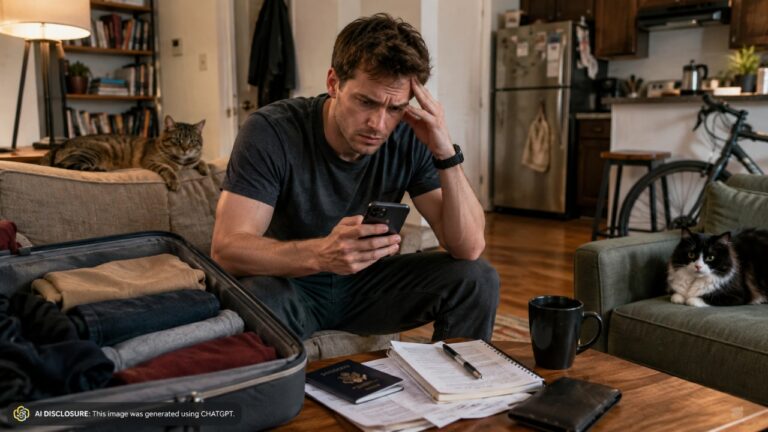
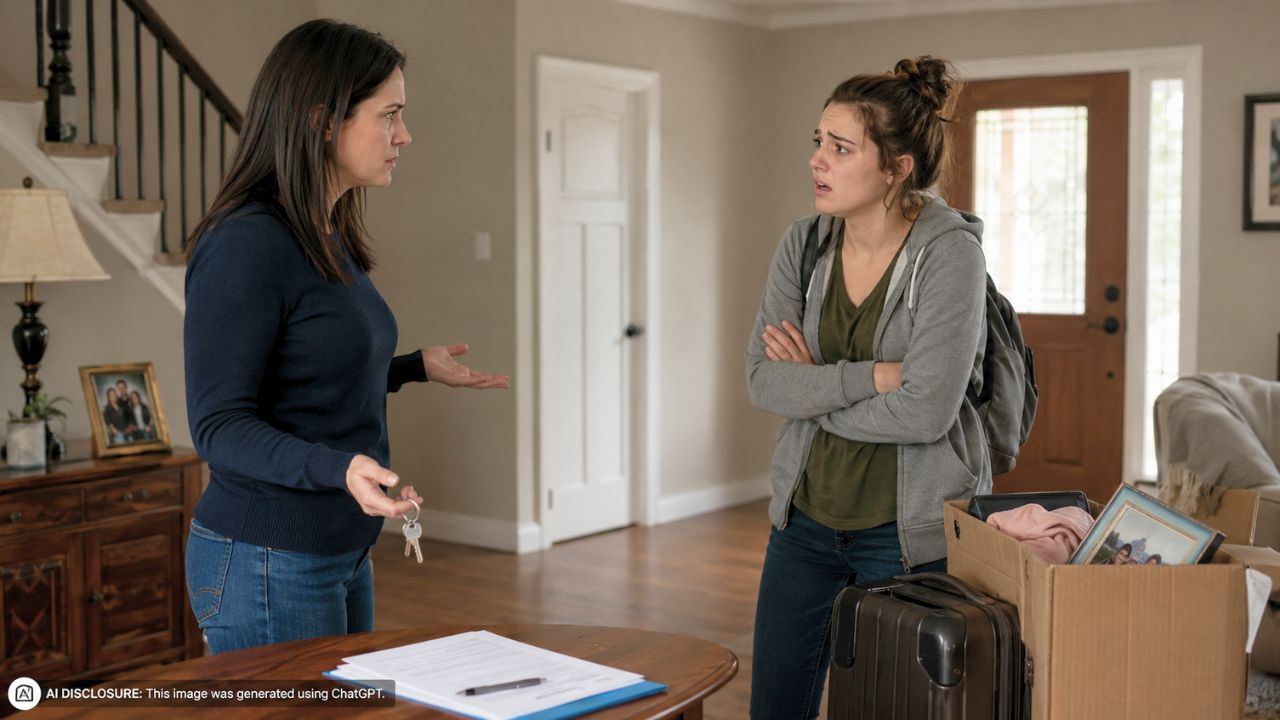
Photo credit: AI-generated image created using ChatGPT. Illustrative only.
A woman who has lived for years in a family home is being told to pack up and leave—not after a landlord dispute or a breakup, but after the death of the people who raised her. In the original post, a family member described asking their informally adopted “sister” to move out of their late mother’s house so the property can be sold.
What makes it messier is that this wasn’t a typical adult roommate arrangement. The woman moved in as a small child after her mother—the family’s housekeeper—died, and the poster’s parents stepped in to raise her. No legal adoption ever happened, but the poster said she was treated as family for years, including school, college, and vacations.
She was raised as family, but never made family “on paper”
The poster said the woman’s mother died when her daughter was under 5 years old. After that, the poster’s parents “basically raised her,” covering major expenses and bringing her along in a way that, in practice, sounded like an adoption without the paperwork.
Growing up, she became a kind of sister figure to the poster and the poster’s two biological siblings. But even with that shared household history, the emotional bonds never fully formed. The poster described their family dynamic as “very cold and distant,” including between siblings.
That detail matters because the current fight isn’t only about money or a deed. It’s also about what obligations still exist when affection was limited, roles were blurry, and legal ties were never created.
The inheritance left one person holding the keys
The poster’s father died about three years ago, and their mother died this year. After their mother’s death, the estate was divided: the two siblings received their shares, and the poster received the house and some money.
The woman who was raised with them is still living in the home. The poster emphasized that they don’t live in the U.S., and said that where they live, it’s normal for children to remain at home until marriage. In other words, her staying in the house didn’t look unusual in daily life—even if ownership and inheritance were a different matter.
Now the poster wants to sell. That decision turns a quiet, long-running living arrangement into an immediate housing problem: the house can’t be easily sold with someone still inside it, and the poster wants her out so they can “move on from all of this.”
“You need to move out” became the breaking point
The woman asked the poster for monetary support to help her transition. The poster refused, writing that they don’t believe she has a claim to the inheritance and that she has “already had enough.”
She also reached out to the poster’s siblings for money, but the poster said neither sibling responded. That silence fits with the larger family portrait the poster painted: people taking their portions and leaving, with little interest in the emotional aftermath for anyone else in the household.
Other relatives, however, aren’t staying quiet. The poster said family members think the woman should receive “at least” something. From their perspective, she wasn’t a temporary guest—she was raised under that roof, and now she’s being displaced because the legal system doesn’t recognize what the family did informally years ago.
For the poster, it’s simpler: the house is theirs, the inheritance was decided, and selling it is part of closing out a chapter that never felt loving in the first place. But selling a family home while someone who grew up there is still living inside it creates a very specific kind of pressure—one that can escalate quickly if it turns into a refusal to leave or a drawn-out eviction battle.
The real-world stakes: housing, timing, and how ugly it can get
Once a property is headed for sale, time starts working differently. There are practical concerns—showings, paperwork, buyers who don’t want complications—but also the human reality that the person being asked to leave needs a place to go and money to get there.
Even without a formal adoption, the woman likely built her entire adult stability around the assumption that this was her home base. If she’s lived there continuously into adulthood, moving isn’t just emotional; it can require deposits, a lease, transportation, and a short runway to find work or reorganize life.
On the other side, the poster may be thinking about their own financial plans, or about distributing assets, or simply not wanting to maintain a property that carries family grief. The problem is that “I inherited it” and “I want to move on” don’t automatically solve the immediate challenge of removing a long-term occupant without blowing up what’s left of extended family ties.
That’s where these stories often turn: a conversation becomes a deadline; a deadline becomes conflict; conflict becomes formal notices, police calls, or court processes. The poster didn’t describe taking those steps yet, but the request for her to move is already producing fallout within the wider family.
Reactions centered on fairness—and the difference between legal rights and moral ones
The post itself framed the question as whether the poster is wrong for asking her to leave so the home can be sold. But the strongest tension in the details is the mismatch between how the woman was treated for years and how she is treated now that assets are being distributed.
Relatives pushing for her to receive something appear to be responding to that mismatch. Even if she has no formal entitlement, they seem to believe the family created an expectation by raising her and allowing her to remain in the home. To them, support now may feel less like charity and more like finishing the job the parents started.
The poster, meanwhile, points to the lack of legal adoption and the family’s emotional distance as reasons not to feel responsible. The underlying message is that the parents chose to help, but the children didn’t sign up for lifetime obligations—and now the poster wants to treat the living arrangement as something that can end when it becomes inconvenient.
The quiet detail that the siblings took their shares and didn’t even reply to her request adds another layer: whatever “family” meant in childhood, the adults are acting like strangers at the moment she needs help most.
A house sale can close an estate, but it can also reopen old wounds
For the poster, selling the house sounds like a clean ending: a way to liquidate an asset, cut ties, and move forward after both parents’ deaths. For the woman still living there, it’s the opposite—a destabilizing reset that forces her to start over, potentially without resources, and with the painful knowledge that the family she grew up with doesn’t consider her entitled to anything.
No one in the story described an easy relationship. That’s part of why the dispute is so blunt: it isn’t happening between people who call each other every week. It’s happening between adults who shared a childhood roof and are now colliding over the last tangible piece of their parents’ legacy.
If the poster follows through with a sale, the next steps will likely depend on whether the woman leaves voluntarily and whether the family can agree on some form of transition support. Either way, the moment the house goes on the market, what used to be an informal promise—“you belong here”—turns into a hard deadline.
Check out more from Now Rundown:
- A Party of 12 Came Back a Month Later Demanding Their $80 Tip Refunded — My Restaurant Made Me Pay It
- Her Coworker Kept Filing the Same Complaint About Her After Being Warned — Then She Filed a Counter-Report With Every Email Documented
- Siblings Demanded Half of Their Sister’s $11 Million Inheritance — She Refused Because They Never Visited
- The Kid I Bullied in Middle School Just Interviewed for a Job on My Team — He Bombed It and I Didn’t Hire Him

Abbie Clark is the founder and editor of Now Rundown, covering the stories that hit households first—health, politics, insurance, home costs, scams, and the fine print people often learn too late.