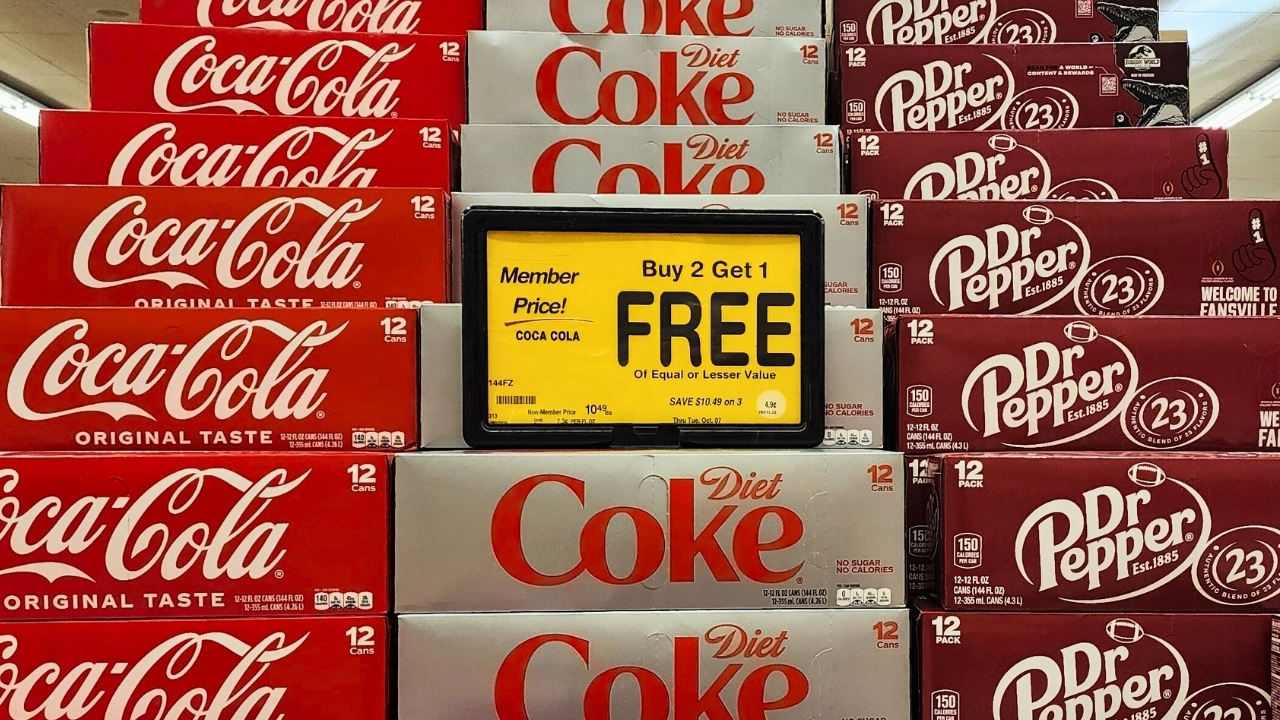
Bundles: When “Savings” Cost You More
Photo credit: Craigs2118/Shutterstock.com
Bundled deals promise to simplify your life and shrink your bills, yet the fine print often tells a different story. When you stop assuming that every package is a bargain and start pricing the pieces on their own, you often find that the “discount” quietly inflates what you pay. The real risk is not that bundles exist, but that you treat them as automatic savings instead of a choice you evaluate with the same discipline you bring to any other purchase.
If you treat every bundle as a guaranteed win, you hand pricing power to the seller and give up your own. The companies designing these packages understand how to mix convenience, psychology, and opaque pricing to nudge you into spending more than you intended. Your job is to reclaim that control, recognize when you are paying a fair premium for convenience, and walk away when the package is simply a more expensive way to buy what you actually use.
The seductive logic of “more for less”
Bundling works on you because it feels like common sense: if you buy more, you should pay less per unit, and if you combine services, you should get a break on the total. That logic is not wrong in theory, but it becomes dangerous when you stop checking the math. The moment you accept that a package must be cheaper simply because it is marketed as a bundle, you are doing exactly what pricing strategists hope you will do, which is to equate volume and convenience with savings without verifying either.
Retailers and service providers lean into that assumption by framing bundles as a reward for being a “smart” or “loyal” customer. You see it in everything from streaming add‑ons to “triple‑play” internet packages that combine broadband, television, and phone service. The pitch is always that you are getting more value for less money, but careful analysis of bundled pricing, such as the warnings laid out in detailed cost reviews, shows that the promised discount often disappears once you strip away extras you do not need and compare the core components on a like‑for‑like basis.
Why convenience is a feature, not a discount
One of the most powerful levers in any bundle is convenience. You are busy, your attention is limited, and there is real value in having one bill, one login, or one box arrive at your door. The key is to recognize that convenience is a product you are buying, not a hidden rebate. As Jan notes in a close look at packaged pricing, there is genuine value in this kind of simplicity and it is perfectly reasonable to pay for it, as long as you understand that you are paying for ease, not automatically saving money by default.
When you treat convenience as a feature, you can decide how much it is worth to you in dollars instead of letting it blur your view of the underlying prices. A curated grocery delivery that spares you a weekly trip might justify a modest premium, but that does not mean the markup on every item is acceptable. Analyses of consumer bundles, including Jan’s breakdown of how People routinely pay more for the comfort of a single package, show that the convenience surcharge can quietly grow far beyond what most customers would accept if they saw it itemized. Your task is to decide where your personal line sits and to walk away when the convenience tax crosses it.
The assumption of savings and how it backfires
The most expensive part of many bundles is not any single product, it is the assumption that the package must be cheaper. Once you internalize that belief, you stop asking basic questions like “What does each piece cost on its own?” and “Would I buy all of these items if they were not grouped together?” The core warning in the analysis titled Avoid The Assumption of Savings is that this mental shortcut is exactly what allows sellers to tuck higher margins into packages that look like deals on the surface.
Once you assume a bundle is a bargain, you are more likely to accept upsells, larger sizes, or longer commitments than you would tolerate if you were buying each component separately. That is how you end up with a streaming package that includes sports you never watch, a phone plan with far more data than you use, or a “family” software license when you live alone. The reporting on bundled pricing shows that this pattern is not accidental. It is a deliberate strategy that relies on your willingness to equate the word “bundle” with “discount” instead of treating it as a neutral description of how products are grouped.
How sellers design bundles to tilt the math
Companies do not assemble bundles at random. They study what you are most likely to buy, what you are reluctant to pay full price for, and which extras have high margins but low perceived value when sold alone. Then they combine those elements into packages that feel like a bargain even when the total quietly exceeds what you would pay if you bought only what you actually use. Detailed pricing breakdowns in pieces like Beware of Bundles show how this structure lets sellers hide expensive components behind a few highly visible “discounted” items.
One common tactic is to anchor your perception of value on a single, heavily promoted element of the bundle, such as a flagship streaming service or a premium channel, and then quietly pad the rest of the package with add‑ons that carry higher margins. Another is to present a “good, better, best” ladder where the middle bundle looks reasonable only because it is framed against an overpriced top tier. By the time you reach the checkout page, the structure of the offer has nudged you toward a package that maximizes revenue for the seller, not savings for you, even though the marketing language emphasizes how much you are supposedly cutting from your bill.
Real‑world traps: from telecom to subscriptions
You see the cost of misplaced trust in bundles most clearly in sectors that rely on recurring payments. Telecom companies, for example, have long pushed packages that combine home internet, television, and landline service, often with a teaser rate that expires after a year. When you compare the ongoing price of that bundle with a stand‑alone internet plan plus the streaming services you actually watch, the package frequently turns out to be more expensive over a two or three year horizon, especially once promotional discounts vanish. Analyses of bundled offers highlight how the initial “savings” can evaporate once regular pricing kicks in and you are locked into equipment fees or channel lineups you do not use.
Subscription software and digital services follow a similar pattern. Productivity suites, cloud storage, and security tools are often sold as all‑in‑one memberships that promise a lower combined price than buying each app separately. Yet when you audit your usage, you may find that you rely on only one or two components while paying every month for a half‑dozen extras that sit idle. Reporting on consumer behavior in these markets shows that People routinely underestimate how little they use the full contents of a bundle, which is exactly what allows these packages to generate steady revenue from features that would struggle to sell on their own.
How to audit a bundle before you buy
To protect yourself, you need a simple, repeatable way to test whether a bundle is actually a deal. Start by listing every component of the package and asking whether you would buy it on its own at the implied price. If the seller does not publish individual prices, you can often approximate them by looking at similar stand‑alone products or by checking how the same company prices smaller packages. The guidance in Jan’s analysis of bundled offers emphasizes that you should treat this exercise as a basic cost comparison, not a hunt for hidden tricks. Your goal is to see the bundle as a set of line items rather than a single, monolithic product.
Next, factor in the value of convenience explicitly instead of letting it blur your judgment. If having one bill or one app saves you time or reduces stress, assign a rough dollar value to that benefit and add it to the total you are willing to pay. Then compare that figure with the actual cost of the bundle. If the package still looks attractive after you account for both the individual prices and your personal convenience premium, it may be a fair deal. If not, you have clear evidence that the bundle is designed to extract more from you under the guise of simplicity, which is exactly the pattern highlighted in the warnings to avoid assumption‑driven savings.
When paying extra is actually worth it
Not every bundle that costs more than the sum of its parts is a bad decision. There are moments when you knowingly pay a premium because the package solves a problem you care about more than the incremental dollars. A roadside assistance plan that comes with your car insurance, for example, might be more expensive than buying a stand‑alone towing membership, but if it integrates seamlessly with your insurer’s claims process and gives you a single point of contact in an emergency, that integration can justify the higher price. The key is that you are making that trade‑off consciously instead of assuming that the bundle must be cheaper.
Jan’s observation that there is real value in convenience, and that People routinely pay for it, is not an argument to reject bundles outright. It is a reminder that you should separate the emotional comfort of having everything in one place from the financial reality of what you are being charged. When you do that, you can say yes to packages that genuinely fit your needs and no to those that simply exploit your instinct to equate “more” with “better.” The moment you stop treating bundles as automatic bargains and start treating them as offers that must earn their place in your budget, you turn a common marketing tactic into a tool you control instead of a trap that quietly drains your wallet.