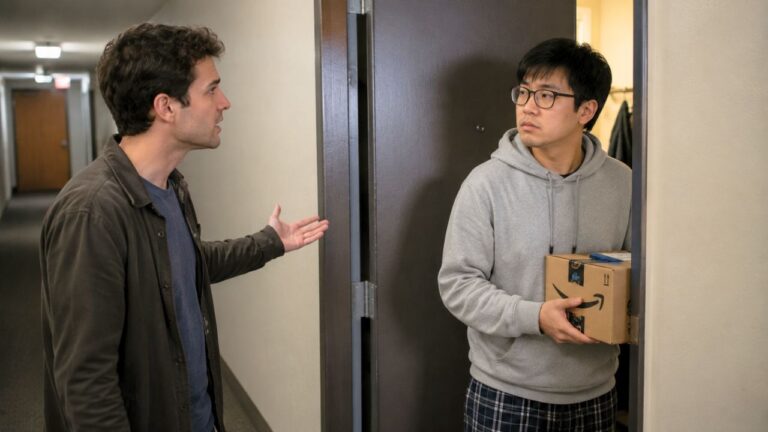
Apartment Leasing Office Employee Allegedly Stole His Bank Details — Then Used Them to Pay Her Own Bills
Photo credit: Premreuthai/Shutterstock.com
A tenant says he trusted his apartment leasing office with the kind of information renters often have no choice but to hand over.
Bank details. Payment records. Personal information. Everything needed to pay rent and keep housing stable.
Then he says one of the leasing office employees used that access to pay her own bills.
He explained in a Reddit post that an employee connected to his apartment leasing office allegedly stole his bank information and used it for her personal expenses. That instantly turned a normal landlord-tenant relationship into a financial security nightmare.
Renters already have limited control in these situations. The leasing office may require bank account information for rent payments, autopay, deposits, fees, or portal setup. A tenant can try to be careful, but at some point, the office has access to sensitive information because housing depends on it.
That is what makes the alleged theft feel so invasive.
This was not a random scammer sending a fake text or stealing a card at a gas pump. This was someone tied to the place where he lived. Someone who may have had access because of her job. Someone connected to the office that handled his rent account and housing paperwork.
When a leasing employee misuses that kind of information, the damage goes beyond unauthorized charges. It makes the tenant wonder what else she could access. His address was obvious. His bank details were exposed. His lease file may have included ID copies, contact information, employment details, emergency contacts, vehicle information, and possibly other documents.
That is a lot of trust to lose at once.
The immediate financial problem was the unauthorized payments. If someone uses your bank account to pay their own bills, you are left trying to get the money back, prove you did not authorize the charges, stop any future withdrawals, and make sure the bank does not treat it like a normal transaction.
That process can be frustrating because banks and billers often want documentation. The tenant would likely need to dispute the transactions, freeze or close the compromised account, open a new one, and redirect legitimate rent payments so his own housing was not disrupted.
That last part matters.
If the compromised account was tied to rent autopay, simply shutting it down could cause rent problems unless he also notified the property office in writing and set up a safer payment method. But continuing to use the same account after an employee allegedly stole from it would feel risky.
Then there is the criminal side.
A police report would likely be important, especially because the alleged thief could be identified through the bill payments. If she used his bank information to pay her own utilities, phone bill, credit card, or other account, there may be a transaction trail pointing directly to her name or account number.
That is more concrete than many fraud cases.
The leasing office’s response would matter too. Did management know? Did they fire the employee? Did they report it? Did they notify other tenants? Did they preserve records showing who accessed his payment information? Did they have safeguards, or could employees see bank details too easily?
Those questions could determine whether the issue was one rogue employee or a bigger security failure inside the apartment office.
Commenters likely pushed him to stop treating it as only a property-management complaint and move directly through the bank and police. The leasing office might want to handle it internally to avoid embarrassment, but the tenant needed his own paper trail. He needed bank dispute records, police report numbers, written communication with management, screenshots of charges, and any admission or evidence connecting the employee to the payments.
He also needed to consider whether other accounts were at risk. If the employee had enough information to pull from his bank account, she may have had enough to try other fraud. A credit freeze, new passwords, updated banking credentials, and monitoring would all be reasonable next steps.
The emotional part is just as real. Your apartment should be the place you go home to after dealing with stress. But when someone in the leasing office allegedly steals from your bank account, even paying rent starts feeling unsafe. Every email from the office becomes suspicious. Every portal login feels risky. Every employee interaction is colored by the fact that someone inside may have used tenant information for herself.
The tenant did not only need reimbursement.
He needed proof the leak had been closed.
Because once a leasing employee uses a renter’s bank details to pay her own bills, the rent office stops feeling like an office.
It starts feeling like part of the crime scene.
Commenters mostly told him to contact his bank immediately, dispute the unauthorized transactions, and ask whether the account needed to be closed and replaced.
Several people said he should file a police report because the payments may create a clear trail to the person who used the bank details.
A lot of commenters urged him to communicate with the apartment complex in writing and ask what information was accessed, who accessed it, and what steps were being taken to protect tenants.
Others said he should freeze his credit or at least monitor it closely, since leasing files can contain far more personal information than just rent-payment details.
The strongest advice was simple: do not let the leasing office handle this quietly. Protect the bank account, create a police record, and make management respond in writing.

Abbie Clark is the founder and editor of Now Rundown, covering the stories that hit households first—health, politics, insurance, home costs, scams, and the fine print people often learn too late.