I Cut Off My Mother Completely After She Compared Defending My Fiancé to Protecting My Childhood Abuser
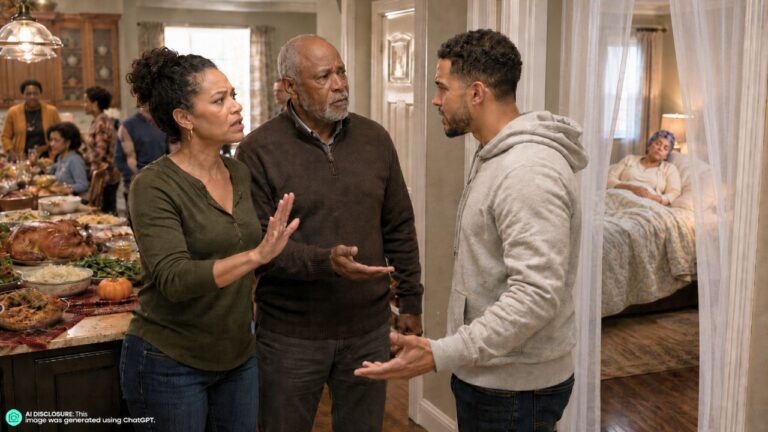
Photo credit: AI-generated image created using ChatGPT. Illustrative only.
A 29-year-old woman says she didn’t just “take space” from her mother—she cut contact completely, stopped visiting, and even started calling her by her first name. The break came after a fight that began with a messy misunderstanding and ended with a comparison that dragged her childhood trauma back to the surface.
In her telling, it wasn’t one blow-up that pushed her over the edge. It was years of feeling like she could never do anything right, paired with a pattern of her mother “getting drunk and starting fights,” then rewriting the story afterward. This time, though, the line she says her mother crossed wasn’t something she could shrug off or smooth over later.
The fight that started with a car and spiraled fast
The trigger was a disagreement at her mother’s home while the woman was at work. Her fiancé, 31, asked her mom where her car was. Her mother told him her younger daughter, 26, was borrowing it for a few hours.
According to the woman, her mother then claimed the fiancé said something insulting about “those kids.” The mother allegedly started screaming at him, ordering him to leave and never come back. The woman insists her fiancé didn’t say it, and she describes him as the one who steps in to help her mother when she needs it.
When the fiancé called her at work to tell her what happened, she says she was instantly furious—pacing, face red, feeling like she was “on fire.” She wanted to storm over, but didn’t. Instead, she waited and texted her mother later that night, demanding an apology and accusing her of lying.
A familiar pattern: drinking, provoking, then shifting the blame
In her post, the woman describes her mother as someone who “find[s] new and excited ways to get under my skin.” She says her mom frequently starts fights, especially when drinking, and says “whatever she wants.”
That context matters because the daughter doesn’t frame this as a one-off misunderstanding. She frames it as a long-running cycle: provocation, escalation, and then a version of events that makes the mother look wronged while everyone else is expected to make peace.
This time, the daughter wasn’t willing to play along. She pushed back hard, taking her fiancé’s side and calling out what she saw as dishonest behavior. That’s when the argument reportedly took its darkest turn.
The comparison that ended the relationship
Her mother responded by telling her that defending her fiancé was “the exact same” as her mother defending the uncle who molested the daughter when she was 8 years old. The woman says she snapped immediately, telling her mother never to compare her fiancé to “that” person again.
Then she did something she hadn’t planned on doing in the middle of a fight: she spelled out what happened to her as a child. She says she texted her mother “everything that he did to me and how long,” along with what she learned at 8 years old that she says no child should have to know.
Instead of backing down, her mother allegedly doubled down, telling her it was the same, while also saying she didn’t need to know those details. For the daughter, that wasn’t just cruel; it felt like it erased the difference between a supportive partner and someone who abused her.
She says the fallout was immediate and physical: nightmares returned, she woke up in panic, and she felt like years of recovery had been “wasted.” At that point, the fight wasn’t about a comment in a driveway anymore—it was about whether her mother could be trusted with her safety, her reality, and the most painful parts of her past.
No contact, a new boundary, and a mother who won’t tell the whole story
After the blow-up, the daughter told her mother never to speak to her again. The next day, her mother texted as if the fight was minor, telling her to come over because it had been “a few days.” The daughter responded with a hostile gesture and told her to go away.
Her mother answered with the kind of message the daughter says she’s heard before: that she “can’t say that” because she’s her mother, and that kids need to respect their mothers. The daughter shot back that respect is earned, and that she doesn’t owe her anything.
She also says her mother has been telling other people a simplified version: that her daughter refuses to visit or speak to her because she told the fiancé to leave her house. The daughter says that’s not the real reason—and that her sister has tried to correct that narrative by telling their mother the real issue was what she said about the childhood abuse.
Even with that clarification, other people in the family circle have reportedly pressured the daughter to forgive. Her response has been blunt: if anyone “stands with” her mother, she’ll cut them off too.
The full account appears in the original post, where she asks whether she’s wrong for going fully no-contact and using her mother’s first name instead of “Mom.”
What people around her focused on: forgiveness versus self-protection
While the daughter’s post is the main window into what happened, it also shows the split she’s now dealing with in real life. One side is pushing reconciliation, arguing that cutting off a parent is too extreme or that forgiveness is required. The other side—represented most clearly by her sister’s reaction—seems to view the comparison as uniquely harmful and unnecessary.
The pressure campaign is familiar in families where blowups are followed by a rush to “keep the peace.” But in this case, the peace comes with a cost: the daughter says the remark reopened trauma symptoms she had worked to manage for years. That turns the question from manners and tone into something much more practical: whether staying in contact creates an ongoing mental health and emotional safety risk.
There’s also the issue of reputation management. The mother, according to the daughter, is already telling a version of events that leaves out the most damaging detail. That matters because it shapes who feels comfortable inviting whom to holidays, who gets labeled “dramatic,” and who gets isolated. For the daughter, correcting the record seems less about winning an argument and more about preventing her mother’s version from becoming the family’s accepted truth.
Where it leaves them now
Two months after cutting contact, the daughter is still holding the line. She’s not visiting, not speaking, and not softening the boundary to make other people comfortable. Even the symbolic change—calling her mother by her first name—signals that she no longer recognizes the relationship in the way she once did.
And the central wound hasn’t been addressed: the mother hasn’t apologized for making the comparison, and the daughter doesn’t describe any attempt at repair beyond a casual “come see me” text. Without accountability, any reunion would likely restart the same cycle, only with more people involved and more emotional damage to clean up afterward.
For now, the daughter’s stance is clear. She can tolerate family tension, gossip, and pressure. What she says she can’t tolerate is being told, even once, that defending her partner is somehow comparable to excusing the person who abused her when she was a child.

Abbie Clark is the founder and editor of Now Rundown, covering the stories that hit households first—health, politics, insurance, home costs, scams, and the fine print people often learn too late.