My Brother Wants to Put a $200,000 Mortgage on Our Family’s Lake House — I Refuse to Sign My Share
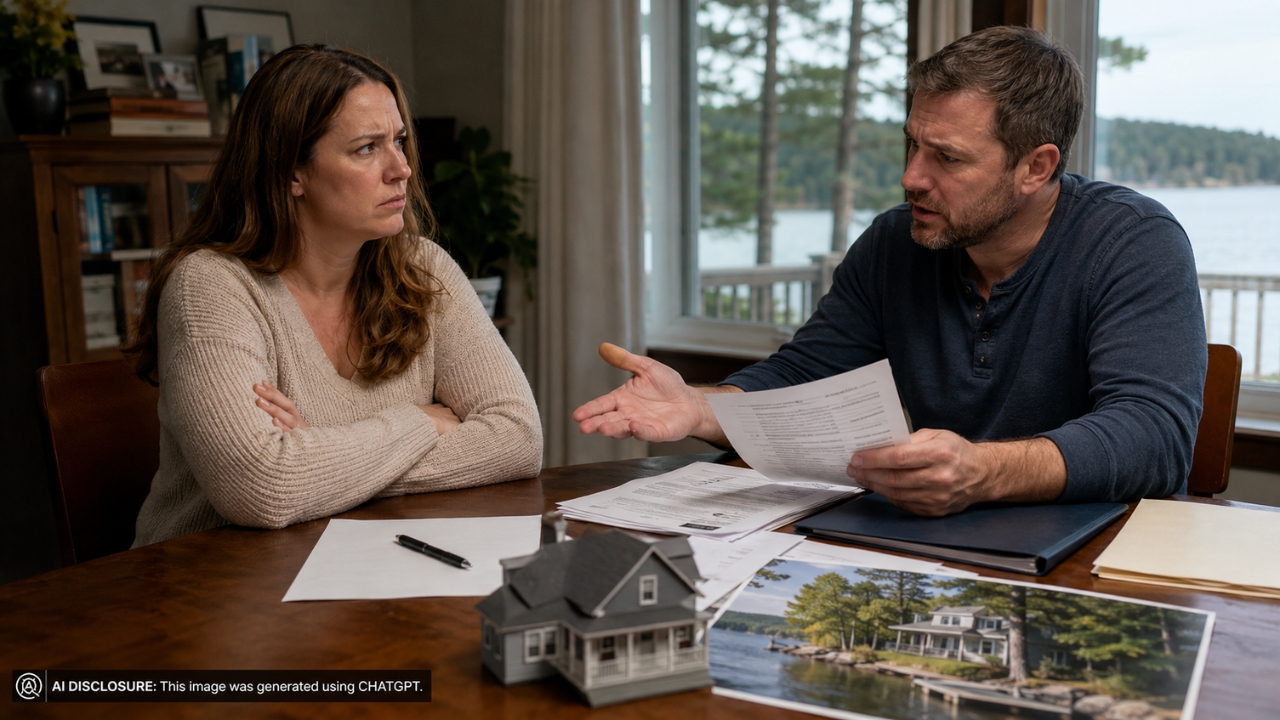
Photo credit: AI-generated image created using ChatGPT. Illustrative only.
The lake house has always been treated like a shared family promise: one day it would pass down to the kids, and everyone would keep it going in the meantime. But when one brother started talking about taking out a $200,000 mortgage against it, the other sibling drew a hard line—no signature, no deal.
The standoff isn’t just about money. It’s about who actually has the right to make decisions, what happens to the property if their father’s health declines, and whether the family is already fighting over an inheritance that technically hasn’t arrived yet.
The mortgage idea landed before the paperwork did
From the family’s perspective, the plan was simple: the siblings would “get the house when he passes,” meaning their father intended for the lake house to go to them later. That expectation is what made the proposed mortgage feel like an immediate threat. A lien on the home could change everything about what they inherit—or whether there’s anything left to inherit at all.
The sibling refusing to sign saw the mortgage as a major escalation, not a routine refinancing decision. But the key detail that quickly changed the conversation was blunt: the father is still alive, and the house is still in his name. That means the brothers can argue all day about what should happen, but their legal control may be close to zero.
In the discussion, commenters immediately pushed on basics that many families don’t confront until there’s a crisis: who is on the deed, who pays the taxes, and who is responsible for long-term care if dementia or assisted-living needs enter the picture.
“You don’t own it”—and that changes what anyone can sign
The most repeated point from readers was simple and unforgiving: if the father never signed over the deed, the children don’t own the property. One person asked directly whether the father had “sign[ed] over the deed in 2008,” and when the answer came back that the siblings would receive it only after he died, the reaction hardened.
Multiple commenters emphasized there may be “nothing to sign over” because the house is currently part of the father’s assets. In other words, if the brother is trying to mortgage it now, he may not have the authority to do it—unless he has some formal control like power of attorney or is otherwise acting on the father’s behalf. That wasn’t established in the material, but the absence of clear legal standing is exactly what made people skeptical of the brother’s push.
Just as important: a will can express intentions, but it doesn’t transfer ownership while someone is still alive. Commenters stressed that the brother “can’t change it,” and that even a plan to “get the house when he passes” doesn’t create a current right to borrow against it.
Taxes, pensions, and the bigger question: who pays for dad’s care?
The family argument didn’t stay confined to the lake house for long. It snapped toward a more immediate concern—who is covering the father’s expenses now, and what happens if he needs higher levels of care.
One commenter questioned why the family wasn’t paying the taxes, and the response clarified that their father had been paying them himself. The father also reportedly has “a very nice pension,” but the sibling who responded claimed he’s “wasting it all as fast as he gets it now.” That detail matters, because it changes the emotional temperature: the house isn’t just a future asset, it’s potentially the only stable thing left if cash is being burned quickly.
But several commenters went straight to the uncomfortable reality families face with aging parents: if the father ends up needing assisted living or long-term care, the value of the house may have to be used to pay for it. One person spelled it out plainly: the father’s house “is considered as an asset” and “will be used for his care.” That means the lake house might not be preserved for inheritance at all—mortgage or no mortgage—if care costs rise.
The inheritance fight got messier when life insurance entered the conversation
The tension wasn’t only about borrowing against the property. Another detail surfaced that made the brother’s approach feel more like leverage than planning: he allegedly said he planned to split life insurance three ways “but not anymore.”
That set off alarm bells among commenters, who questioned how a sibling could decide that unilaterally. Life insurance payouts aren’t typically divided by family consensus; they go to whoever is named as beneficiary. If the brother isn’t the policyholder, he may not have any power to change it. If he is the beneficiary, he might have control—but then the threat to “split it” or not starts sounding like a pressure tactic rather than a settled arrangement.
People also pointed out the timing problem: the father is alive, and yet the siblings are already bargaining over who gets what later. That kind of jockeying can get ugly fast, especially if the father’s mental state is declining and decisions are being made around him instead of with him.
Commenters zeroed in on authority, documentation, and the danger of jumping the gun
The strongest pushback didn’t come in the form of moral judgment at first—it was practical. Who is on the deed? Who has power of attorney? What does the will actually say, and where is it stored? If the father is still the owner, the siblings’ refusal to sign may be less a bold stand and more an indicator that the proposed mortgage can’t legally happen without the father’s participation.
Some commenters were harsher about the family dynamics. One described it as “typical family fighting over the inheritance when the relative isn’t even dead yet,” and argued that the focus should be on using the home’s value to make “the remainder of their father’s life comfortable.” Another suggested the father had “let it go because he physically can’t do it anymore,” framing the lake house not as a prize but as a burden that may already be slipping out of the family’s ability to maintain.
There was also a darker undercurrent: dementia. A commenter noted that if the father has dementia, changes to estate plans could be challenged, and that the whole situation is a minefield if someone is attempting to act on his behalf without clear capacity and documentation.
A house at the lake, a family at odds, and no easy way to keep everyone whole
On the surface, the conflict reads like a straightforward sibling disagreement over a loan. But the details point to a more fragile reality: the property is still the father’s, the father may be burning through income, and care costs could force a sale regardless of what any of the brothers want.
The refusal to sign is a boundary, but it doesn’t solve the deeper question of who is making decisions for the father right now and whether those decisions are being made to protect him or to protect a future inheritance. Until the family gets clarity on legal authority and the father’s care plan, the lake house is likely to remain less of a retreat and more of a pressure point—one that keeps pulling the siblings back into the same argument, only louder each time.

Abbie Clark is the founder and editor of Now Rundown, covering the stories that hit households first—health, politics, insurance, home costs, scams, and the fine print people often learn too late.