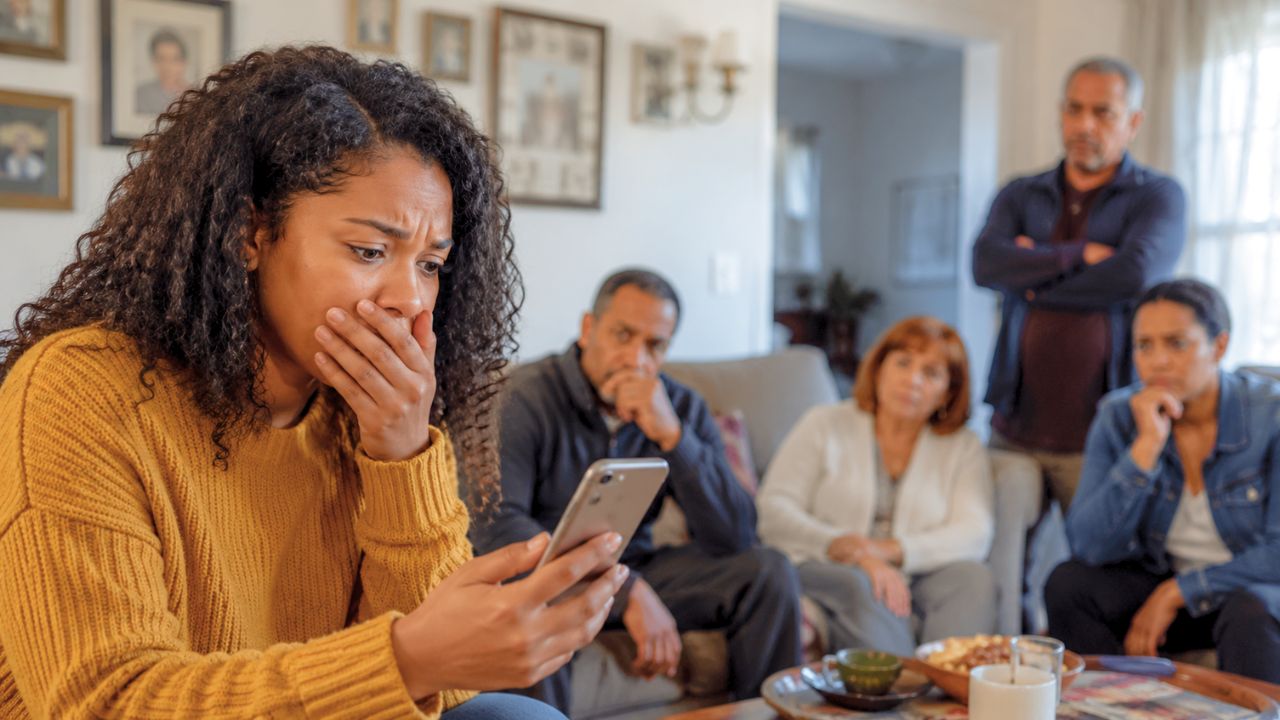
Sister Texted His Entire Family About Her Mental Health History Before Their First Meeting
Photo credit: Nowrundown.com
By the time Nora pulled into her boyfriend’s parents’ driveway, her stomach was already doing that pre-meeting flip. She’d spent extra time on her hair, picked a safe-but-pretty outfit, and rehearsed the basics in her head: smile, be polite, let them talk about themselves, don’t overshare.
She was there to meet Ethan’s family for the first time—a backyard lunch with his parents, his sister, and a couple relatives who happened to be in town. Normal. Manageable. Except her phone kept buzzing with Ethan’s texts that were getting weirder by the minute.
His last message before she got out of the car: his sister had “sent something” to the family group chat and it “might be intense,” but he didn’t want her to walk in blindsided.
The problem started as “helpful” concern
Nora and Ethan had been dating for eight months. They weren’t rushing anything, but they were solid—weekend trips, grocery runs, meeting each other’s friends, the whole comfortable routine. Ethan knew Nora had a mental health history because she’d told him early on, the same way you disclose anything important when you’re serious about someone.
She’d been treated for anxiety and depression in her early twenties and had one hospitalization after a scary medication change. Now she was stable, working, consistent with appointments, and honestly proud of the life she’d built. It wasn’t a secret, but it also wasn’t something she announced at brunch.
Ethan’s sister, Maren, had always struck Nora as the “family manager” type. The one who hosted holidays, kept everyone’s birthdays, and spoke for the group without being asked. She was friendly enough the one time Nora ran into her at a coffee shop, but it was the kind of friendliness that felt like an assessment.
So when Ethan casually mentioned that Maren wanted “everyone to be comfortable” at the first family lunch, Nora figured it meant normal stuff—dietary preferences, maybe a heads-up that Ethan’s dad tells long stories.
It didn’t.
The text message turned private history into a group topic
On the drive over, Ethan finally explained: Maren had sent a long message to the entire family group chat that morning. Not just his parents and their other sibling, but a rotating cast of aunties, an uncle, and a cousin who used the chat to share recipes and complain about airline delays.
Maren’s message described Nora’s mental health history in detail. Not as gossip, not as a question—more like a briefing. She included that Nora had been hospitalized once, that she took medication, and that she sometimes got overwhelmed in crowds. She also added “suggestions” for the lunch: keep conversation calm, avoid “triggering topics,” and don’t offer alcohol.
Nora hadn’t told Maren any of that. Ethan had.
That part hit Ethan like a delayed punch, because in his mind he’d shared it in a protective way. He hadn’t realized Maren would treat it like a safety notice for a workplace meeting. And he definitely hadn’t imagined she’d send it to people Nora had never met.
By the time Nora arrived, Ethan was already upset. Not enough to cancel, though. He kept saying it was “done now” and they should just get through lunch and address it later.
Nora sat in the car for a second, staring at her reflection in the mirror. She wasn’t embarrassed of her past. She was furious that it had been packaged and distributed like a warning label.
The first meeting felt like walking into a spotlight
Ethan’s mom opened the door with a tight smile that didn’t match her words. She hugged Nora a little too carefully, like Nora might crack. His dad shook her hand and asked if she was “doing okay today,” which sounded supportive until you realized they’d never met her before and didn’t ask Ethan that way.
In the backyard, the relatives kept doing tiny glances that stopped the second Nora looked up. The cousin offered her a sparkling water before she even sat down and said it with a weird brightness, like it was part of an agreed plan.
Maren arrived last, breezing in with a salad bowl and the energy of someone who had already decided she’d been the responsible one. She hugged Nora and asked, quietly but not quietly enough, whether she preferred “a calm space” if she needed a break.
Nora felt the heat rush up her neck. She didn’t want a calm space. She wanted her own story to be hers.
Ethan tried to redirect, asking his dad about a home project, but Maren kept orbiting Nora. She steered topics away from anything even mildly emotional. When an aunt started talking about a messy divorce in the extended family, Maren cut in and said they should “keep it light.”
It turned Nora into the reason everyone had to perform. She could sense them monitoring themselves around her, and it made her feel less like a guest and more like an unpredictable factor they’d been warned about.
Halfway through lunch, Nora excused herself to the bathroom. She wasn’t having a breakdown. She was trying not to cry from anger.
When Nora confronted her, Maren doubled down
In the hallway, Nora found Maren putting something in the fridge. Nora kept her voice low and said she’d been told about the group chat message. She asked why Maren thought it was appropriate to share personal medical information with people Nora hadn’t even met.
Maren didn’t apologize. She acted surprised Nora was upset. She said she was “just trying to prevent awkwardness” and that families share things so nobody says the wrong thing. She framed it like a kindness—like she’d done Nora a favor by making sure everyone was “informed.”
Nora told her it wasn’t Maren’s information to share. Maren shrugged and said Ethan had told her, so she assumed it was fine. Then she added that she’d dealt with “situations” before in the family and didn’t want “drama” at her parents’ house.
That word—situations—landed like an insult. Nora wasn’t a situation. She was Ethan’s girlfriend.
Ethan walked in on the end of it and asked what was going on. Maren immediately turned it into a misunderstanding, saying Nora was “sensitive” about people knowing. Ethan snapped back that it wasn’t sensitivity, it was privacy, and that Maren had broadcast something that wasn’t hers.
The sound carried. His mom appeared at the end of the hall, concerned but also annoyed, like she could already feel the pleasant lunch slipping away.
Nora grabbed her purse. She told Ethan she wanted to leave. Ethan hesitated for a second—just a second—like he was weighing the social cost. That hesitation did more damage than anything Maren had said.
People around them picked sides fast
In the driveway, Ethan apologized repeatedly, saying he never meant for it to become a family message. He admitted he’d vented to Maren once early in the relationship when he was worried about saying the wrong thing, and he’d trusted her to keep it between them.
But inside the house, the narrative was already forming. Ethan’s mom texted him that Nora leaving was “proof” she wasn’t ready to meet them. An aunt sent a separate message to Nora—sweet on the surface—saying she hoped Nora was taking care of herself and that they were “all rooting for her.”
Even that felt like being patted on the head.
Nora’s own friends weren’t subtle. They were angry on her behalf, asking why Ethan’s sister had access to that information at all and why Ethan didn’t shut the lunch down the moment he saw the text. One friend pointed out that if this was how the family handled private information, it would only get worse with bigger milestones.
Ethan’s brother, meanwhile, texted Ethan that Maren had crossed a line. But he also suggested Ethan smooth it over because their mom would be upset for weeks, and Maren would take it personally. The usual script: keep the peace, absorb the damage, don’t rock the system.
The relationship didn’t end, but it changed shape
That night, Nora told Ethan she wasn’t comfortable meeting anyone else in his family for a while. Not because she couldn’t handle it, but because she didn’t trust that her life wouldn’t become family material again. She also told him, plainly, that she needed to know he could protect her privacy even when it made things uncomfortable.
Ethan agreed to call Maren and tell her she owed Nora an apology and needed to delete the message thread. Maren refused to apologize in the way Nora needed. She offered a version of regret that was more about Nora’s reaction than her own behavior, and she insisted she’d “only been trying to help.”
So Nora took a step back. She didn’t ban Ethan from seeing his family. She just stopped putting herself in rooms where she would be handled like fragile glass. Ethan started visiting them without her, and every visit came back with a new ripple—his mom hinting that Nora was controlling, Maren insisting Nora was holding a grudge, someone suggesting Nora should “move forward.”
Nora didn’t want revenge. She wanted the basic dignity of meeting people as herself, not as a file someone forwarded. And for now, the damage was simple and heavy: the first impression was already set, and the only person who could have prevented it was the person she was dating.
Weeks later, Ethan asked if they could try again with just his parents, somewhere public and low-stakes. Nora didn’t say no. She just didn’t say yes right away, either. She needed time to see whether Ethan could stop treating his sister like the family spokesperson—and start treating Nora like the partner he claimed she was.
Check out more from Now Rundown:
- A Party of 12 Came Back a Month Later Demanding Their $80 Tip Refunded — My Restaurant Made Me Pay It
- Her Coworker Kept Filing the Same Complaint About Her After Being Warned — Then She Filed a Counter-Report With Every Email Documented
- Siblings Demanded Half of Their Sister’s $11 Million Inheritance — She Refused Because They Never Visited
- The Kid I Bullied in Middle School Just Interviewed for a Job on My Team — He Bombed It and I Didn’t Hire Him

Abbie Clark is the founder and editor of Now Rundown, covering the stories that hit households first—health, politics, insurance, home costs, scams, and the fine print people often learn too late.