Sister Posted the First Photo of the Baby Online Before the Parents Had a Chance To
Photo credit: Nowrundown.com
The baby had been in the world for less than three hours when the notification started buzzing on the new mom’s phone. She was still hazy from the delivery, hair stuck to her forehead, trying to figure out nursing with a nurse gently coaching her. Her partner had stepped out to grab ice chips, and she reached for her phone expecting a sweet message from family.
Instead, she saw a photo of her newborn—fresh, wrinkly, still in that hospital blanket—already posted online. Not in a private family chat. Not sent to grandparents. Public, with a caption announcing the name and birth time like it was a press release.
It wasn’t the parents who shared it. It was her sister.
They’d already made one simple request
During pregnancy, the couple had been clear about exactly one thing: they wanted to be the ones to introduce their baby to the world. They weren’t doing a big “social media is evil” speech. They just wanted the first photo and the first announcement to come from them.
The new mom had dealt with a rough pregnancy and felt like so much had been out of her control already—doctor visits, complications, the stress of waiting. The birth was supposed to be theirs. The first photo was supposed to be theirs too.
Her sister, though, treated that request like it was cute but optional. She was the family’s unofficial broadcaster, the one who posted everything: engagement rings, surprise parties, even other people’s kids’ first day of school pictures. She was always “so excited” and “just sharing the joy.”
Even at the baby shower, she’d tried to snap pictures of the ultrasound printouts while the mom-to-be was opening gifts. The mom had laughed it off then, but she’d also pulled her sister aside and repeated the plan: no posting until the parents did.
The hospital visit that should’ve been safe
They didn’t even want visitors at the hospital. The plan was to wait until they were home, settled, and had slept at least a little. But the sister pushed hard. She promised it would be quick, promised she wouldn’t bring anyone, promised she’d just “peek in and leave.”
The partner didn’t like it, but the new mom was exhausted and emotional and didn’t want a fight right after giving birth. So they agreed to one short visit—only immediate family, only after the golden hour, and no photos shared anywhere.
When the sister arrived, she came in with a big tote bag like she was moving in. She squealed, leaned over the bassinet, and immediately asked if she could take a picture “for grandma.”
The new mom remembers saying yes, but specifically: one picture, and it stays off social media. The sister nodded like she was totally on board.
That was the moment that came back to haunt them. Because the sister didn’t take one photo. She took a dozen, from every angle, including one with the baby’s tiny face fully visible and the hospital name tag in frame.
The first post hit while the parents were still processing the birth
By the time the partner returned to the room, the sister was already walking out, promising to come back “when you’re ready.” Everything seemed fine—until the phones started lighting up.
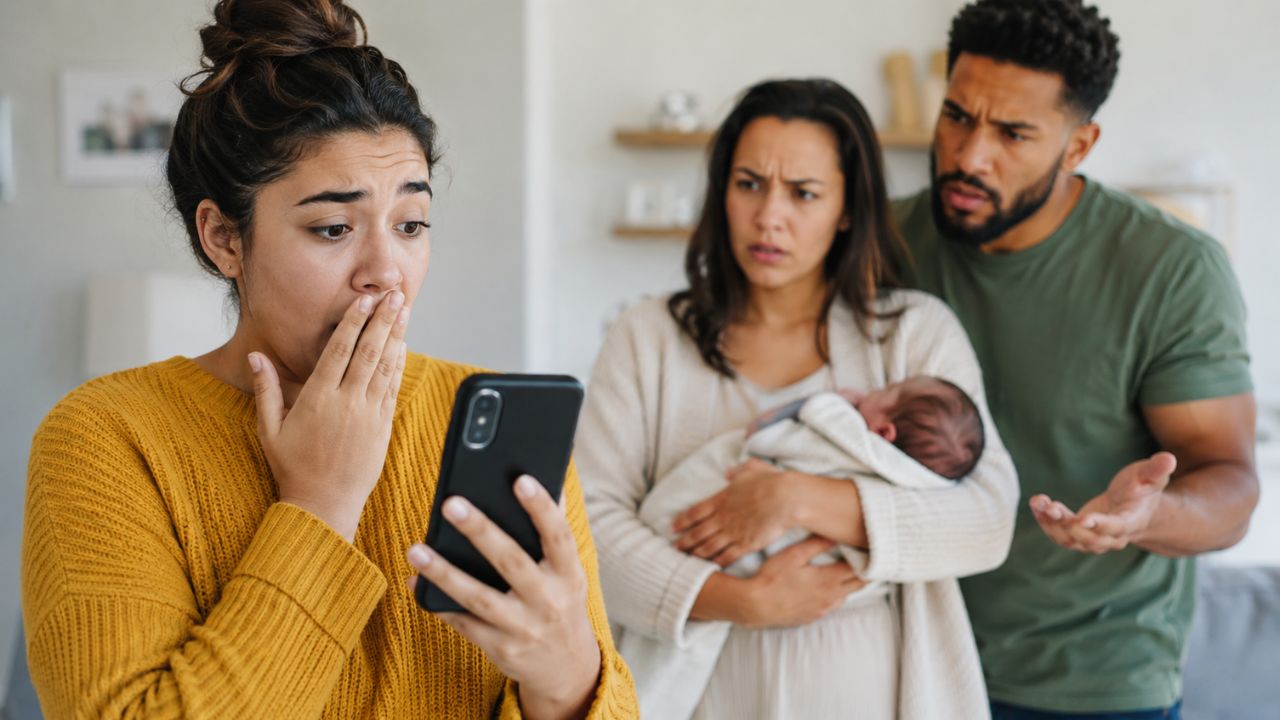
A cousin texted congratulations with a screenshot. A coworker of the partner sent a message that began, “I saw you had the baby!” The new mom’s aunt called, hurt that she “had to find out on the internet.”
When the new mom opened the app, there it was: the baby’s face, the name, the birth weight, and a caption about becoming an aunt “again.” The sister had tagged the partner, tagged the grandparents, and added a handful of heart emojis.
The new mom didn’t even feel angry first. She felt that drop in her stomach, the one that comes when something private is suddenly not yours anymore. Like the room got colder. Like her body wasn’t hers and now her baby’s first moments weren’t either.
The partner, on the other hand, went straight to anger. He didn’t yell in the hospital room, but his voice got quiet and sharp. He told the sister to take it down immediately.
She replied with a message that was basically: it’s not a big deal, everyone is happy, I didn’t think you meant it that seriously. Then she added that she’d already gotten “so many likes” and didn’t want to confuse people.
The apology turned into a debate, and then a power play
When the sister finally removed the post, it wasn’t an apology so much as a performance. She posted a story saying she had to “repost later” because the parents “wanted to announce in their own way,” like she was doing them a favor.
Then she sent a long text to the new mom about how hurt she was. She said she felt “punished” for being excited. She reminded her of all the things she’d done during the pregnancy—helping with the nursery, bringing meals, checking in. She framed the whole thing like a misunderstanding where both sides needed to “move on.”
The new mom wasn’t in a place to negotiate. She was bleeding, exhausted, and learning how to keep a brand-new human alive. She told her sister she didn’t want visitors for a while and that she needed space.
That’s when it got uglier.
The sister went to their mom and dad. She told them she’d been “shut out,” that the partner was controlling, that she was being treated like a stranger. Suddenly the grandparents were calling, not to ask how the mother was healing, but to argue about fairness.
The partner heard the new mom on the phone trying not to cry while her own mother said things like, “She’s your sister,” and “You’ll regret this later,” and “It’s not like she posted anything inappropriate.”
It wasn’t just a post anymore. It was the family deciding who got to call the shots.
People around them didn’t focus on the photo—they focused on the entitlement
Once friends heard what happened, the reactions were immediate and pretty consistent. The new mom’s best friend—who had offered to run interference during the pregnancy—said the sister treated the baby like content. Another friend, also a parent, said the first announcement is one of those moments you never get back, and it shouldn’t be stolen because someone else wants attention.
Even a relative who typically stayed neutral quietly reached out to say she’d seen the post and felt uncomfortable that the baby’s full name was online before the parents had shared it. She pointed out that it wasn’t just emotional; it was privacy. It was safety. It was the parents being the ones to decide what’s public.
Meanwhile, the sister doubled down in her own circle. She told people she was being “iced out” during an already hard time for her. She described herself as the victim of a hormonal new mom and an overprotective partner. That version of the story conveniently left out the part where she’d been told no, clearly, more than once.
The weirdest part was how quickly the baby became the center of a family argument that had nothing to do with the baby. It became about who gets access, who gets credit, who gets to be seen.
The fallout changed the early weeks at home
When the couple finally got home, the new mom thought the storm might settle. Instead, it followed them right to their doorstep.
Her sister showed up unannounced with another bag of gifts and acted like nothing happened. When the partner didn’t open the door, the sister texted that she was “standing outside like an idiot” and that neighbors were watching. The new mom sat on the couch holding the baby, feeling trapped in her own house.
They stopped sharing photos in the family group chat because the trust was gone. The new mom’s parents complained they were being punished, but the couple couldn’t risk another “accident.” The partner also removed tagging permissions and tightened privacy settings, which somehow became another reason the sister said he was “doing too much.”
In the end, the couple set a new rule: anyone who posted the baby without permission would lose photo access for a long time. And the sister, specifically, wouldn’t get fresh pictures at all until she could acknowledge what she did without turning it into a debate.
Weeks later, the sister still wanted it both ways. She wanted to be the doting aunt in public and the wronged party in private. The new mom didn’t want a family war, but she also couldn’t pretend it didn’t matter. She’d waited months to meet her baby, and she didn’t get to hold onto that first announcement the way she’d planned.
Now, every time she takes a picture she loves, there’s a second thought attached to it: who will respect this, and who will treat it like theirs to share.
Check out more from Now Rundown:
- A Party of 12 Came Back a Month Later Demanding Their $80 Tip Refunded — My Restaurant Made Me Pay It
- Her Coworker Kept Filing the Same Complaint About Her After Being Warned — Then She Filed a Counter-Report With Every Email Documented
- Siblings Demanded Half of Their Sister’s $11 Million Inheritance — She Refused Because They Never Visited
- The Kid I Bullied in Middle School Just Interviewed for a Job on My Team — He Bombed It and I Didn’t Hire Him

Abbie Clark is the founder and editor of Now Rundown, covering the stories that hit households first—health, politics, insurance, home costs, scams, and the fine print people often learn too late.