MIL Live-Streamed the Hospital Waiting Room Before She Had Told Her Own Family She Was in Labor
Photo credit: Nowrundown.com
By the time the contractions were close enough to make counting pointless, Leah had stopped checking her phone. She and her husband, Jordan, were doing that quiet, focused thing couples do in triage—breathing, answering questions, signing forms, trying to pretend the fluorescent lights aren’t making everything feel ten times harsher.
Then Jordan’s screen lit up with a notification from his mom.
Not a text. Not a “How’s she doing?” A live video.
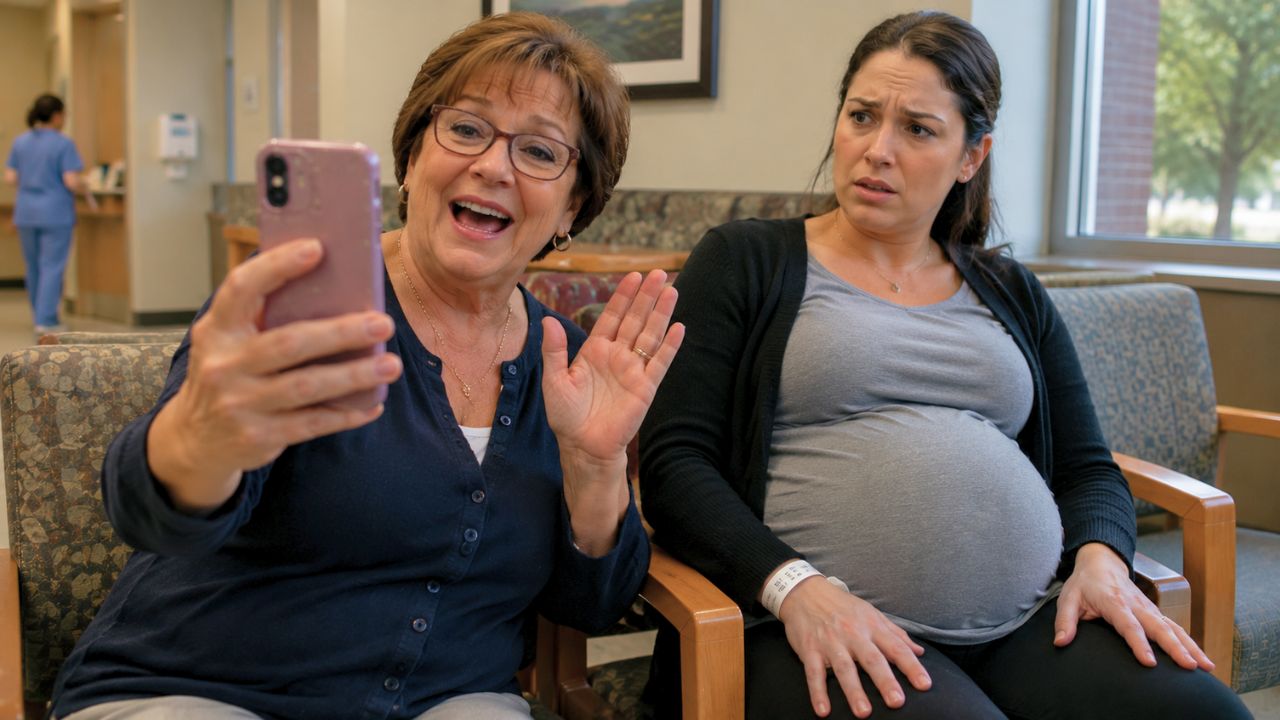
There it was: the hospital waiting room, panning slowly over the vending machines, the TV mounted in the corner, and Jordan’s mother perched in a chair like she was hosting a talk show. The caption was something like “Baby watch!” with a bunch of heart stickers.
The problem started before they ever got to the hospital
Leah had already been careful about information. Her pregnancy had been mostly smooth, but Jordan’s mom had turned it into a season-long event. Every appointment became something she wanted updates on. Every bump photo became something she wanted to share. If Leah didn’t respond quickly, Jordan’s mom would send follow-ups that sounded cheerful but landed like pressure.
So Leah and Jordan agreed on a plan: they wouldn’t tell anyone labor had started until they were settled. No play-by-play. No waiting room camp-outs. Just them focusing on the baby.
They told Leah’s family that she was “having a quiet weekend.” Jordan, trying to keep the peace, told his mom they were staying in and would call if anything changed. He thought that was enough.
It wasn’t.
Because Jordan’s mom had a different relationship with the word “private.” In her mind, exciting news wasn’t real until it was shared, and the bigger the audience, the better.
How she ended up broadcasting from the waiting room
When Leah’s labor started overnight, Jordan stepped into the hallway to call his mom and simply say they were heading in. He didn’t want her to worry if he didn’t answer later. He also didn’t want her to show up.
He didn’t say the hospital name. He didn’t give room numbers. He didn’t tell her to come.
But within an hour, while Leah was getting monitored and answering the same intake questions between contractions, Jordan’s mom somehow appeared anyway. She’d guessed the hospital based on where Leah’s OB practiced and where Jordan had been born. Then she texted Jordan a photo of the waiting room chairs like it was a cute surprise.
Jordan sent back a message telling her to go home. He said they weren’t having visitors and that labor was still early. She didn’t respond.
Instead, she opened her phone and went live.
Leah didn’t even know until Jordan’s cousin messaged him: asking if everything was okay because “your mom’s streaming from the hospital.” That’s how Jordan found out his mother had announced the labor online before she had even told some of her own siblings.
The moment Leah realized she’d lost control of her own day
Jordan showed Leah the screen because he didn’t want her blindsided later. It was a mistake and he knew it the second her face changed.
Leah wasn’t worried about strangers seeing a waiting room. She was worried about what came next. If Jordan’s mom would livestream this part, what would stop her from filming the nurse’s station, the hallway, the door with their last name on a whiteboard?
Leah started shaking, not from fear exactly, but from a rush of anger that made her feel cold. She’d spent months carefully keeping things calm, choosing what to share, trying not to make pregnancy feel like a group project.
Now, with her body doing something massive and vulnerable, she was watching someone else treat it like content.
Jordan messaged his mom again, more direct. He told her to turn it off immediately and leave. When she didn’t, he called.
She answered on speaker, still sounding upbeat, like he was interrupting a fun hangout. She said people were excited, that it was “just family and friends,” that she wasn’t showing anything sensitive. Then she offered to swing by the front desk to “see if they’d let her up.”
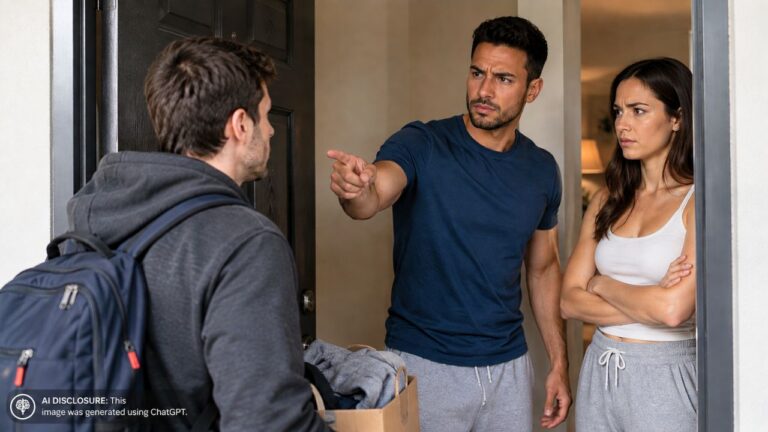
That last part snapped Jordan into action. He left Leah with the nurse and walked straight out to the waiting room.
The staff got pulled into it, and it got ugly fast
Jordan found his mom holding her phone at arm’s length, narrating the scene like it was a countdown show. She saw him and, without even ending the video, angled the camera toward him.
Jordan didn’t yell. He just told her to end it. Now.
She tried to laugh it off, saying viewers wanted to see “Dad-to-be energy.” Jordan told her again, and when she still hesitated, he stepped closer and asked her to leave the hospital.
That’s when she got offended. She said she had a right to be there. She said she’d “driven all this way.” She said Leah was “keeping the baby from the family.” She said Jordan was being disrespectful.
A security guard noticed the raised voices and approached. Jordan didn’t have to explain much. The guard looked at the phone, looked at Jordan, and asked Jordan’s mom to stop recording. The guard told her the hospital didn’t allow filming in public areas, especially not livestreaming.
Jordan’s mom finally ended the video, but she didn’t go quietly. She argued, demanded to speak to someone “in charge,” and tried to turn it into a big scene where she was the wronged party.
Security escorted her out.
Leah didn’t see any of it. She just saw Jordan come back in with that drained look people get when they’ve been forced to parent their own parent.
Family reactions made it worse, not better
Within minutes, Jordan’s phone started lighting up. His aunt asked why she hadn’t heard anything about the labor and why Jordan’s mom was saying she’d been “kicked out.” A cousin sent a screenshot of the livestream announcement that someone had reposted before it ended.
Leah’s sister, who hadn’t even known Leah was in labor, found out when a mutual friend messaged her asking if she was “at the hospital yet.” That was the part that felt the most humiliating for Leah—her own family learning about her delivery through secondhand social media chatter.
Jordan tried to shut it down by sending one group message: Leah was safe, they were not accepting visitors, and they would share updates when ready. He asked everyone to stop posting and stop forwarding anything.
Some relatives listened. Others didn’t.
Jordan’s mom, now outside the hospital, started texting him long paragraphs about gratitude and how “everyone was just excited.” She made it about her emotions, her intentions, her experience of becoming a grandmother. In the middle of labor, she was still trying to be the main character.
After the baby arrived, the apology came with strings
Leah’s delivery ended up being longer than she expected, and she was exhausted in that bone-deep way that makes everything feel sharp. When the baby finally arrived, Leah and Jordan waited hours before telling anyone. They needed a quiet stretch to breathe, to hold their baby without phones and opinions pressing in from all sides.
When they did send the announcement, Leah’s family was relieved but hurt. They weren’t angry at Leah, but the weirdness lingered—like they’d been robbed of the chance to hear it directly.
Jordan’s mom asked to come to the hospital the next day “to make it right.” Leah said no. Jordan backed her up.
That’s when the apology came. It included a lot of “I didn’t realize,” and “I was just excited,” and “people begged me to go live.” It also included a request: she wanted Leah to publicly reassure everyone that she hadn’t done anything “that bad,” because she felt embarrassed that security walked her out.
Leah read the message, then handed the phone back to Jordan. She didn’t have the energy to argue. She also didn’t have the energy to pretend it was small.
Jordan told his mom they weren’t discussing it now, and they wouldn’t be sharing photos with anyone who posted without permission. He said visits would happen later, when Leah was healed and ready, and only if everyone could respect their rules.
His mom didn’t like that answer. She told other relatives Leah was “controlling.” She hinted that Jordan had changed. She started talking about how “grandparents have rights,” which made Leah’s stomach drop even more than the livestream had.
So Leah and Jordan got practical. They asked the hospital to flag their file for privacy, they told staff not to give out information, and they tightened their circle for a while.
The baby went home to a quiet apartment, curtains drawn, phones on silent. The waiting room show was over, but the aftermath wasn’t. Leah wasn’t sure when she’d feel comfortable being around her mother-in-law again, and Jordan was realizing the version of “keeping the peace” he’d practiced his whole life came with a price his new family couldn’t afford to keep paying.
Check out more from Now Rundown:
- A Party of 12 Came Back a Month Later Demanding Their $80 Tip Refunded — My Restaurant Made Me Pay It
- Her Coworker Kept Filing the Same Complaint About Her After Being Warned — Then She Filed a Counter-Report With Every Email Documented
- Siblings Demanded Half of Their Sister’s $11 Million Inheritance — She Refused Because They Never Visited
- The Kid I Bullied in Middle School Just Interviewed for a Job on My Team — He Bombed It and I Didn’t Hire Him

Abbie Clark is the founder and editor of Now Rundown, covering the stories that hit households first—health, politics, insurance, home costs, scams, and the fine print people often learn too late.