HOA Fined Her While Giving Her Neighbor a Pass for the Same Violation
Photo credit: Nowrundown.com
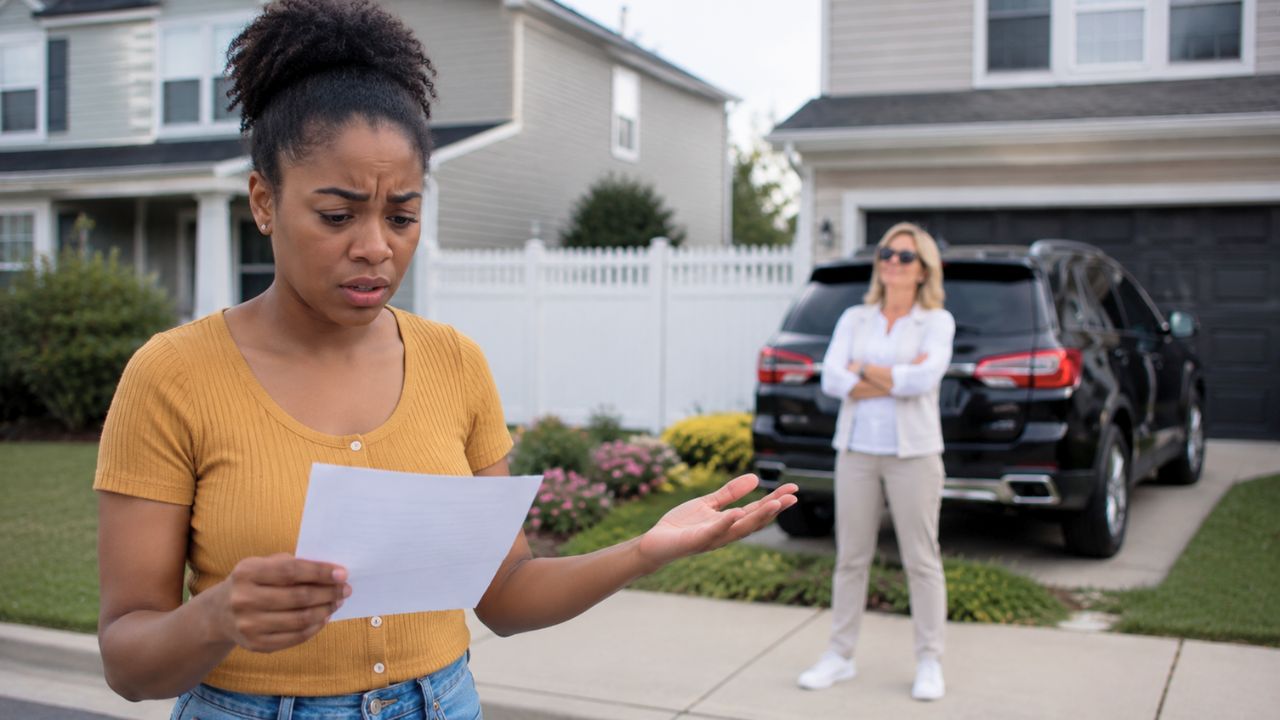
It was a plain white envelope taped to the inside of her storm door that made her stomach drop.
The notice looked official in that annoying way HOA notices always do—lots of bold text, lots of deadlines, and a number at the bottom that felt like a slap. She’d been cited for a “visible refuse container” and charged a fine that was already stacking daily fees if she didn’t fix it within 48 hours.
She stood there in her socks, holding the paper with one hand and her phone with the other, staring straight across the street at her neighbor’s trash bins. The same bins. The same placement. In fact, his were more visible than hers, angled right toward the sidewalk like they were posing for a listing photo.
And yet she was the one being penalized.
The problem started before the big blowup
She and her husband had moved into the neighborhood two years earlier because it felt calm and “family.” There were mature trees, a playground, and those tidy little rules that promised nobody would paint their house neon green on a whim.
She didn’t love the HOA, but she tolerated it the way most people do: pay the dues, smile at the holiday wreath contest, and hope nobody becomes the rule police.
Then her son started kindergarten, and mornings became chaos. On trash day, she’d roll the bins out before sunrise, then rush inside to pack lunches and wrangle shoes. More than once, the bins stayed at the curb until after work. Not overnight for days—just past whatever perfect time the HOA had decided was acceptable.
Her neighbor across the street did the same thing. Sometimes longer. Sometimes his bins sat out through the weekend like they were permanent lawn decor.
No one seemed to care until one particular board member started doing evening walks.
The notice felt personal, and that’s what made it sting
At first she told herself it was random. An unlucky day. A drive-by. Maybe they’d cited the whole street.
But when she checked the HOA portal, she saw photos attached to her violation file. Not just one, but multiple angles. Someone had taken the time to frame her driveway, her bins, and the side gate like they were documenting a crime scene.
She walked across the street later that afternoon and looked at her neighbor’s setup again, just to make sure she wasn’t losing it. Two bins still parked near the curb. Lid slightly ajar. One of those little wind-blown paper scraps caught underneath.
She took a picture with her phone, not because she wanted drama, but because she could feel the familiar sinking feeling: the one where you realize you’re being singled out and you’re expected to just swallow it politely.
That night at dinner, she showed her husband the notice and the photos. He tried to calm her down at first, suggesting they just move the bins and pay the fine to make it go away. But when she showed him the picture of the neighbor’s bins still sitting out, his face changed.
It wasn’t just about trash cans anymore. It was about fairness.
She asked a simple question, and the HOA made it worse
She emailed the HOA management company with what she thought was a reasonable message. She included the rule, the date, and her own photo from across the street. She asked if the policy was being enforced consistently and requested that the fine be waived since others were in the same violation window.
The reply came the next morning, short and cold. They thanked her for “bringing concerns to their attention,” confirmed her fine was valid, and reminded her that “other homeowners’ compliance is not subject to discussion.”
That line—like her eyes didn’t matter, like fairness was gossip—made her hands shake.
So she did what the HOA practically forces people to do: she went to the board meeting.
It was held in a community clubhouse with fluorescent lighting and folding chairs. She came prepared with printed photos and the violation notice, trying hard to keep her voice steady. She explained that she’d corrected the issue immediately but didn’t understand why she’d been fined when her neighbor’s bins had been sitting out just as long, sometimes longer.
One board member shifted uncomfortably. Another kept his eyes on his laptop. And then the president—who lived two streets over and had been unusually friendly with her across-the-street neighbor—said something about “case-by-case” enforcement and “not everything is as it seems.”
It didn’t answer the question. It just implied she was the problem for asking.
The neighbor’s “pass” turned into a whole neighborhood issue
After the meeting, she didn’t confront her neighbor immediately. She didn’t want to be that person. But within a week, she got a second notice—this time for her front yard sign.
It was one of those little kid-school signs she’d put up on the first day of kindergarten, and she’d forgotten to pull it up. The HOA claimed it violated a “temporary signage” rule and slapped another fine on it, even though seasonal signs were everywhere. Someone had a giant skeleton in their yard in October. Another house had a sports flag up year-round.
That’s when she stopped believing it was coincidence.
Her husband finally went across the street on a Saturday when the neighbor was washing his truck. He brought it up casually, like, hey, have you been getting any notices about your bins? The neighbor shrugged and said he hadn’t, then made a joke about how he’d “never had trouble” with the HOA.
What he didn’t say mattered as much as what he did. No surprise. No concern. No, that’s weird, they’ve tagged me before.
Later, another neighbor texted her privately. They’d also been fined recently for weeds, even though there were yards on the corner with grass up to a toddler’s knees. The message wasn’t dramatic. It was just tired. Like, it’s happening to you too?
Suddenly it wasn’t one family vs. an HOA. It was a pattern.
People around her had opinions, and they weren’t subtle
Once word got around, the reactions came in waves. Some neighbors were sympathetic but cautious, like they were afraid the HOA might hear them agreeing out loud. They’d whisper support at the mailbox and then change the subject quickly.
Others were blunt. One mom at pickup told her the board had “favorites,” and if you weren’t friends with the right people, you got hit with fines over tiny things. Another neighbor said the president had been known to enforce rules when he was annoyed at someone, especially if that person had complained about anything in the past.
Then there were the ones who acted like she should just accept it. A retired guy down the street told her that HOAs were “like this,” and fighting would only make them look harder for violations. It wasn’t advice so much as a warning: be quiet, or it gets worse.
That warning scared her. But it also made her angry, because what kind of neighborhood requires you to be scared of your own mailbox?
At home, the stress started leaking into everything. She’d tense up every time a car slowed near the house, convinced it was someone photographing her yard. She stopped letting her son ride his scooter in the driveway with chalk because she didn’t want a chalk drawing to turn into a violation.
Her husband tried to keep things normal, but she could tell he was watching too. Checking the side gate, glancing at the bins, pulling the blinds when headlights hit the living room.
She didn’t get the apology, but she did get louder
Instead of paying quietly, she requested a formal hearing for the fines. She showed up with a folder: her photos, dates, screenshots of the HOA portal, and copies of the bylaws. She didn’t accuse anyone of bias outright. She just kept repeating the same point: rules are rules, and selective enforcement is a problem.
This time, the tone in the room shifted. The management rep looked uncomfortable. One board member asked to see the neighbor’s compliance history, and the president tried to steer the conversation away from “other lots.” But the paper trail was there now, and it was harder to wave her off.
They agreed to reduce the fines if she corrected the issues, which she already had. Not a full waiver, not an apology. But it was the first time they budged at all.
Still, she left the hearing knowing the bigger problem hadn’t been fixed. The next week, her neighbor’s bins were suddenly tucked neatly behind his fence every single time. Like someone had finally given him a heads-up.
She didn’t feel victorious. She felt proven right in the most annoying way possible.
Now she’s not just double-checking her own yard. She’s paying attention to elections, meeting dates, and who keeps getting “randomly” fined. Her husband calls it her new hobby. She calls it not being an easy target.
And when she sees that plain white envelope on someone else’s door, she doesn’t look away anymore. She walks over, asks what happened, and tells them they’re not crazy for noticing who gets away with what.
Check out more from Now Rundown:
- A Party of 12 Came Back a Month Later Demanding Their $80 Tip Refunded — My Restaurant Made Me Pay It
- Her Coworker Kept Filing the Same Complaint About Her After Being Warned — Then She Filed a Counter-Report With Every Email Documented
- Siblings Demanded Half of Their Sister’s $11 Million Inheritance — She Refused Because They Never Visited
- The Kid I Bullied in Middle School Just Interviewed for a Job on My Team — He Bombed It and I Didn’t Hire Him

Abbie Clark is the founder and editor of Now Rundown, covering the stories that hit households first—health, politics, insurance, home costs, scams, and the fine print people often learn too late.