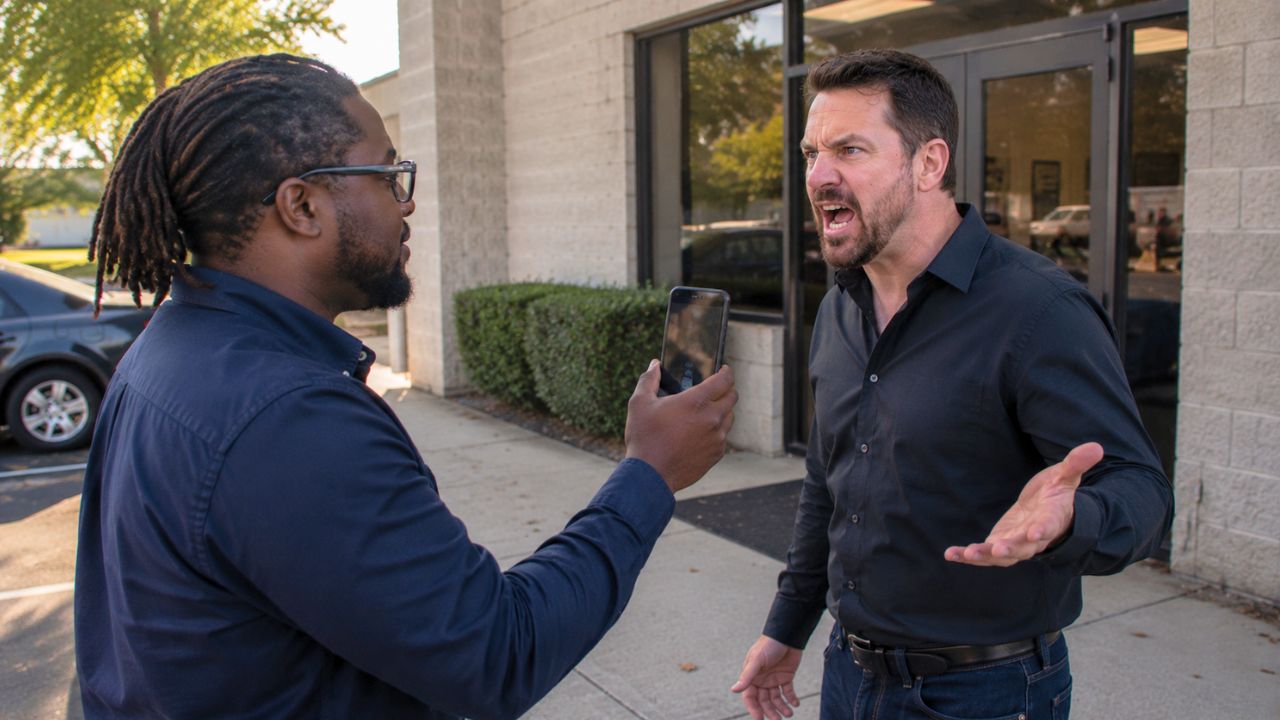
Road-Rage Driver Followed Him to Work — Then Claimed Recording the Confrontation Was Illegal
Photo credit: Nowrundown.com
A Wisconsin driver said a road-rage encounter followed him all the way to work, then took another strange turn when the angry driver allegedly claimed it was illegal to record the confrontation.
The driver shared the situation in a post on r/legaladvice, explaining that the incident started on the road but did not end there. According to the post, another driver became angry enough to follow him to his workplace.
That alone made the situation feel more serious than a normal traffic argument. Road rage is scary when it happens between cars at a light or on the highway. But when another driver follows someone to a destination, especially a workplace, the person being followed has to think about what comes next. Will the driver get out? Will they confront them in the parking lot? Will they now know where the person works? Could they come back later?
The driver chose to record the encounter.
That is a common instinct now. When someone feels threatened, recording can feel like protection. It creates proof of what was said, who was there, what the other person looked like, and how the interaction unfolded. But the angry driver allegedly pushed back by saying it was illegal to record people and that he was going to report the poster.
That threat added another layer of stress. The person who had been followed to work was now wondering if recording the road-rage confrontation could somehow get him in trouble. Instead of focusing only on the man who followed him, he had to ask whether his own attempt to document the incident was legally risky.
The situation raised a few different questions. Was it legal to record video in the parking lot or outside the workplace? Did audio matter? Did Wisconsin’s recording laws apply differently if the conversation was happening in public? Could the other driver report him for filming? Should the worker file a police report because he had been followed?
The workplace setting also mattered. If the confrontation happened at work, the driver may have had coworkers, supervisors, security cameras, or customers nearby. The angry driver may have created a safety issue not only for the poster but also for the business.
The post did not describe the driver seeking revenge or trying to embarrass the other person online. It read like someone trying to preserve evidence after a stranger escalated a road-rage incident beyond the road itself.
That is what made the “you can’t record me” claim feel especially frustrating. The person making the accusation was allegedly the one who followed him to work. Yet he was also trying to make the recording sound like the real problem.
Commenters focused on two separate issues: the road-rage driver following him and the legality of recording.
Several people explained that recording someone in a public or semi-public place is often different from secretly recording a private conversation, but the exact answer can depend on state law and whether audio was captured. Commenters urged the poster to look at Wisconsin’s rules carefully if the video included sound.
Still, many commenters did not think the angry driver’s claim automatically meant the poster had done anything wrong. They treated the “you can’t record me” line as something people often say when they do not want their behavior documented.
Others said the more important issue was that the driver had followed him to work. Commenters suggested preserving the video, writing down the time and location, saving any license plate information, and considering a police report if the encounter felt threatening.
Some also advised notifying the workplace. If a road-rage driver now knew where the poster worked, a manager or security staff might need to know in case the person returned. Even if the situation ended that day, having a record at work could matter later.
There was also practical advice for future road-rage incidents. Commenters said not to drive directly to work or home if someone is following you. A safer option is to call police, keep driving, and head toward a police station, fire station, busy public place, or somewhere with cameras and people nearby.
The post did not end with the other driver charged or the recording reviewed by police. It ended with the driver trying to understand whether his attempt to document a frightening confrontation had created any legal trouble.
That is what made the situation so stressful. He was followed to work, recorded the person confronting him, and then got threatened with being reported for the recording.
Commenters did not tell him to delete the video or accept the angry driver’s claim. They told him to preserve the footage, understand the local recording law, document the encounter, and treat being followed to work as the bigger concern.
Because when road rage follows someone into a workplace parking lot, the issue is not only who yelled first. It is whether the target has proof, a record, and a plan if the person comes back.
Check out more from Now Rundown:
- A Party of 12 Came Back a Month Later Demanding Their $80 Tip Refunded — My Restaurant Made Me Pay It
- Her Coworker Kept Filing the Same Complaint About Her After Being Warned — Then She Filed a Counter-Report With Every Email Documented
- Siblings Demanded Half of Their Sister’s $11 Million Inheritance — She Refused Because They Never Visited
- The Kid I Bullied in Middle School Just Interviewed for a Job on My Team — He Bombed It and I Didn’t Hire Him

Abbie Clark is the founder and editor of Now Rundown, covering the stories that hit households first—health, politics, insurance, home costs, scams, and the fine print people often learn too late.