Man Says Road Rage Driver Waited on the Freeway and Threw Something at His Car
Photo credit: Now Rundown
A driver said a frightening road rage encounter left him wondering whether filing a police report could put him at more risk.
The driver shared the situation in a post on r/legaladvice, explaining that the confrontation started while he was driving on the freeway. According to his post, another driver became aggressive after what seemed like a normal traffic issue. The other person allegedly began following him, driving erratically, and turning the situation into something much more serious than a bad moment on the road.
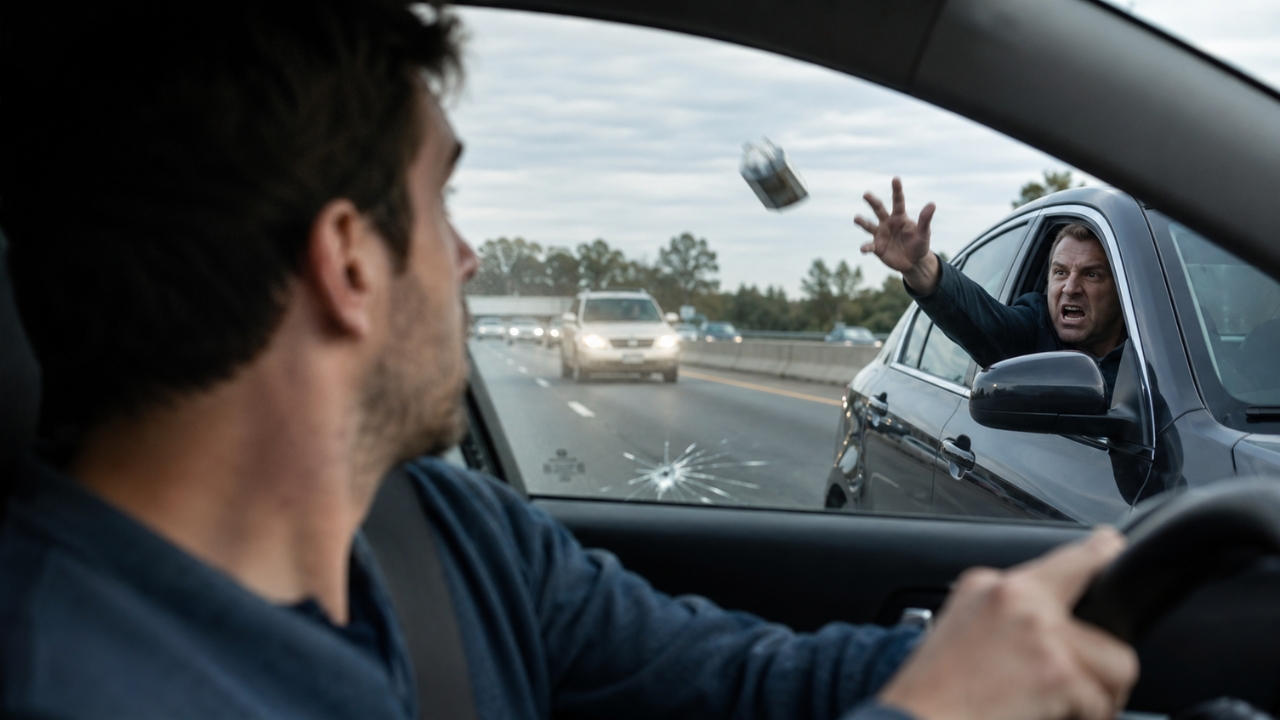
The driver said he tried to get away from the other vehicle, but the other driver did not simply move on. Instead, the person appeared to wait for him on the freeway.
That detail made the whole encounter feel different. Road rage is scary enough when someone tailgates, honks, yells, or cuts another car off. But someone allegedly waiting on the freeway suggests the anger did not pass after a few seconds. It suggests the driver made a choice to keep the confrontation going.
According to the post, the other driver then threw something at the man’s car. The object damaged the vehicle, and the man was left with more than just a shaken-up story. He had property damage, fear, and the unsettling realization that the person who did it had been close enough and angry enough to target his car directly.
The driver did what many people would do afterward: he started thinking about whether he should file a police report.
But he was worried. His concern was not only whether police would take the report seriously. He wanted to know if filing a report might expose his name, address, or other personal information to the road rage driver. If the other person was already angry enough to wait for him and throw something at his car, the driver wondered what might happen if that person learned who had reported him.
That fear shaped the whole post. He was not trying to ignore what happened. He was trying to decide whether reporting it could make the danger worse.
The concern is understandable. Many people are told to report aggressive drivers, especially when there is damage or a threat. But when someone has already acted irrationally, it can feel risky to create a legal trail that might eventually identify you.
The driver’s question became less about the damage itself and more about safety. Would a police report help protect him? Would it start a process that made the other person angrier? Would his personal information become part of something the other driver could access?
The post did not describe a long-standing feud, a known neighbor, or a person he could identify easily. It was a public-road encounter with a stranger. That can make it more frightening because there is no obvious way to predict what the other person might do.
In a neighborhood dispute, you may know where the problem is coming from. In a workplace conflict, HR might know who the other person is. On the freeway, the driver is just another person in another car, and the encounter can feel random and out of control.
The damage to the car gave the driver a concrete reason to report it. But the fear of retaliation made him hesitate.
Commenters Urged Him to Report It Anyway
Commenters generally told the driver that he should file a police report, especially because the incident involved damage and allegedly dangerous behavior on a freeway.
Several people said the report could help if he needed to make an insurance claim. Even if police did not immediately find or charge the other driver, having a record could matter later. Without a report, the damage might be harder to explain or document.
Others said the behavior sounded serious enough that police should at least have the information. A road rage driver who waits on the freeway and throws something at another car may not stop with one incident. Commenters argued that reporting it could help establish a record if the same driver had done something similar to someone else.
A few commenters addressed the fear directly. They explained that police reports can sometimes be accessible in different ways depending on location and case status, but that did not mean the driver should avoid reporting a dangerous incident. Some suggested asking the police department how victim information is handled in that jurisdiction and whether any address information could be kept private or limited.
Others told him to write down everything while it was fresh: the time, location, direction of travel, description of the vehicle, license plate if he had it, the object thrown, damage to the car, and any witnesses or dashcam footage. If he had photos of the damage, commenters said he should save those too.
There was also practical advice about what to do in the moment if it ever happened again. Commenters said not to drive home if someone is following you. Instead, drive to a police station, fire station, busy public place, or well-lit area while calling 911. They also said not to get out of the car to argue, even if the other driver tries to force a confrontation.
The story’s tension came from the gap between what the driver knew he probably should do and what he feared might happen next.
He had already experienced a stranger acting aggressively enough to damage his car. It makes sense that he did not want to invite more attention from that person. But commenters kept returning to the same point: doing nothing could also carry risk.
If the driver filed a report, he might worry about retaliation. If he did not, there would be no official record, no case number for insurance, and no way for police to connect the incident to any future pattern.
The post did not end with the other driver being found or charged. It ended with the driver weighing a practical safety decision after a public confrontation that moved too fast and got too personal.
That is what road rage does. A few seconds of anger can leave the other person thinking about it for days, checking their mirrors more often, wondering whether they handled it right, and replaying the moment when an ordinary drive turned into a threat.
Commenters did not treat the driver like he was being dramatic. They treated the incident as something worth documenting. Their advice was to make the report, keep records of the damage, ask police how personal information is handled, and avoid letting the fear of retaliation erase what happened.
Because once someone is willing to wait on a freeway and throw something at another car, the situation has already gone far beyond bad manners in traffic.

Abbie Clark is the founder and editor of Now Rundown, covering the stories that hit households first—health, politics, insurance, home costs, scams, and the fine print people often learn too late.