Mom Says Her MIL Posted Adoption Photos to 1,000 Facebook Friends — Then Called It One “Mistake”
Photo credit: Now Rundown
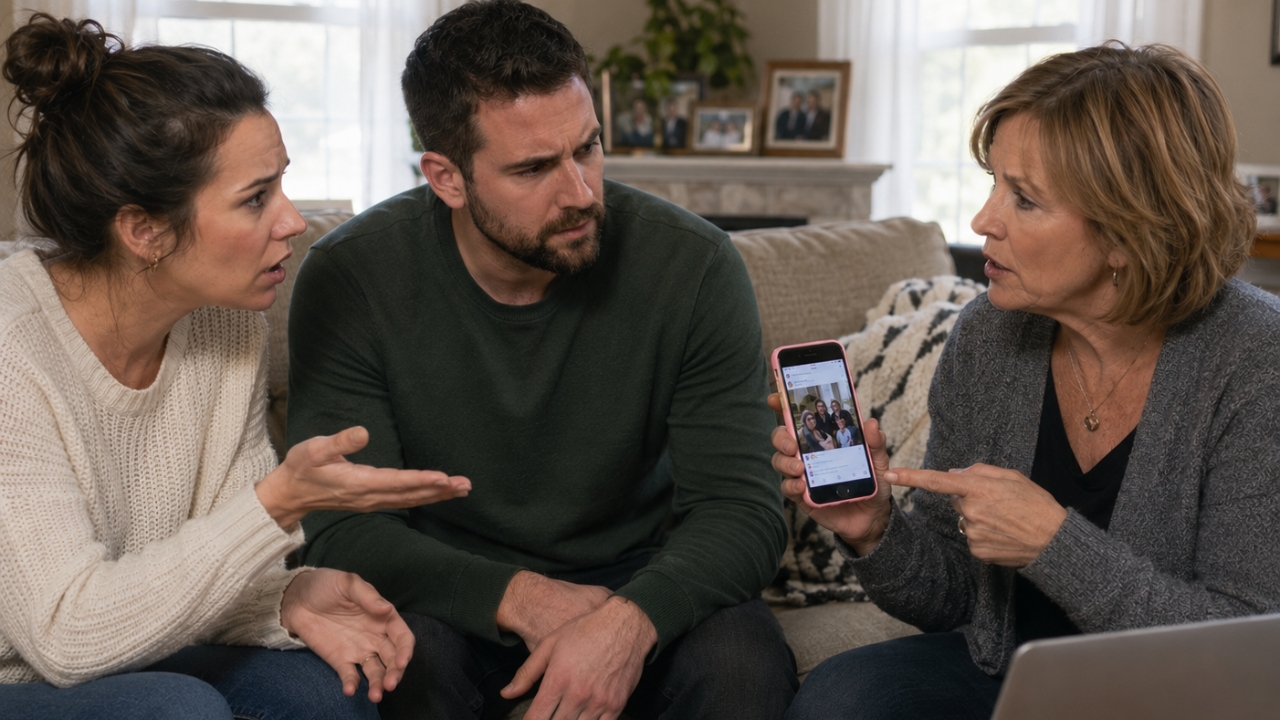
A parent preparing to adopt two children says the family had one clear rule before the kids were even in their care: no photos or personal information online. Everyone was told. Everyone agreed. Then, during one of the family’s visits with the children, her mother-in-law posted the pictures to Facebook almost immediately.
The parent explained in a Reddit post that she and her partner are on the journey to adopt two children. The kids had not come into their care yet, but the couple had already started having serious talks about how they wanted to parent, especially when it came to privacy.
One of the biggest topics was whether they would share the children’s pictures online.
That was not a small question for them. Both parents have social media accounts with decent followings, including a joint account and personal accounts. After researching the risks, they decided the cons were too big. They did not want their children’s information or photos shared online.
So they told their families and friends the rule clearly.
No posting.
To make it easier for trusted loved ones to still see the children, the couple created a private shared album. The idea was simple: they could share photos with people they personally knew while still keeping the children off public-facing social media.
That should have been a reasonable compromise.
Then, during a visit with the children that week, the couple took a few pictures with their youngest child and added them to the private album.
The mother-in-law immediately shared the pictures on her “private” Facebook account.
The word “private” did not mean much to the couple because, according to the poster, her MIL has about 1,000 Facebook friends, most of whom she does not even know. That was exactly the kind of exposure they were trying to avoid.
The couple talked to her afterward. They explained that until she could prove she would not share the children’s photos online, she would no longer have access to the shared album.
That consequence made sense to the poster. They had set one clear rule. Her MIL had agreed to it. Then she broke it the first time she had the chance.
But the family did not all see it that way.
The poster said her MIL turned much of her partner’s family against her by saying she had overreacted after one “mistake.” Her partner agreed with the boundary, but pressure from other relatives started making the poster second-guess herself.
Her brother-in-law even suggested they might loosen up once they had more children and that, for now, they were acting like many first-time parents do.
That comment bothered her because it missed the point. The children’s privacy was not a temporary new-parent anxiety. The couple had already thought it through, researched it, discussed it, and explained it. This was not a casual preference. It was a parenting rule.
In the comments, the poster added that privacy had already been a problem with this MIL. Because the adoption was private rather than through foster care or international adoption, they had shared a small amount of information about why they were adopting. Then suddenly, people in her MIL’s church knew those private details.
That made the Facebook post feel less like a harmless slip and more like part of a pattern.
The poster also explained why online privacy mattered so much to them. She said even innocent photos can be misused, altered, or shared in ways parents cannot control. She talked about how overwhelming and invasive it would be for children to grow up with their private lives spread across the internet before they can consent.
This was especially important in an adoption context. Depending on a child’s background, sharing identifying information can create safety, privacy, or legal concerns. The poster did not want anyone treating the children’s story or faces as something they were entitled to broadcast.
Later, she said they had set a clear path for her MIL to regain access. The MIL could take her own pictures during visits if the children consented, but she could not share or post them. If she proved she could respect that, she could eventually get back into the album.
The poster said the same rule applied to everyone. Anyone who shared photos with the MIL or posted them online could lose access too.
That was the part that showed this was not about punishment for punishment’s sake. The couple did not want to cut family out of the children’s lives. They wanted the adults to understand that the children’s privacy came first.
Her MIL had access. She broke the rule. Now she had to earn the trust back.
Commenters overwhelmingly told her she was not overreacting. Many said the MIL did not make a simple accident. Posting photos to Facebook takes several deliberate steps, especially after being specifically told not to do it.
A lot of commenters focused on adoption privacy. Some said children in adoption situations often have background details that should stay private, and relatives can be shockingly careless about sharing things that are not theirs to share.
Several people said the poster’s partner needed to keep reinforcing the boundary with his own family. Commenters warned that if relatives defended the MIL or sent her pictures from the album, they should lose access too.
Others suggested sending printed photos instead, though some commenters immediately pointed out that someone could still take a phone picture of a printed photo and upload it.
A few commenters said there could be a path back to trust, but only if the MIL took the rule seriously. She needed to show that she understood why the boundary existed, not simply complain that she had consequences.
The strongest reaction was simple: the children are not online content. Their parents made a privacy rule, and the grandmother broke it. That was enough reason to cut off album access.

Abbie Clark is the founder and editor of Now Rundown, covering the stories that hit households first—health, politics, insurance, home costs, scams, and the fine print people often learn too late.