
The US pledges $2 billion for UN humanitarian aid, but calls for major reform grow louder
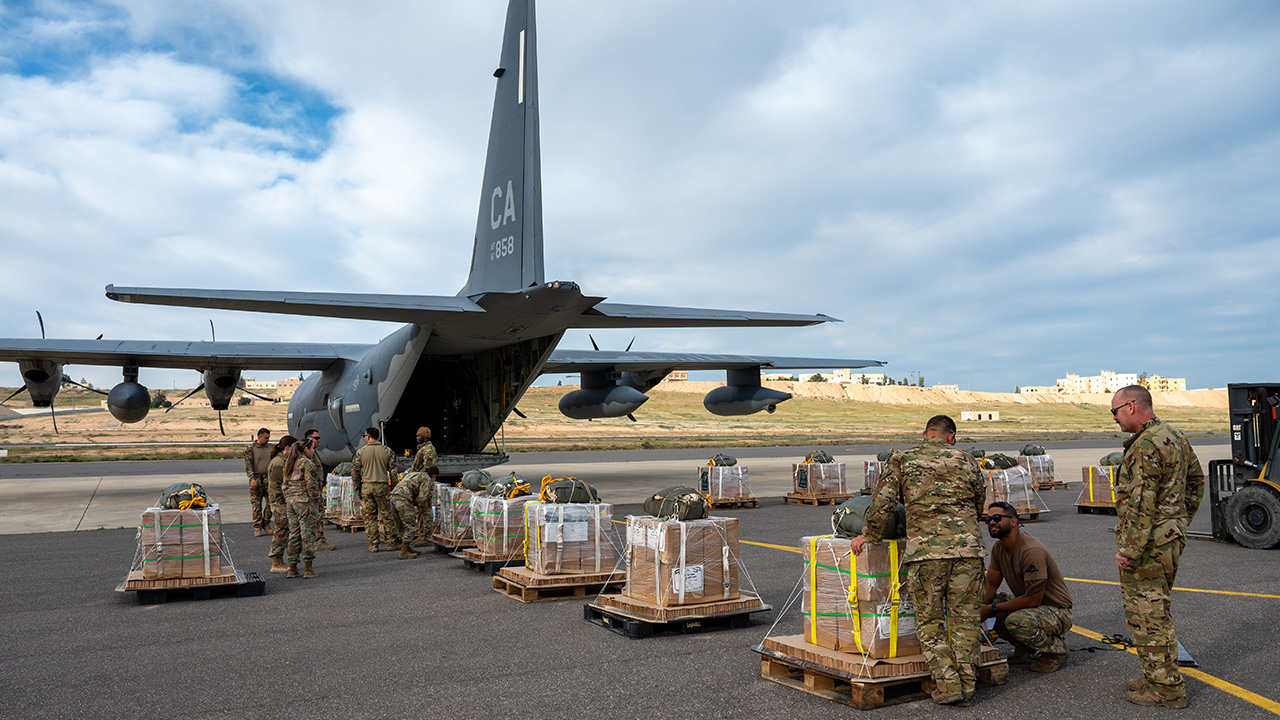
Photo credit: U.S. Air Force AFCENT (Staff Sgt. Caleb Roland), Public Domain/Wiki Commons
The United States has put a headline figure of 2,000,000,000 dollars on the table for United Nations humanitarian work, even as you hear louder warnings that the system receiving that money is no longer fit for purpose. The pledge signals that President Donald Trump still wants the UN to be a central channel for global relief, but he is tying that support to a demand for sweeping change in how aid is managed and measured. You are watching a moment when life‑saving funding and institutional survival are being negotiated at the same time.
The $2 billion pledge and what it really buys
When you hear that The United States has pledged 2,000,000,000 dollars for UN humanitarian aid, it sounds like a straightforward act of generosity, but the context makes it more complicated. Officials describe the package as a major contribution to global relief operations, yet they also frame it as part of a tougher line on performance, warning that agencies must adapt or risk losing support from Washington. In public remarks, President Donald Trump has paired the funding announcement with a message that you should see this money as leverage for change rather than a blank check.
US officials say the 2,000,000,000 dollars is structured as a first tranche toward the UN’s broader humanitarian appeal, with the expectation that other donors will follow and that UN agencies will show clearer results in return. Reporting on the announcement notes that the pledge is being presented as both a lifeline and a warning, with Trump’s team stressing that future contributions will depend on how effectively the UN’s humanitarian arm responds to crises and reforms its internal systems, a stance reflected in coverage of how agencies must adapt or risk deeper cuts.
A joint UN–US deal covering 17 crisis-hit countries
Behind the big number is a detailed agreement between The United Nations and the Unit that spells out where much of this money is supposed to go. You are not looking at a vague promise, but a funding deal that targets 17 crisis‑hit countries, from conflict zones to regions battered by climate‑driven disasters. The structure is meant to reassure both sides, giving UN agencies some predictability while giving US officials a clearer line of sight into how funds are allocated.
The agreement channels resources into operations coordinated by the UN’s humanitarian leadership, with a focus on protecting civilians, stabilizing fragile communities, and preventing further displacement. It is framed as a way to save lives in the year ahead, but it also serves as a test of whether a more tightly negotiated partnership can deliver better outcomes than the looser arrangements of the past, a point underscored in UN reporting on how UN, US sign $2 billion humanitarian funding agreement for 17 crisis‑hit countries.
Why $2 billion is also a cut, not just a commitment
If you compare this pledge to what Washington has paid in past years, you see why critics describe it as a reduction as much as a renewal. Analysts note that the 2,000,000,000 dollar figure is significantly lower than previous US humanitarian outlays, which means you are looking at a funding floor that has been pulled down even as global needs rise. The Trump administration is presenting the shift as a deliberate recalibration, arguing that the UN must do more with less and prove that every dollar is justified.
Coverage of the decision stresses that the cut is especially sharp when you factor in voluntary contributions that used to top up the core humanitarian budget. US officials acknowledge that this is a huge cut compared with earlier years, but they insist that the pressure is necessary to force overdue reforms in how relief operations are planned, audited, and evaluated, a framing captured in reports that the US slashes UN humanitarian aid to $2bn, huge cut as Trump demands reforms.
Trump’s ‘adapt or die’ warning to aid agencies
President Donald Trump has not tried to soften his message to the UN system, telling you in plain terms that agencies must change or face the consequences. In his public comments, he has warned that organizations receiving US funds need to streamline their operations, cut what he sees as bureaucratic waste, and show measurable results on the ground. The phrase that has stuck is his warning that agencies must “adapt or die,” a stark signal that he is willing to use funding as a tool to reshape the humanitarian landscape.
US officials reinforce that line by linking future tranches of money to specific performance benchmarks, from faster response times to clearer reporting on how aid reaches people in need. They argue that the old model of open‑ended support is no longer acceptable to taxpayers or to a White House that wants tighter control over multilateral spending, a stance reflected in detailed accounts of how Trump warns agencies to ‘adapt or die’ while unveiling the new funding package.
OCHA’s central role and the pressure on coordination
At the heart of this funding debate is the UN Office for the Coordination of Humanitarian Affairs, better known as OCHA, which you can think of as the system’s nerve center. US officials say the 2,000,000,000 dollars is intended as an initial outlay to help finance OCHA’s annual appeal, which sets the tone for global humanitarian fundraising. That means the office is under intense pressure to show that it can coordinate dozens of agencies and partners more efficiently than in the past.
For you as an observer, the stakes are clear: if OCHA can demonstrate sharper coordination, it strengthens the case for channeling large sums through the UN rather than through bilateral or private routes. If it cannot, critics in Washington will have fresh ammunition to argue for further cuts or for bypassing the UN altogether, a dynamic highlighted in reporting that US officials say the $2 billion is just a first outlay to help fund OCHA’s annual appeal for money.
‘Adapt or Die’ as a negotiating strategy, not just a slogan
When you strip away the rhetoric, Trump’s “adapt or die” line functions as a negotiating tactic aimed at reshaping how the UN does business. By pairing a large, headline‑grabbing pledge with a clear threat of future reductions, the White House is trying to pull UN leaders into a reform agenda on US terms. The message is that Washington is still willing to be the largest single donor, but only if it can see concrete changes in governance, transparency, and field performance.
The framing is explicit in coverage that describes how the United States Pledges 2,000,000,000 dollars for UN Humanitarian Aid while Trump Slashes Funding and Warns Agencies to Adapt or Die, a combination that forces you to read the pledge as part of a broader overhaul rather than a simple act of support. That duality is captured in reports that detail how the administration Pledges Billion for UN Humanitarian Aid, Trump Slashes Funding and Warns Agencies to Adapt and Die if they fail to respond.
Aid amid overhaul: how the US is redefining its UN role
The 2,000,000,000 dollar package is also part of a wider rethink of how Washington engages with multilateral institutions. You are seeing a shift from relatively automatic payments toward a more transactional approach, in which every major contribution is tied to a narrative of reform and national interest. Officials close to the process describe the current moment as an overhaul of humanitarian affairs, with the US using its financial weight to push for changes that it argues will make the system leaner and more accountable.
Reports on the pledge emphasize that the amount is lower than what the US paid in past years, even as it is presented as a cornerstone of the UN’s humanitarian budget. That tension reflects a broader strategy in which the administration wants to keep influence inside the UN while reducing overall exposure, a balance that is evident in accounts of how the United States Pledges $2 Billion to UN Humanitarian Affairs Amid Overhaul of its broader approach.
How UN leaders are responding to US pressure
On the UN side, senior officials are trying to walk a tightrope between welcoming the money and pushing back against the harshest criticism. You can see that balancing act in public briefings where leaders thank The United States for remaining a major donor while also defending the integrity of existing humanitarian structures. They argue that reforms are already under way, from new transparency tools to stronger field oversight, and that further cuts would hurt people in crisis more than they would fix bureaucratic problems.
In one widely watched briefing, UN humanitarian chief Tom Fletcher addressed concerns about the scale of the reduction and the conditions attached to the new funding. He acknowledged that the system must evolve, but he also warned that sudden shifts in US policy can disrupt life‑saving operations in places that have no alternative sources of support, a point he made as The United States has announced a $2 billion pledge to the United Nations for humanitarian aid.
What this means for you and for people in crisis
For you as a citizen, taxpayer, or advocate, the 2,000,000,000 dollar pledge is a reminder that humanitarian policy is never just about compassion, it is also about power and priorities. The United States is signaling that it still wants to shape the global response to wars, disasters, and displacement, but it is doing so with a sharper edge, using funding levels and conditions to push the UN in a direction that aligns with Trump’s vision of efficiency and control. That approach may resonate if you are frustrated with perceived waste, but it also raises the risk that political disputes will slow or shrink aid just as needs are rising.
For people living in the 17 crisis‑hit countries covered by the new agreement, the stakes are more immediate. The money can mean food, shelter, and medical care in the short term, yet the long‑term picture depends on whether the UN and Washington can find common ground on reform without letting their standoff choke off support. As you watch this play out, the key question is not only how much The United States gives, but how the conditions attached to that funding reshape the humanitarian system that millions of people rely on to survive.


