Husband Set Conditions on His Mother-in-Law Staying With Them for the Holidays After She Spent Months Bouncing Between Family Members Following Her Separation
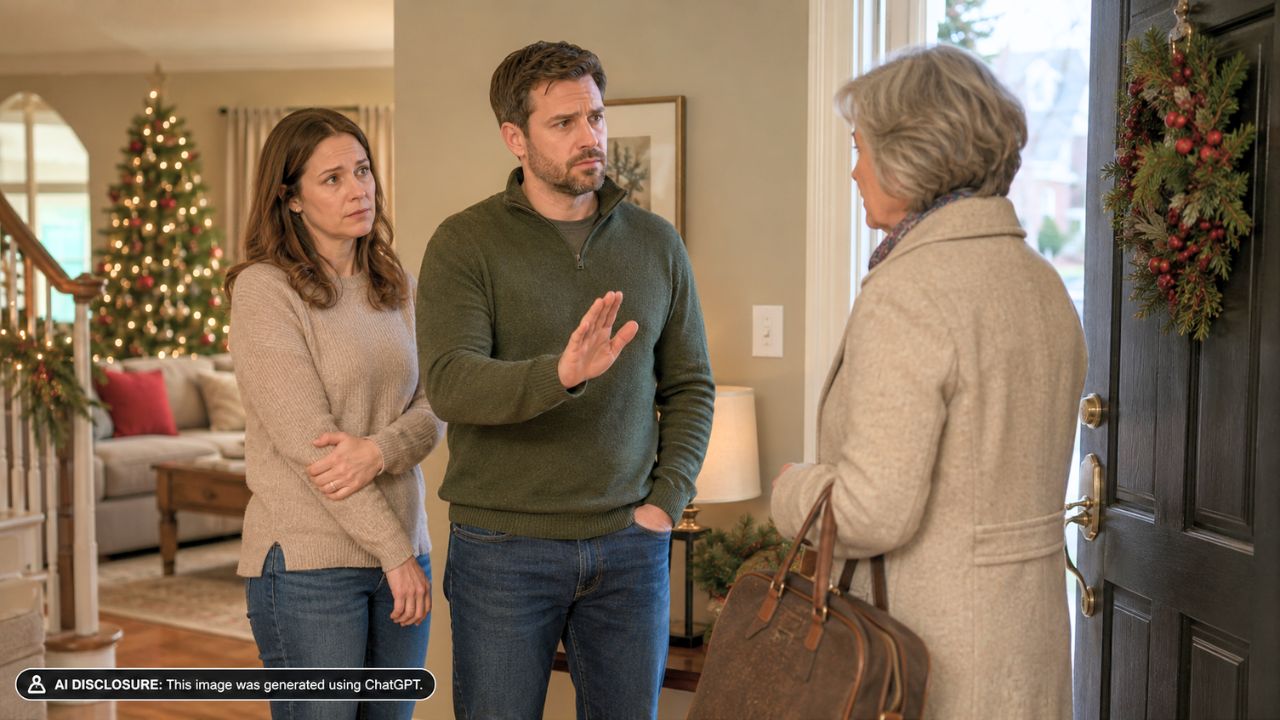
Photo credit: AI-generated image created using ChatGPT. Illustrative only.
By the time the holidays rolled around, the house was already feeling full. A married father of two said his mother-in-law had spent the last six months rotating between relatives after separating from her husband, and the repeated stays in his home were starting to wear on him and his marriage.
In the original post, he described a family that was trying to do the right thing, but running into the limits of space, privacy, and patience. His wife wanted her mom to feel supported during a painful breakup. He wanted their home to stop functioning like the next stop on a long couch-surfing loop.
Six months of “just for a little while”
The mother-in-law’s separation upended her living situation. According to the husband, she had been financially dependent on her husband (the wife’s stepfather), didn’t have a job, and no longer had a place of her own. The result was a nomadic stretch of months spent staying with various family members.
The couple had already hosted her for about two months total, split across three separate visits. Each stay might have sounded manageable on paper, but he said the constant presence of another adult in the home created real stress, especially for him. He wrote that he doesn’t do well with extra people in his living space, and it had started to affect the relationship.
His wife, on the other hand, felt pulled by guilt and empathy. From her perspective, her mom was going through a destabilizing life change and needed family to step in. That push and pull was already there long before Christmas plans entered the chat.
A holiday plan that was supposed to protect family time
The couple’s original schedule sounded like a compromise. They planned to spend Christmas Eve with the wife’s extended family at her aunt’s house, then come home and spend Christmas Day at their place as a smaller unit—just the couple and their two kids.
That “home on Christmas Day” plan mattered to the husband because it was something he and his wife had discussed and agreed on together. It wasn’t framed as a rejection of the wider family. It was pitched as a way to have quiet, immediate-family time after the bigger gathering.
Then the mother-in-law asked a new question: could she come home with them after Christmas Eve and stay with them for the remainder of the holiday stretch. The husband said the mother-in-law had been planning to stay at the aunt’s place, but now wanted to switch plans so she wouldn’t be alone.
“She’s not a free babysitter” meets “we aren’t a hotel”
When the husband objected, he said the conversation quickly became about more than just Christmas Day. He viewed the mother-in-law’s ongoing bouncing between homes as unsustainable, and argued that she needed to “get her life figured out.” His wife shut that down, telling him that part wasn’t important in the moment and that her priority was making sure her mom still felt like part of a family during Christmas.
Eventually, he relented—but with a condition. If the mother-in-law stayed with them over Christmas, he wanted her to watch their two kids for New Year’s weekend so he and his wife could get away. He floated the idea of doing something fun together, possibly with friends, possibly alone as a couple, even suggesting a hotel or an AirBnB.
His wife reacted strongly, telling him her mom “is not a free babysitter” and that they couldn’t expect her to watch the kids whenever they wanted. That’s when the husband responded with his own line in the sand: if the mother-in-law wasn’t a babysitter, then they weren’t a hotel. If she was going to continue staying with them, he argued, she needed to “pull her weight.”
The standoff escalated fast. The wife refused to ask her mother to take on a full weekend of childcare. The husband then said that if babysitting wasn’t happening, his wife and mother-in-law could stay home with the kids, and he would make his own plans for New Year’s weekend by himself.
The argument turns into a threat, and the kids get pulled into it
The wife called him selfish and said her mom was going through a hard time and needed support without strings attached. To her, conditioning help on labor—especially childcare—turned compassion into a transaction. She also warned him that if he disappeared for New Year’s, he’d be the one to explain to their kids why he wasn’t there to ring in the new year with them.
The husband said he didn’t mind talking to the kids about his absence, but he also drew another boundary: he wouldn’t “tell them the whole truth” that their mom was putting her mother ahead of their family and relationship. That line landed hard. He said she called him an AH and became cold afterward.
At that point, the fight had layered into something bigger than holiday logistics. It wasn’t only about one extra guest for Christmas night. It was about whether the couple’s home was becoming a default landing spot, and whether one spouse felt outvoted inside his own living room.
What people latched onto: boundaries, burnout, and the missing long-term plan
While the post centered on whether the husband was wrong to attach conditions, the details naturally pulled attention to a practical question hovering over everything: what is the mother-in-law’s plan after the holidays? The husband described six months of bouncing between relatives, and two months total already spent in their home. For many readers, that sounded less like a short-term emergency and more like an arrangement quietly turning permanent.
Another point that stood out was the difference between “helping” and “hosting.” The wife framed her mom’s stay as emotional support—keeping her from feeling alone at Christmas. The husband framed it as household impact—loss of privacy, increased stress, and a repeating pattern. Both can be true at the same time, but they lead to very different decisions.
And then there was the babysitting condition. Some people tend to view childcare as a reasonable way for a guest family member to contribute, especially if they are staying for free. Others see it as an unfair ask, particularly for an entire weekend, and especially when the mother-in-law is already in a vulnerable, unsettled place. The disagreement between the couple mirrors that split: contribution versus coercion.
Finally, the New Year’s ultimatum—him going off alone—read like a pressure tactic to some and a last-resort escape to others. Either way, it raises the stakes because it turns a household dispute into a visible family moment, one the children are likely to notice regardless of how carefully it’s explained.
A quiet holiday still looks unlikely
What’s left is a home where nobody feels fully heard. The wife wants to protect her mom from loneliness and the humiliation of feeling like a burden. The husband wants his home to feel like his home again, and he’s clearly worried that every “just for the holidays” stay pushes their marriage closer to a breaking point.
Even if the mother-in-law never sets foot in their guest room again, the underlying fight doesn’t disappear: how much support is reasonable, what “pulling her weight” should look like, and who gets to decide when the family is tapped out. And if she does come for Christmas, the tension is already packed and ready to come out with the decorations.
Check out more from Now Rundown:
- A Party of 12 Came Back a Month Later Demanding Their $80 Tip Refunded — My Restaurant Made Me Pay It
- Her Coworker Kept Filing the Same Complaint About Her After Being Warned — Then She Filed a Counter-Report With Every Email Documented
- Siblings Demanded Half of Their Sister’s $11 Million Inheritance — She Refused Because They Never Visited
- The Kid I Bullied in Middle School Just Interviewed for a Job on My Team — He Bombed It and I Didn’t Hire Him

Abbie Clark is the founder and editor of Now Rundown, covering the stories that hit households first—health, politics, insurance, home costs, scams, and the fine print people often learn too late.