Woman Refused to Host Her Ex-Husband and His Other Children for Christmas With Her Own Kids — She Says It Protects Them From Family Drama
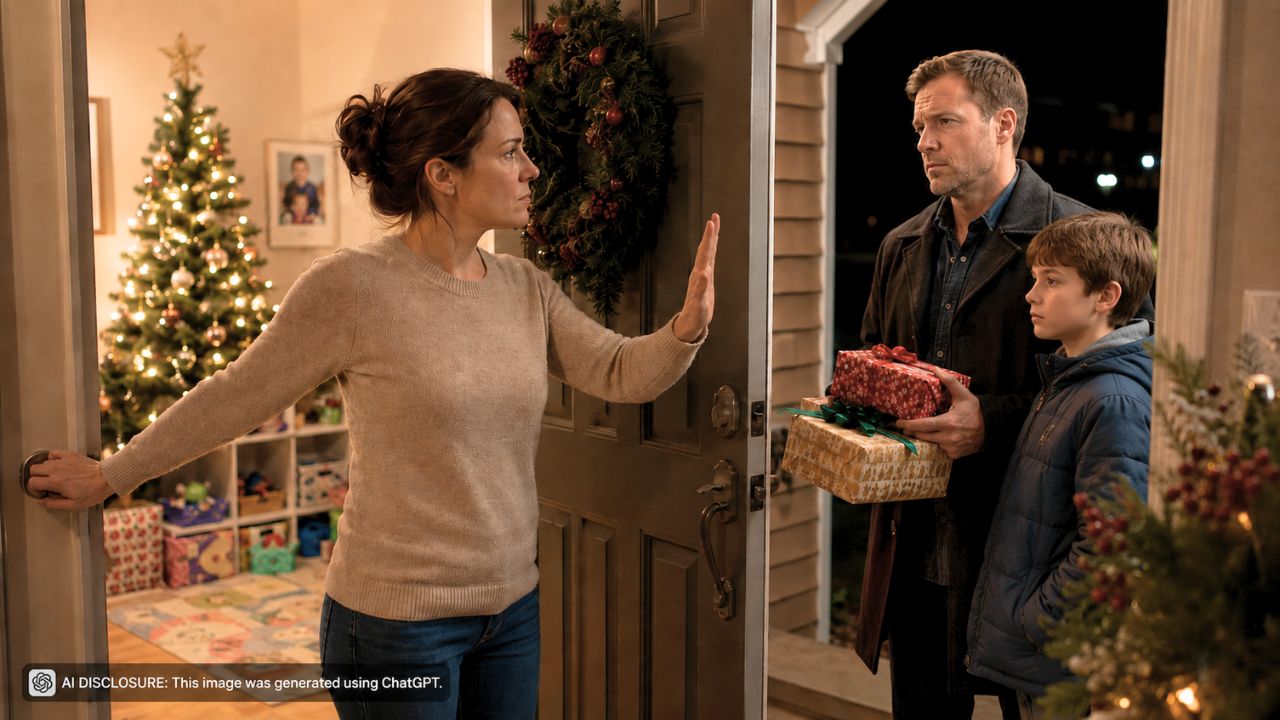
Photo credit: AI-generated image created using ChatGPT. Illustrative only.
When her former in-laws started pushing for a picture-perfect Christmas, a divorced mom said she could already see the fallout coming. The request wasn’t just to share a meal with her ex-husband for the sake of their two kids—it was to open her home to him and a rotating cast of children he’s fathered with other women.
In the original post, she explains why she refused. Her reasoning wasn’t about scoring points against an ex. It was about keeping the holiday calm for her 11- and 9-year-old—and keeping old wounds, new expectations, and messy adult history from spilling onto them in her living room.
The divorce ended, but the damage didn’t
The woman says she and her ex-husband have been divorced for just over five years, and it didn’t end quietly. She asked for the divorce after discovering he’d been cheating for several years—and that he was in the middle of DNA testing for six possible children he may have fathered during their marriage.
Five of those six children turned out to be his, she said. And instead of handling the aftermath privately, he tried to involve her in discussions with the children’s mothers. She refused, telling him that it was no longer her responsibility and she wanted no part of it.
That wasn’t the end of the revelations. She says it later emerged he already knew about two other biological children born during their marriage—children she didn’t even know existed at the time.
More kids, less parenting time—and one repeated request
Over the years, her ex’s family situation has only grown more complicated. She says two of those previously known children moved in with him a year after the divorce, and their mother “doesn’t appear to be around.”
She also claims he has had five additional children on top of that. Two of those kids live with him full time, while she isn’t sure how involved he is with the others—only that they exist.
Meanwhile, the father’s contact with the two children he shares with her is limited. She says he sees them one weekend a month and isn’t very involved day-to-day.
But he does make one kind of request regularly: he calls to propose plans where they spend time together “as a family.” She says she shuts it down every time, reminding him they are no longer a family unit. What stands out to her is that he “never wants to speak to or see just the kids,” only arrangements that include her too.
The grandparents’ Christmas plan: one house, everyone under it
Despite the bad breakup, the woman says she stayed on reasonably good terms with her ex-husband’s parents. They still see her kids, and the children love their grandparents. That ongoing relationship is part of what made the latest pressure campaign harder to ignore.
According to her, the grandparents decided it would be “better for the kids” if everyone came together for Christmas. They wanted her to host her ex-husband and whichever of his other children he had that day, so the whole group could function like a supportive extended family for the holiday.
She flatly refused. She told them she would not pretend her ex or his other children were her family. The grandparents pushed back, saying she shouldn’t hold onto so much “spite,” and argued that, as a mother, she should want her children to know their siblings—full or half.
They even offered to buy the turkey as a peace offering, framing it as help to “make it work.” She still said no. When they pressed for more reasons, she told them she didn’t have to justify her boundary, and her answer wasn’t changing.
Why she thinks hosting would hurt, not help
The woman’s refusal wasn’t presented as a punishment. She described it as risk management—for her kids, for herself, and for the stability of her home.
For one, she says she hates her ex-husband, and spending an entire holiday with him could put her emotions on display in front of their children. Even if she tried to keep it together, she worries the strain would be obvious and create a different kind of burden—kids watching their parents navigate tension and pretending it’s normal.
Then there’s the practical side. Hosting “him and his kids” would likely come with expectations she doesn’t want. She specifically mentions presents—bringing additional children into her Christmas would, in her view, create pressure to buy gifts for kids she has no relationship with and never agreed to include in her life.
Her biggest concern, though, is what it could signal to the children living with him. Some of his kids, she says, have no relationship with their mothers, and she fears her ex could tell them—or imply—that she might become their “new mom.”
That fear isn’t abstract to her. She says he already tries to engineer “family” time that includes her, even though he rarely seeks time with the children alone. From her perspective, hosting Christmas could become a foothold for him to keep pushing the same narrative, only with more kids and higher stakes.
People focused on boundaries, expectations, and not creating a new obligation
The post centers on one question: whether refusing to host makes her the one in the wrong. She frames it around the familiar “put the kids first” idea, saying she believes her choice does exactly that—by keeping adult problems out of their holiday and preventing false hope that their parents will reunite.
Her reasoning also highlights a common dynamic in split families: relatives wanting a peaceful gathering can end up asking the person with the most stable home to absorb the most chaos. In her case, “just one day together” wouldn’t simply be dinner. It would be introducing her children to a large, complicated sibling network in the most emotionally charged way possible, while her ex uses the moment to play house.
Even without a blowup, she’s looking at the long tail of consequences. If she hosts once, she may be expected to host again. If she gives gifts once, it could become an annual obligation. If the other kids start viewing her as a parental figure, it could create confusion, attachment, and disappointment she never consented to manage.
And if the grandparents are already lobbying this hard, she has reason to believe the pressure won’t stop at Christmas.
A quiet holiday vs. a staged “family” moment
The woman doesn’t describe trying to cut her ex-husband’s parents out. She says the kids have a good relationship with their grandparents, and she has kept that door open. But she draws a sharp line at turning her home into neutral ground for a man she divorced under painful circumstances—especially when his idea of co-parenting seems to revolve around getting her back into a family role.
For now, her answer stays the same: her children can have time with their father on his schedule, and time with their grandparents as it works out. But Christmas morning in her house won’t be turned into a reunion set-up involving a man she no longer trusts and children she has never met.
In her view, protecting her kids from family drama doesn’t require a blended holiday table. It requires a stable one.
Check out more from Now Rundown:
- A Party of 12 Came Back a Month Later Demanding Their $80 Tip Refunded — My Restaurant Made Me Pay It
- Her Coworker Kept Filing the Same Complaint About Her After Being Warned — Then She Filed a Counter-Report With Every Email Documented
- Siblings Demanded Half of Their Sister’s $11 Million Inheritance — She Refused Because They Never Visited
- The Kid I Bullied in Middle School Just Interviewed for a Job on My Team — He Bombed It and I Didn’t Hire Him

Abbie Clark is the founder and editor of Now Rundown, covering the stories that hit households first—health, politics, insurance, home costs, scams, and the fine print people often learn too late.