Man Stopped Trying to Spend Time Around His Older Siblings and Their Kids After Realizing They’d Disliked Him Since He Was Born
Photo credit: AI-generated image created using ChatGPT. Illustrative only.
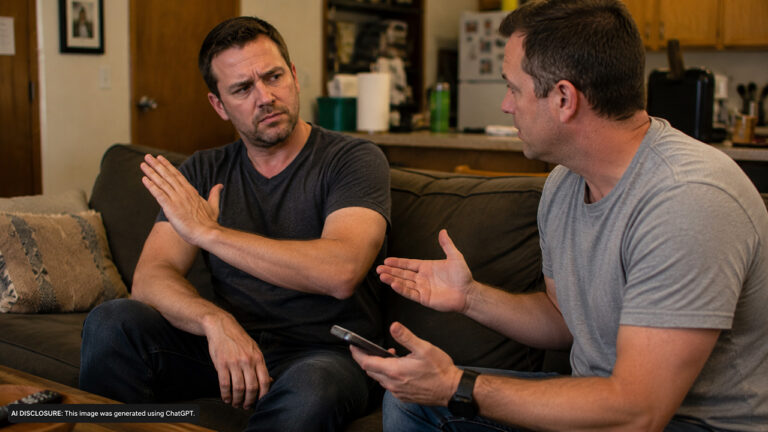
By 20, he says he’d already spent most of his life trying to earn a place around his older brother and sister—only to realize they never wanted him there in the first place. In the original post, the youngest of three siblings describes a family dynamic where the rejection started so early it felt baked in, and it’s now spilling into the next generation.
He’s 12 years younger than his sister and 14 years younger than his brother, a gap that made them more like adults-in-training than typical siblings when he was born. And from his perspective, they resented him from day one. Now, after years of being treated like an unwanted presence—and being labeled a “bad influence” around their children—he’s decided to stop showing up at all.
Growing up as the “problem” nobody could explain
He says his siblings always acted like he was “crazy and wild and out of control,” even though that picture didn’t match how anyone else experienced him. The strangest part, he wrote, is that they claimed he was “impossible to control” when nobody else was around—yet they were never actually alone with him. Instead, they avoided him during childhood and moved out while he was still young.
By the time he was around 10, he remembers hearing them describe him as a “terror” and a “monster,” and even claim he almost put them off having kids. He says he internalized it enough that he started questioning whether he was even fully related to them—so much so that he and his dad did 23&Me to quiet the fear. The results confirmed they are full biological siblings, with both parents being his biological parents.
His parents believe jealousy played a role, and he says extended family members have echoed that idea. But whatever the reason, he describes a long-running narrative in which he was cast as the family’s walking cautionary tale.
The distance turned into a pattern of total exclusion
As he got older, the relationship didn’t improve—it hardened into something that looked less like sibling rivalry and more like erasure. He says they ignored his birthdays and his graduation. He wasn’t invited to their weddings or baby showers. And the message, in his telling, was consistent: he wasn’t part of their lives, and they weren’t interested in changing that.
Then came the next, sharper layer—his siblings shifting the focus to their own kids. In group chats, he says, they repeatedly stated they didn’t want him around because he’d be a “bad influence” and they didn’t want their children to become “wild little monsters” like he supposedly was.
To him, that wasn’t just rude; it was a public branding, repeated in front of other relatives, that framed him as unsafe or corrupting. And it put him in a no-win position at family gatherings: show up and be treated like a threat, or stay home and be blamed for the distance.
Why the “bad influence” story didn’t add up
Part of what pushed him toward finally stepping away is how disconnected the accusations seem from reality. He says nobody else ever complained about him being out of control as a kid. At school, he was considered quiet and shy, and teachers struggled to get him to socialize or even speak up in class.
Friends, he added, described him as the quietest one in the group—and they had “zero idea” where his siblings’ version of him came from. The more he compared those outside perspectives to his siblings’ claims, the more it felt like they weren’t reacting to his behavior at all. It felt like they were committed to a story where he was the villain, no matter what he did.
And once kids entered the picture, the stakes changed. Being disliked is painful. Being framed as someone who shouldn’t be around children is a different kind of accusation—one that can follow you through a family for years.
He decided to stop showing up—and the family erupted
After years of hearing that he isn’t wanted around the kids, he chose what he sees as the simplest path: take them at their word. He wrote that he’s decided he won’t be around them, and that if his siblings are attending an event, he’ll skip it so he doesn’t have to spend time around them or their children.
To him, it’s not a dramatic “cut them off” announcement. It’s choosing peace over friction. He also points out a practical issue: even if he did show up, there’s “no saying” he’d be allowed to even say hi to his nieces and nephews. So why keep walking into a situation where the outcome is humiliation or conflict?
Not everyone in the family supports the move. He says relatives have told him he shouldn’t do this because his nieces and nephews “deserve to know” him. That argument lands differently when the gatekeepers are the very people who don’t want him near their children.
His parents, meanwhile, reportedly “went nuts” on his siblings over it, calling their treatment of him “disgusting” and telling him his siblings are in the wrong. Their advice was essentially to ignore the siblings and continue living his life.
But he’s stuck on one question: if his siblings have been clear for years that they don’t want him around, why is he being asked to keep pushing into that space?
Reactions centered on boundaries, not forced reunions
While the post focused on whether he’d be wrong for stepping back, the practical tension is about access and control. His siblings have positioned themselves as the decision-makers for kid-related contact, and they’ve repeatedly signaled they will use that control to keep him away.
In that kind of setup, the “kids deserve to know you” line can become a trap: it pressures him to keep showing up, but doesn’t actually guarantee him a relationship with the children. It also risks turning every holiday or birthday into another episode where he’s labeled a negative influence in front of the wider family.
The other point that stands out is the reputational damage. Being branded as a “monster” or unsafe presence around kids—even informally—can affect how extended relatives treat you, who invites you, and how you’re discussed when you’re not in the room. Walking away, in his view, isn’t punishing the kids; it’s refusing to participate in a narrative that’s been used to exclude him for decades.
What he’s left with now
At 20, he’s looking at a family split where his parents are furious, his siblings appear unmoved, and other relatives want him to endure the discomfort for the sake of children he may not be allowed to know anyway. He’s also dealing with the emotional whiplash of realizing the story told about him—uncontrollable, dangerous, corrupting—doesn’t match the way teachers, friends, and even genetics have reflected him back.
For now, his plan is straightforward: stop attending gatherings where he’ll be treated like a problem, and stop making access to his nieces and nephews dependent on people who have already decided he’s not welcome. It doesn’t resolve the hurt, and it doesn’t fix whatever resentment his siblings carried from his birth. But it does end the cycle of showing up hopeful and leaving reminded that he was never invited into their lives in the first place.
Check out more from Now Rundown:
- A Party of 12 Came Back a Month Later Demanding Their $80 Tip Refunded — My Restaurant Made Me Pay It
- Her Coworker Kept Filing the Same Complaint About Her After Being Warned — Then She Filed a Counter-Report With Every Email Documented
- Siblings Demanded Half of Their Sister’s $11 Million Inheritance — She Refused Because They Never Visited
- The Kid I Bullied in Middle School Just Interviewed for a Job on My Team — He Bombed It and I Didn’t Hire Him

Abbie Clark is the founder and editor of Now Rundown, covering the stories that hit households first—health, politics, insurance, home costs, scams, and the fine print people often learn too late.