Woman Refused to Help Her Sister After Being Treated Like a Maid for Years in Her Filthy, Flea-Infested Home
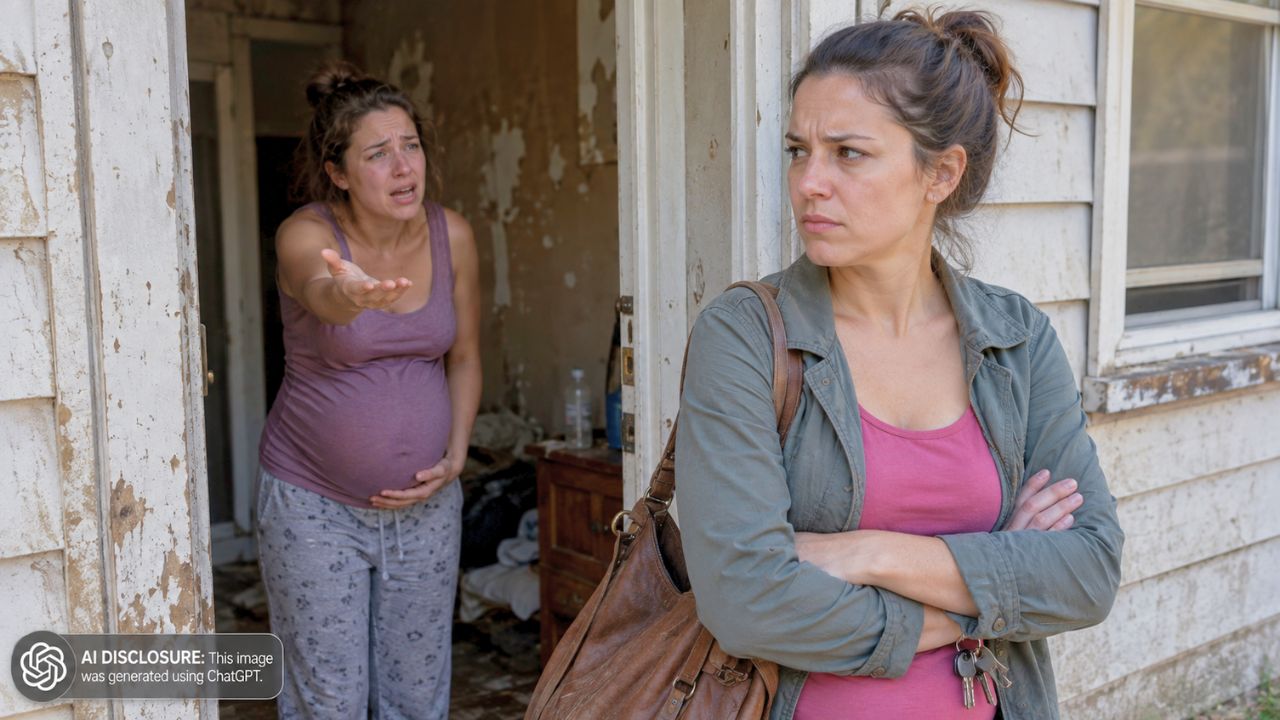
Photo credit: AI-generated image created using ChatGPT. Illustrative only.
When a 26-year-old woman finally got out of a living situation she describes as filthy and infested with ticks and fleas, she thought the chaos was behind her. Instead, the fallout followed her into pregnancy—because the sister who once treated her like unpaid help is now calling for support again.
In the original post, the woman lays out years of family tension that ended with her cutting contact and refusing to step back into the role she says nearly derailed her life the first time.
A home so bad she says it changed how she lived day to day
For a period of time, the woman lived with her older sister, now 30, and says the house was in constant disrepair and never truly clean. She describes floors and rooms so dirty that ticks and fleas were a regular problem, made worse by her sister’s six pets going in and out of the home.
According to her account, animals peed and pooped throughout the house, and the overall conditions felt unmanageable. She also says her sister’s 11-year-old son—who is homeschooled—wasn’t engaged in schoolwork and often behaved disrespectfully, adding another layer of stress inside the home.
The woman doesn’t frame it as a one-time rough patch. She describes it as a long-running pattern where she felt treated “like a maid,” blamed for small things, and generally pushed around in a space that already felt unhealthy.
Getting out wasn’t just moving out—it was starting over
Eventually, she left, and she describes the contrast between then and now as dramatic. She’s expecting her first child with her boyfriend, has a job that pays well, and says she’s finally stable.
She also says she has a five-bedroom house and a new car, and that her cat is now free of fleas, ticks, and parasites—details that underline how severe she felt the previous conditions were. In her telling, the relationship she’s in is supportive, and she credits her partner with helping her avoid losing her housing and derailing her education during the worst of it.
But while her own life has improved, she says her sister’s hasn’t. And now their pregnancies are running almost back-to-back, setting up an unavoidable collision.
Then her sister got pregnant again—and the same fears came back
The sister is now pregnant by a man the poster says she “doesn’t really like,” describing constant fighting and instability. The sister reportedly lost her job, which the poster attributes to pregnancy discrimination, and now has to rely financially on the baby’s father.
The poster also claims the man is in the country illegally, which adds another pressure point: she says her sister is afraid of him being deported while she’s pregnant. Meanwhile, she says the sister’s 11-year-old son “hates the unborn baby with a passion,” creating tension at home before the new baby even arrives.
To the poster, it feels like history repeating itself. She says when her sister was 18, she got pregnant in a similarly volatile relationship, and family members stepped in to help. In her view, her sister later reframed it as if she had done everything on her own, even though others carried much of the burden.
The breaking point: their mom got pushed out, and the family scattered
The poster says their mother had been helping the sister in practical ways—letting her use a car and even helping cover rent. But she also says her sister never saved for her own vehicle and used the borrowed car not just for work, but for dating and general life.
Once the sister became pregnant again, the mother reportedly hit her limit. The poster describes it as a “final straw,” especially because she believed the new relationship looked like the same destructive pattern from years earlier.
Then the conflict escalated. The poster claims her sister tried to pressure their mother into continuing to provide the car, essentially using a threat: comply or get kicked out. The mother chose to leave rather than stay in what the poster calls a toxic, drama-filled home.
After that, the poster says her mother moved somewhere else and won’t share the location, apparently out of fear of further conflict. For the poster, that’s not just family drama—it’s a real loss. She says her sister’s actions “cost” her baby a relationship with their grandmother, because now contact is strained and the grandmother is in hiding from the situation.
Why she refused to help this time
With her mother gone, the sister turned to the poster. Their due dates are close—about a month apart—so the requests for help are arriving while the poster is preparing for her own baby.
The answer was no. The poster says her sister treated her terribly when they lived together, and she points to a specific moment that still stings: she says she was thrown out over eating pasta. She frames that as part of a larger pattern of control and humiliation that she’s unwilling to revisit.
She also believes her sister ignored repeated warnings to slow down, focus on education, and stop dating for a while to stabilize her life. In the post, she says her sister doesn’t have a GED, has no education, and doesn’t appear to have a plan to change course.
The refusal wasn’t gentle. The poster admits she told her sister she has “no sympathy,” and said the pregnancy was her sister’s choice. She also told her sister not to expect to be present for her baby’s birth or to have access to her child, arguing that someone who mistreated family members and pushed their mother out doesn’t get to step in when it’s convenient.
The sister’s response, according to the post, was to call the poster cruel and emphasize that she’s pregnant too. The poster’s fear is that her sister would use the new baby “as a pawn,” repeating the same manipulative dynamics she believes have driven the family apart.
Reactions centered on boundaries, safety, and keeping distance
While the post itself is focused on the poster’s decision and guilt, the practical subtext is hard to miss: she’s pregnant, housed, employed, and trying to protect a stable environment she fought to build. Getting pulled back into a home she describes as flea-infested and chaotic could put her health, her relationship, and her newborn’s safety at risk.
In discussions around stories like this, people tend to focus less on “being nice” and more on what it actually means to help. Financial support, housing, and transportation aren’t small favors—they can become open-ended obligations, especially when the person asking has a history of burning bridges and escalating conflict.
Another common focus is limiting access to the new baby until trust is earned. The poster has already drawn that line, and the fact that her mother’s location is being withheld suggests the family is treating this as more than a simple argument. It reads like a safety and peace-of-mind decision.
The poster ends in a conflicted place: she feels guilty about how harshly she spoke, but also feels backed into a corner by years of being treated badly and watching the same choices play out again. For now, she’s holding her boundary—preparing for her own baby, while her sister faces the consequences of a support system that has finally run out.
Check out more from Now Rundown:
- A Party of 12 Came Back a Month Later Demanding Their $80 Tip Refunded — My Restaurant Made Me Pay It
- Her Coworker Kept Filing the Same Complaint About Her After Being Warned — Then She Filed a Counter-Report With Every Email Documented
- Siblings Demanded Half of Their Sister’s $11 Million Inheritance — She Refused Because They Never Visited
- The Kid I Bullied in Middle School Just Interviewed for a Job on My Team — He Bombed It and I Didn’t Hire Him

Abbie Clark is the founder and editor of Now Rundown, covering the stories that hit households first—health, politics, insurance, home costs, scams, and the fine print people often learn too late.