Widower Banned His Late Wife’s Mother From His House After She Kept Showing Up Uninvited and Letting Herself In
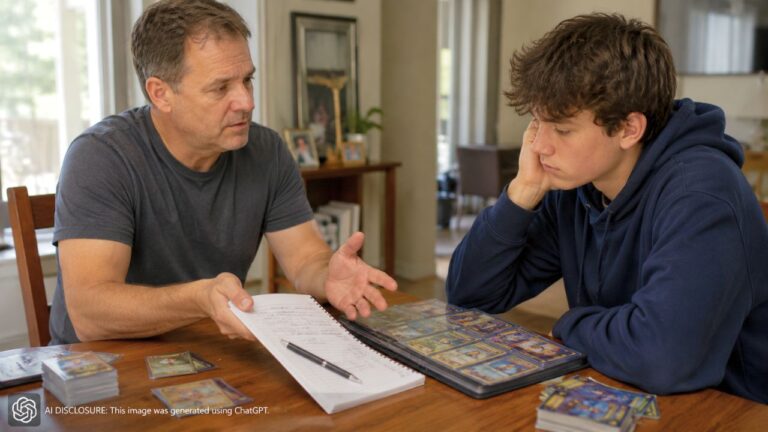
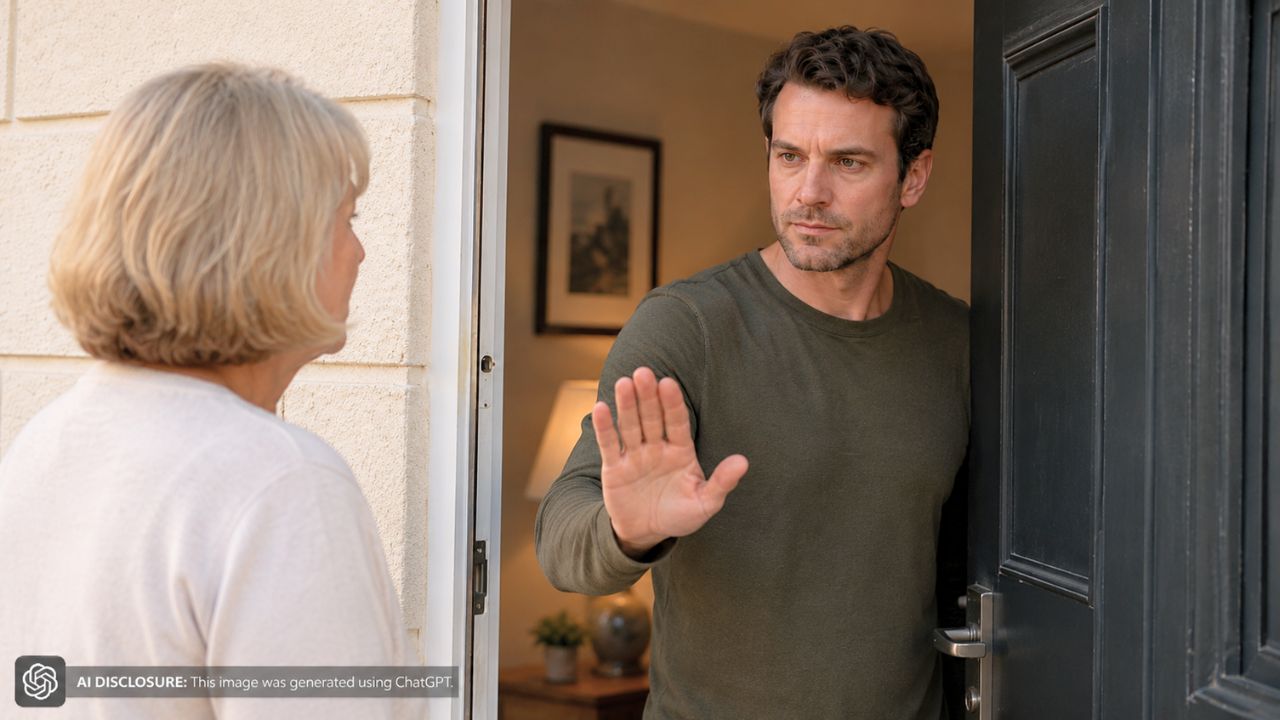
Photo credit: AI-generated image created using ChatGPT. Illustrative only.
By the time he finally snapped, it wasn’t over one awkward drop-in. It was the buildup of months of a key being treated like an open invitation, a house that no longer felt private, and a line that kept getting crossed no matter how many times he tried to redraw it.
In the original post, a 32-year-old widower described banning his late wife’s mother from his home after she repeatedly showed up unannounced, let herself inside, and then exploded when she walked in on him spending time with the woman he’s been dating.
A young family, a sudden loss, and a move for survival
He said he married his then-girlfriend at 23 after she became pregnant, and the couple welcomed a daughter. Two years later, his wife became extremely sick and died, leaving him to raise their child alone.
With grief and practical reality colliding, he moved several states away to live near his own parents so he could keep working while getting help with childcare. Over time, he earned a promotion, saved up, and bought his own house about half an hour from his parents.
His daughter is now 8, and he works long days—roughly 8 a.m. to 6 p.m. Childcare is split between a hired nanny and his parents, who he says insist on helping.
When “close to her granddaughter” turned into constant access
His former mother-in-law, 52, eventually moved to his town because she wanted to be near her granddaughter. At first, he saw it as understandable: his late wife was her only child, and the girl is her only grandchild.
But once she arrived, the visits didn’t look like occasional check-ins. He described her being at the house “pretty much all day,” including after he got home from work and on weekends.
What unsettled him most was that she was there even when no one was supposed to be home. He said she would show up while his daughter was at school and the house was empty—apparently letting herself in to clean.
Boundary talks didn’t stick, and the “slip ups” kept coming
He said he tried to handle it directly. There were multiple conversations and arguments where he told her her behavior was inappropriate and that she was crossing boundaries.
For a while, he got a partial win: she “toned it down.” But he also said the pattern never really stopped, and the unannounced entries and “slip ups” remained common.
In the background was a bigger emotional imbalance. He was trying to rebuild a normal life for himself and his daughter, while his former mother-in-law appeared to be holding on tightly—so tightly that she was acting like the house was still partly hers.
The moment it blew up: a key, an unlocked door, and an accusation
The breaking point came after he started dating again. He said that for the past year and a half he’s been seeing a woman, but pandemic restrictions limited how much time they could spend together.
As things opened up, he invited his girlfriend over. He arranged for his parents to watch his daughter, giving himself a rare evening that was both child-free and private.
That privacy didn’t last. While the couple were “fooling around” on the couch, his former mother-in-law let herself in—no call, no knock, no warning. He described her as immediately losing her temper and accusing him of cheating and disrespecting his deceased wife.
In that moment, he said, he was done negotiating. He went to her, took his key back, forced her out of the home, and told her she was no longer welcome there.
Family pressure kicked in, but the trust was already gone
After he banned her, the fallout wasn’t limited to the two of them. He said several people weighed in—including his own parents—pushing him to reconsider because his former mother-in-law “really has no one else.”
That’s the part that makes the story messy in a way that isn’t easily fixed by one apology. He isn’t describing a single misunderstanding; he’s describing a repeated loss of control over his own home, followed by an emotional confrontation that happened in the most intimate way possible: walking in without permission.
And even if the goal was “help” or “cleaning,” letting yourself into someone’s house when they aren’t home changes the relationship. It turns family into someone who can appear at any time, see anything, and judge it in real time.
What people focused on: the key, the entry, and protecting the home
The post itself was tagged “Not the A-hole,” reflecting how many readers framed it: not as a fight about dating after loss, but as a basic issue of access and consent.
The practical detail that jumped out was the key. Once someone is letting themselves in without calling or knocking, the key becomes the whole story—because it’s proof the boundary wasn’t just being ignored, it was being physically bypassed.
People also honed in on how quickly “I’m here to see my granddaughter” can drift into monitoring and control, especially when the former mother-in-law felt entitled to police his romantic life. In their view, her accusation of “cheating” suggested she wasn’t treating him like a widower moving forward—she was treating him like a husband who still belonged to her daughter.
Others were sympathetic to her grief, but still saw a hard stop as unavoidable. Grief doesn’t grant unlimited access to someone else’s home, and it doesn’t cancel the reality that an 8-year-old is being raised in that space. If a grandparent can come and go at will, the child’s stability can start revolving around an adult’s impulses rather than a parent’s routine.
He’s now left with the kind of decision that feels cruel no matter what: enforce a boundary that protects his home and his future, or soften it and risk returning to the same pattern—surprise entries, confrontations, and a house that doesn’t feel like his.
For him, the key wasn’t just a piece of metal. It was the last symbol of a problem he says he’d tried to fix the polite way. Taking it back ended the constant access, but it also made the conflict official—and forced everyone around him to pick a side.
Check out more from Now Rundown:
- A Party of 12 Came Back a Month Later Demanding Their $80 Tip Refunded — My Restaurant Made Me Pay It
- Her Coworker Kept Filing the Same Complaint About Her After Being Warned — Then She Filed a Counter-Report With Every Email Documented
- Siblings Demanded Half of Their Sister’s $11 Million Inheritance — She Refused Because They Never Visited
- The Kid I Bullied in Middle School Just Interviewed for a Job on My Team — He Bombed It and I Didn’t Hire Him

Abbie Clark is the founder and editor of Now Rundown, covering the stories that hit households first—health, politics, insurance, home costs, scams, and the fine print people often learn too late.