Homeowner Spent $20,000 Clearing Wildfire Debris to Protect Neighbors’ Homes — They Complained About His Weekend Wood Chipper
Photo credit: AI-generated image created using ChatGPT. Illustrative only
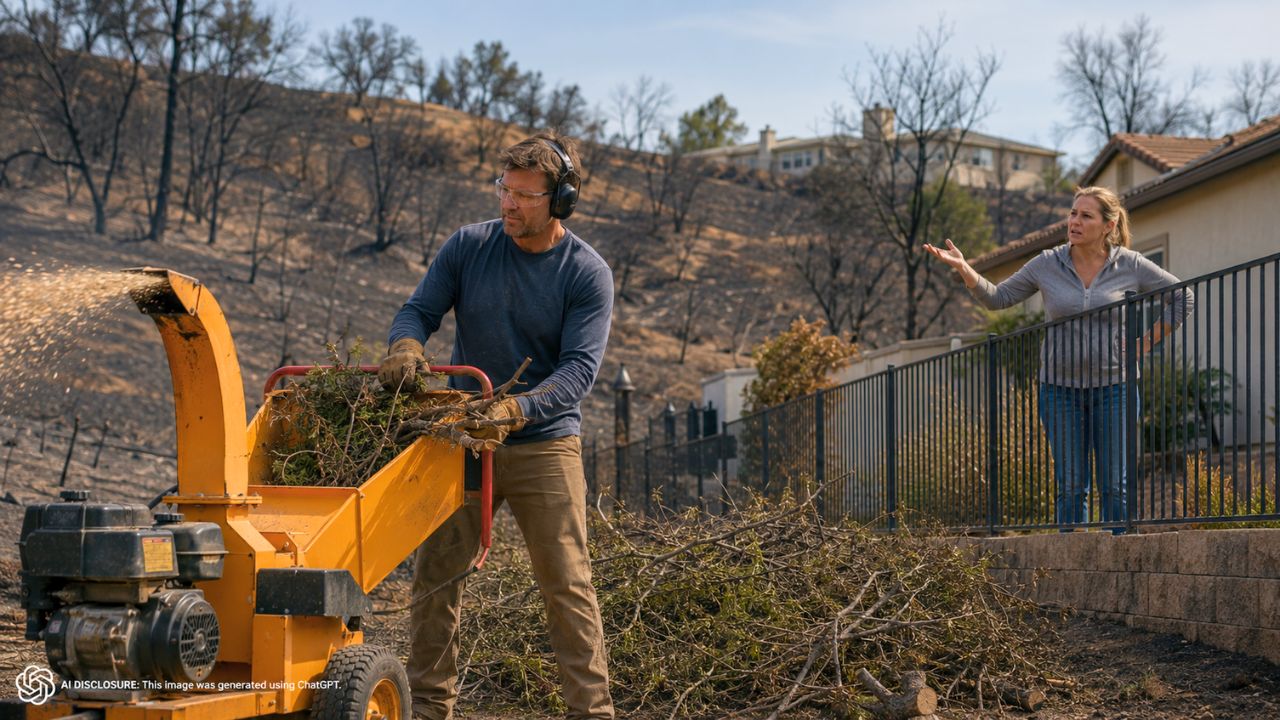
By late Sunday afternoon, the work was already in motion: a homeowner down near the bottom of a sloped, tree-filled property feeding branches into an electric wood chipper, trying to stay ahead of the next wildfire season. The machine was loud even though it wasn’t gas-powered, and the sound carried up toward the homes perched above a creek.
Then came the yelling from a neighbor’s deck. In the original post, the homeowner described spending years and roughly $20,000 clearing out old tree debris—work he says doesn’t just protect his own land, but primarily reduces risk for the neighboring houses that overlook it.
A wildfire-zone yard that never stops dropping branches
The homeowner’s property is about an acre and slopes down to a creek, with oak and sycamore trees covering the area. Across the creek there’s a short steep hill, and at the top are neighboring homes with decks that look down onto the trees and the debris-catching low spot near the creek.
It’s also a wildfire zone, which changes what “yard work” means. He said he has spent “probably $20k” over the past few years trimming oaks and hauling out massive amounts of old, accumulated debris. In his view, the dangerous fuel load wasn’t just an eyesore—it was a real hazard that, if ignited by a flying ember, would be more likely to threaten the homes above than his own.
But trees keep dropping limbs, leaves, and deadfall. Maintenance doesn’t end after one major cleanup, and he described needing a sustainable way to keep the property from turning back into a tinderbox.
The wood chipper was supposed to be the practical fix
To keep up with the steady stream of branches and trimmings, he purchased an electric wood chipper. It wasn’t bought as a weekend hobby; it was meant to make the ongoing cleanup manageable without repeatedly paying to haul and dispose of piles of vegetation.
The catch is noise. Even electric chippers aren’t subtle, and his is set up near the bottom of the property where the branches and leaves tend to accumulate. He estimated it’s about 200 feet from the neighboring homes across the creek, close enough that the sound still matters—especially when people are outside on their decks.
He also works during the week, meaning the only realistic time to do this kind of labor is on weekends. That put him on a collision course with the hours when neighbors are most likely to be relaxing, entertaining, or trying to enjoy a quiet afternoon.
Sunday at 4 p.m., the neighbor finally spoke up
He said he was chipping debris around 4 p.m. on a Sunday when he thought he heard someone yelling. When he looked up, he spotted what he called an “old grumpy neighbor” standing on his deck.
The homeowner shut the chipper off, pulled out his earplugs, and tried to figure out what the man wanted. The neighbor disappeared from view, and the homeowner called out a few times asking if he could help with something.
Eventually, the neighbor yelled back from partially out of sight—behind a tree or similar cover—saying the noise was annoying and he was trying to barbecue with his family. The homeowner said he stopped, even though he briefly debated starting the machine again because of the neighbor’s tone.
The ordinance said yes, but the neighborhood vibe said no
The homeowner pointed out that the city’s noise ordinance allows noise between 10 a.m. and 7 p.m. seven days a week, and he was operating within that window. From a rules perspective, he wasn’t trying to sneak in work at dawn or push it into the evening.
But neighborhood disputes don’t always follow the clean lines of an ordinance. A loud machine in a quiet canyon-like area can feel bigger than it is, especially if the sound is bouncing across a creek and up a hillside. And a Sunday afternoon is prime time for outdoor meals, family visits, and the exact kind of “this is my one day off” peace people feel protective about.
That’s the tension he couldn’t resolve on his own: if weekend work is his only option, and the work reduces wildfire danger that could threaten the homes above, how much courtesy does he owe to people who might benefit from the cleanup but still don’t want to hear it?
He considered a truce before the next blowup
Instead of escalating, he floated a small, practical next step: leaving a note in neighbors’ mailboxes with his phone number. His idea was to give people a direct way to tell him if the chipper was disrupting a specific event, so he could pause or adjust without a shouting match across the creek.
It’s also an attempt to keep control of the temperature. The first exchange already carried some edge—yelling from a deck, the neighbor vanishing when the machine shut down, then shouting again from behind a tree. That’s not a foundation for calm problem-solving.
At the same time, he made clear that he “in general” needs to use the chipper. The work is ongoing, and he framed it as part of keeping the property safer in a high-risk fire area, not a discretionary chore he can keep postponing.
What people latched onto: timing, communication, and the bigger safety picture
Even from the homeowner’s framing alone, the pressure points are easy to predict. One is timing: a chipper at 4 p.m. on a weekend can feel intrusive, even if it’s legal. Another is predictability—neighbors tend to tolerate noise better when it’s scheduled, limited, and communicated in advance.
The other point is the wildfire angle. He didn’t describe the cleanup as cosmetic; he described it as prevention, after spending thousands to reduce old debris that had built up for years. That creates a mismatch between his sense of urgency and a neighbor’s immediate experience of “my barbecue is getting drowned out.”
There’s also a fairness undercurrent: he believes the work mostly protects the uphill homes, which can make complaints sting more. But from the deck, a neighbor may only register the noise, not the money spent, the debris hauled, or the risk calculus behind it.
For now, the homeowner is left balancing two truths at once: he’s following the ordinance and trying to reduce fire danger, and he’s still the source of an annoying sound that can ruin someone’s quiet weekend moment. Whether a friendly note and a little scheduling can smooth things over—or whether the next round of yard work triggers another confrontation—will likely depend on how willing both sides are to treat it as a neighbor problem instead of a personal one.
Check out more from Now Rundown:
- A Party of 12 Came Back a Month Later Demanding Their $80 Tip Refunded — My Restaurant Made Me Pay It
- Her Coworker Kept Filing the Same Complaint About Her After Being Warned — Then She Filed a Counter-Report With Every Email Documented
- Siblings Demanded Half of Their Sister’s $11 Million Inheritance — She Refused Because They Never Visited
- The Kid I Bullied in Middle School Just Interviewed for a Job on My Team — He Bombed It and I Didn’t Hire Him

Abbie Clark is the founder and editor of Now Rundown, covering the stories that hit households first—health, politics, insurance, home costs, scams, and the fine print people often learn too late.