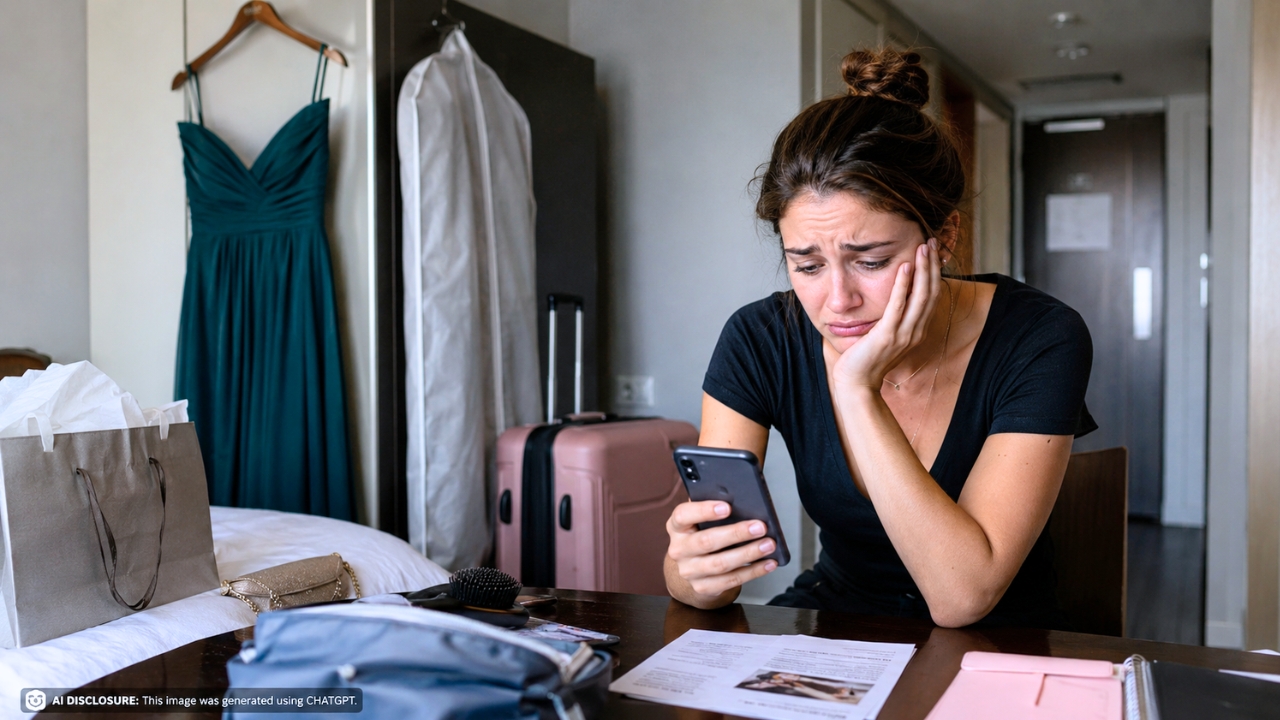
Woman Was Uninvited From a Wedding One Week Before — After Spending $400 on a Dress and Hotel Room
Photo credit: AI-generated image created using ChatGPT. Illustrative only.
She thought she was doing the normal, supportive-friend thing: RSVP early, follow the color dress code, help cover bachelorette costs, and book a hotel so a Friday wedding wouldn’t become a logistical nightmare. Then, with about a week to go, the bride sent a blunt message saying she was no longer invited—after the guest had already spent roughly $400 on a dress and lodging.
The woman laid out the story in the original post, describing a long, complicated friendship and a wedding lead-up that slowly turned into a one-sided obligation. Her frustration wasn’t just emotional. It was practical: money spent, time blocked off, and a sense that she’d been used for help and then cut loose when her presence felt “uncertain.”
A long friendship, but not a close one
The two women have known each other for more than 15 years, but the poster emphasized they aren’t best friends. In her telling, the dynamic was more history than intimacy—lots of “catch up” meetings and the bride venting, but not much real investment in her life.
That mismatch mattered later, because it shaped why she was surprised to be pulled into wedding-related tasks at all. She wasn’t a bridesmaid and wasn’t part of the bridal party, she said. She was invited as a regular guest only two days before the RSVP deadline, even though she’d been in the bride’s orbit for years.
Still, she ended up involved in some planning. She didn’t see it as unusual at the time—just something you do when you have a long history with someone, even if you’re not in their inner circle.
Wedding planning met chronic illness, and patience ran out
Right around the time the bride got engaged again, the poster became chronically ill. She said the illness has been severe enough that she hasn’t been able to work for almost a year, and it forced her to cancel multiple wedding-related appointments, including a dress shopping trip and a fitting.
She did make it to one dress shopping appointment but not the second, and she said she always explained why. But she also suspected the bride didn’t truly believe her symptoms, even though the bride claimed she understood.
What stung most wasn’t just skepticism. It was indifference. The poster said the bride didn’t really check in or ask how she was doing, which made her feel like she was expected to show up and perform support while getting very little care back.
She helped fund the bachelorette—then couldn’t attend
Despite her health limits, the poster said she co-planned and co-paid for the bachelorette. But when the event came, she couldn’t attend because of her illness.
That, she believed, was the turning point. A few days after the bachelorette, the bride sent a message that didn’t ask questions or open a conversation. It read more like a final decision.
The bride said she “can’t cope with any uncertainty” around the wedding, and she felt the poster hadn’t made enough effort. Then came the hard line: she had decided the poster would not be “part of her day,” and it was “finalized.” The poster described the tone as resembling a corporate termination email—polite on the surface, but cold and closed.
The timing made it expensive fast
The poster had RSVP’d back in January. Now it was May, with only about a week before the wedding. In that window, there wasn’t much she could do to undo the costs she’d already absorbed.
She said she’d purchased a dress to comply with a specific color dress code. She and her partner also planned around the unusual schedule: the wedding was on a Friday, so her partner needed to take paid time off.
And because it wasn’t a local, casual drop-in event, she’d booked a hotel room too. In total, she estimated being out about $400 for the dress and hotel alone—before even factoring in the bachelorette costs she’d already contributed to.
The sudden uninvite also made her rethink the earlier details. She noted that she’d received the e-invite just two days before the RSVP deadline, which made her wonder if she hadn’t been wanted in the first place and was invited late out of guilt or hesitation. To her, the last-minute cutoff fit a pattern of keeping her around when useful, then discarding her when inconvenient.
She asked for money back, and that’s where it got messy
After the uninvite, the poster didn’t just quietly eat the expense. She told the bride that if she was going to be uninvited so close to the date—without having raised concerns earlier—then the bride should cover her portion of the bachelorette costs.
It wasn’t framed as a petty revenge demand. It read more like a fairness argument: she’d helped fund a major pre-wedding event and was now being told she wasn’t welcome at the wedding itself, after months of planning and financial commitment.
At the same time, the poster made it clear she also wanted “some compensation” given that she’d spent money on wedding-specific requirements like the dress code, and her partner had rearranged work to accommodate the Friday ceremony.
The bride, at least in the material shared, didn’t respond with negotiation or specifics—no offer to reimburse, no discussion of partial repayment, no attempt to talk through what “effort” should look like for someone dealing with chronic illness. The poster was left with the costs and the feeling of being dismissed.
Most reactions focused on what was owed—and what was already gone
In the thread, the ruling highlighted in the source was “Not the A-hole,” reflecting support for the poster’s decision to push back after being cut out. The most practical focus wasn’t on whether the friendship could be repaired, but on the money: what expenses were realistically recoverable and what losses she might just have to absorb.
Some attention centered on the bachelorette contribution, since it was tied directly to the bride and the wedding timeline. The poster’s reasoning was simple: if her participation was treated like an obligation when the bride benefited, it shouldn’t be treated as optional the moment the bride felt anxious about “uncertainty.”
Others zeroed in on the bigger warning sign: being pulled into planning and spending for someone who wasn’t actually treating her like a valued friend. The late invitation, the lack of check-ins during illness, and the abrupt uninvite were read as clues that the relationship had been transactional for a while.
By the end, the poster wasn’t just out money. She was confronting a more uncomfortable reality: that “history” can keep you showing up for people long after they’ve stopped showing up for you. And when weddings compress emotions, schedules, and expectations into a tight deadline, those imbalances don’t stay hidden for long.

Abbie Clark is the founder and editor of Now Rundown, covering the stories that hit households first—health, politics, insurance, home costs, scams, and the fine print people often learn too late.