Woman Denied a Lucrative Contract to the Former Bully Who Tormented Her for Years — Then He Accused Her of Holding a Grudge
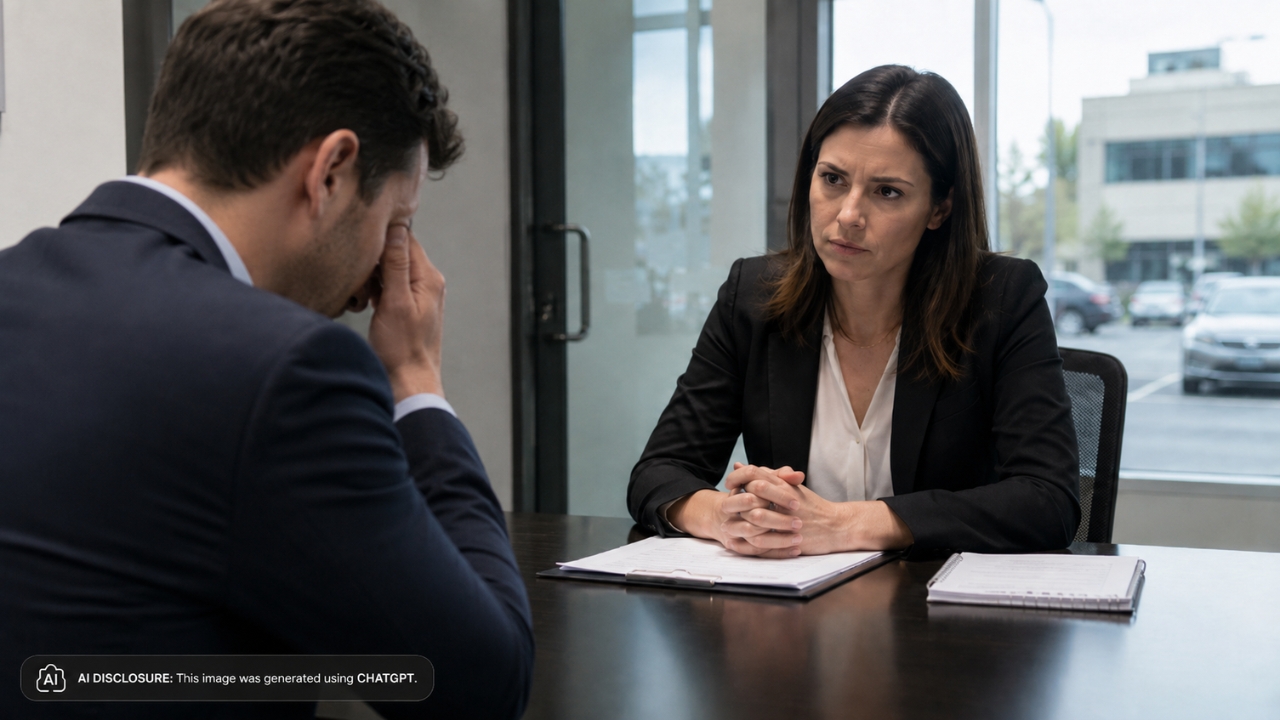
Photo credit: AI-generated image created using ChatGPT. Illustrative only
She’d been on the other side of cruelty in high school, watching classmates get targeted and watching her younger sister take the worst of it. Years later, she was sitting in a very different chair: hiring manager at a startup biotech company, interviewing candidates for a well-paying role.
Then a familiar face walked into the room. In the original post, the hiring manager describes coming face-to-face with a former high school bully—someone she says used to “torture” other students—now asking for a chance at a lucrative job. What followed was a fast, tense interview and a decision that left the applicant in tears in the parking lot.
Back then, the bullying was physical, public, and relentless
The hiring manager says she wasn’t the bully’s direct target in high school, but not because the bully was kind. She describes herself as “scrawny” and thinks she was simply “a waste of time” for someone who picked fights and ran on intimidation.
But she says she saw what happened to other students. In her account, the bully beat people up, challenged boys and girls to fight, and threatened classmates into doing things. Most personal to her: she says her younger sister was one of the victims.
The fear got so heavy that her parents moved both siblings to a different school farther away. After transferring, she didn’t see the bully again—until that day at work.
Then the bully walked into the interview room
By the time they crossed paths again, the power dynamic had completely flipped. The former bystander was now the person deciding who gets hired. The former aggressor was the one trying to make a good impression.
When the applicant came in and realized who would be interviewing her, the hiring manager says she “literally froze.” The moment landed like a shock: not just recognition, but the kind of recognition that comes with years of history attached.
The hiring manager didn’t describe any attempt at small talk or catching up. She went straight into the interview and, by her own telling, made it harder than usual.
A tougher interview, a quicker rejection, and a deliberate sting
The interviewer says she asked “ridiculously difficult technical questions” and watched the applicant “fumble and stammer.” There’s an important detail here: this wasn’t just a neutral evaluation of skills. The hiring manager frames it as intentional.
Instead of the standard company approach—telling candidates they’d hear back in a few days—she decided to end it on the spot. She told the applicant, “I’m sorry, you just don’t have what it takes. I’m not going to be able to offer you the position.”
And she didn’t hide why she was doing it in that moment. She says she wanted to see the look on the applicant’s face. That choice turned a normal hiring decision into something sharper: part evaluation, part payback.
“I really needed this job,” the applicant pleaded
Once she realized the decision was final, the applicant tried to salvage the opportunity. She told the interviewer she’d been out of work for three months and said she really needed the job. She insisted that if she were given a chance, she could prove she could do the work.
The hiring manager didn’t budge. She responded that she couldn’t “set our company up for failure by hiring you,” then ended the meeting: “The interview is over.”
They still went through the motions of a professional exit. The interviewer stood up and offered her hand, and the applicant shook it before leaving.
Ten minutes in the car, and the reality of what happened hit
The part that stuck with the hiring manager wasn’t the handshake. It was what she saw afterward.
From her window, she watched the applicant sit in her car and cry for 10 minutes before driving away. The image was visceral enough that it didn’t just feel like a clean break; it lingered.
At first, the hiring manager says, it felt like justice—like she “scored one for all the people who have been bullied,” especially her sister. But once the adrenaline wore off, she began replaying her own behavior with a different lens. She worried she’d acted too harshly and “out of line” for someone in her position.
Reactions zeroed in on professionalism—and the risk to her own job
The hiring manager labeled herself “conflicted,” but she also framed the lesson bluntly: if you might need someone’s help someday, don’t be cruel today. It’s a warning that reads like it’s directed at her former bully, but it also applies to anyone who makes decisions with power.
In stories like this, the most practical concern isn’t only whether the candidate “deserved” rejection. It’s what happens when a hiring manager turns an interview into a personal reckoning. Even without any formal complaint mentioned in the post, the risk is easy to understand: a rejected applicant can contact the company, contest how the interview was conducted, or claim bias.
And the hiring manager admits she deviated from standard practice specifically to hurt the applicant’s feelings. That detail alone could be dangerous in a real workplace, because it’s not about qualifications anymore—it’s about motive. In many professional settings, the safest path is to keep interviews structured, document performance-based reasons, and let HR handle communications when there’s a potential conflict of interest.
At the same time, the post doesn’t describe the applicant apologizing, acknowledging past behavior, or demonstrating any accountability. The only thing she offered was need: unemployment for three months and a promise that she could do the job if given a chance. That may be true—but it’s not the same as addressing the history that clearly flashed across both of their faces the second the door opened.
The hiring manager is left holding two competing truths. One is deeply personal: she saw real harm done to other kids, including her sister, and she remembers it clearly. The other is professional: she’s in a role where decisions should be defensible on skills, not revenge.
Whether it was justice or a misstep, she got the moment she thought she wanted. Now she’s stuck with the image of someone crying in a car—and the uncomfortable possibility that the old bully wasn’t the only person in that room who used power to make someone feel small.

Abbie Clark is the founder and editor of Now Rundown, covering the stories that hit households first—health, politics, insurance, home costs, scams, and the fine print people often learn too late.