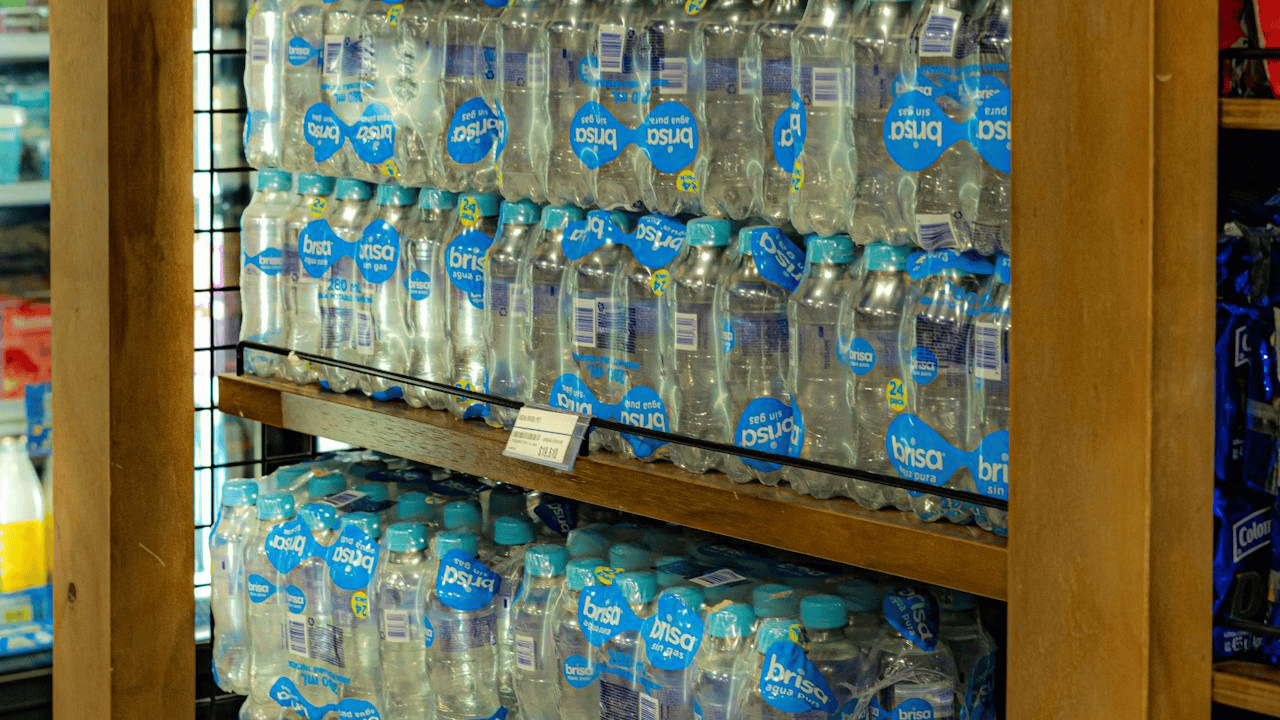
The bottled water marketing claim that’s mostly noise
Photo credit: Nicolás Rueda/Pexels
Bottled water companies have spent years convincing you that what comes in a plastic bottle is cleaner, safer, and more sophisticated than what flows from your tap. The core promise is simple: purity and health, conveniently packaged. Yet when you look closely at the science, the lawsuits, and even blind taste tests, a lot of that promise turns out to be marketing noise rather than meaningful difference.
What you are really buying, again and again, is a story about purity and lifestyle layered on top of a product that is often no better than municipal water and sometimes literally the same thing. Once you strip away the slogans and mountain imagery, the gap between the image and the reality becomes hard to ignore.
The purity myth that built a multibillion dollar habit
The modern bottled water boom rests on a powerful idea: that what comes out of your tap is suspect, while what comes in a sealed bottle is pristine. Marketers have leaned heavily on words like “pure”, “natural”, and “pristine” to frame bottled water as a kind of liquid insurance policy, something you buy to protect yourself and your family from unseen contaminants. You are not just paying for water, you are paying for reassurance that someone else has done the filtering and testing for you.
Consumer advocates have pointed out that if you pick up almost any bottle of spring or mineral water, you will see this language repeated, often alongside images of untouched landscapes and snow capped peaks that suggest a source far removed from industrial life. One detailed review of bottled water labels noted how frequently brands rely on these purity cues, even when the underlying product is not subject to stricter standards than tap water and may in fact be regulated less tightly. Marketing has also positioned bottled water as healthier than what comes from your faucet, despite scientific evidence that tap water in many regions is tested more frequently and more rigorously than bottled alternatives.
When “pure” is just tap water in disguise
Behind the purity myth sits a more awkward reality: a significant share of bottled water is simply treated municipal water, repackaged and sold at a huge markup. You pay hundreds or even thousands of dollars a year for something that, in many places, you could get for a few dollars in tap fees. One widely shared video analysis framed this as a straightforward scam, pointing out that the core product is often indistinguishable from what already runs into your kitchen sink, except for the branding and the plastic.
There have been high profile cases where companies were challenged for using words like “pure” to advertise water that originated from ordinary municipal supplies. The Coca and Cola Co faced questions in Britain after promoting its Dasani bottled water with purity claims, even though the water was sourced from the local system and then filtered. That controversy highlighted how easily the line blurs between tap and bottle once you strip away the label. If you assume that a premium brand must be drawing from some remote alpine spring, the reality that it may start as the same water that fills your bathtub undercuts the entire value proposition.
Legal challenges to “False and Deceptive Marketing”
As the gap between marketing and reality has become more visible, bottled water brands have increasingly found themselves in court. Earlier this year, PepsiCo, Inc, FIJI, Water, and Danone Face a set of “False and Deceptive Marketing” lawsuits in Washington, D.C., with complaints arguing that their sustainability and purity claims mislead consumers. The filings contend that these companies present their products as environmentally responsible and uniquely healthy, while downplaying the plastic waste and the fact that the water is not demonstrably safer than tap in many jurisdictions.
Separate complaints have targeted FIJI Water specifically. One case, described as Plastic Pollution Coalition Files a “False and Deceptive Marketing” Complaint Against Makers of FIJI Water, draws on a Poll of consumer perceptions to argue that branding has convinced buyers that FIJI is a cleaner and more sustainable choice than it actually is. Another complaint, focused on Core Hydration, notes that Claims around the sustainability and healthfulness of bottled water are being debunked as marketing spin that ignores the long term environmental costs of single use plastic. These legal actions do not just challenge individual slogans, they question an entire industry narrative that equates bottled water with virtue and safety.
What blind taste tests and tap comparisons really show
When you remove the label and the marketing story, the supposed superiority of bottled water often evaporates. In one widely cited comparison, researchers tested a bottle of Fiji against a glass of tap water from Cleveland. The experiment was designed to see whether the premium brand actually delivered a cleaner or better tasting product than a standard municipal supply. The results undercut the idea that paying extra guarantees a better experience, and they reinforced how much of bottled water’s appeal is psychological rather than sensory.
Public taste tests and informal experiments have repeatedly shown that people struggle to distinguish bottled brands from tap when they do not know which is which. A discussion on a popular forum about “The Bottled Water Scam” captured this skepticism, with one commenter noting that viewers should be smart enough to recognize when a commercial is feeding them “a load of malarkey” about taste and quality. Even rankings of popular bottled water brands, which sometimes highlight differences in mineral content or filtration processes, often concede that the perception of quality is heavily shaped by branding. One detailed ranking of 29 popular bottled water brands pointed out that while some products go through multiple filtration steps, that does not automatically mean they are of better quality than tap, and consumers who assume otherwise are likely mistaken.
How marketing preys on health anxieties
Bottled water advertising does not just sell purity, it sells protection from vague health threats. You are told that tap water is full of chemicals, that only a particular brand can deliver the “clean” hydration your body deserves, and that anything less is a compromise. This messaging taps into real concerns about aging infrastructure and contamination incidents, but it often glosses over the fact that municipal systems are subject to strict testing regimes that many bottled products do not match. The result is a kind of free floating anxiety that nudges you toward the bottle even when your local tap water is demonstrably safe.
Social media conversations reflect how deeply this narrative has sunk in. One widely shared post noted that marketing has positioned bottled water as purer and healthier, but scientific evidence shows that tap water is often regulated as strictly, or more strictly, than what you buy in a bottle. The same post called out brands like Crystal Geyser and a Whole Foods store brand, with the author reacting, “Dang, Crystal Geyser. Not surprised. Was surprised by Whole Foods brand,” before adding that if you are not making it yourself, you may be trusting a process that is not as transparent as your local water utility. When you see “alkaline”, “electrolyte enhanced”, or “pH balanced” splashed across a label, you are often looking at health anxieties turned into a premium upsell rather than a medically meaningful upgrade.
The environmental cost hidden behind the label
Even if you accept that bottled water is not significantly purer than tap, you might still reach for it out of habit or convenience. What the label rarely foregrounds is the environmental cost of that choice. Every bottle requires fossil fuels to produce the plastic, energy to filter and chill the water, and more fuel to ship it to warehouses and stores. You are effectively burning oil and water to move water around in small containers, a process that makes little sense in places where safe tap water is already available.
Analyses of the industry’s footprint have highlighted how resource intensive this system is. One breakdown of reasons to stop buying bottled water notes that you will be reducing your use of fossil fuels and, ironically, water by filling your own bottle instead. It points out that for every one litre bottle produced, significantly more water is consumed in manufacturing and bottling than ends up in the container you drink from. Environmental advocates involved in the Claims against Core Hydration have also stressed that plastic pollution cannot be “recycled away”, and that a world already struggling with microplastics in oceans and food chains needs less plastic, not more. When you buy into the purity story, you are also buying into a waste stream that lingers for decades.
Why “sustainable” bottled water is a contradiction
In response to growing criticism, many brands have pivoted to sustainability messaging, promising “eco friendly” bottles, “responsibly sourced” water, or “carbon neutral” operations. On the surface, this sounds like progress. In practice, it often functions as another layer of marketing that distracts from the basic problem of single use packaging. You are encouraged to feel virtuous about choosing a bottle made with slightly more recycled plastic, rather than questioning why you need a disposable bottle at all.
The recent complaints filed by Plastic Pollution Coalition Files against FIJI Water and Core Hydration argue that this kind of sustainability branding can itself be deceptive. The FIJI case leans on Poll data to show that consumers interpret the brand’s imagery and language as a promise of low environmental impact, even though the product still relies on long distance shipping and single use plastic. The Core Hydration complaint emphasizes that Claims about being “better for the planet” ignore the reality that plastic pollution is a systemic issue that cannot be solved by marginal tweaks to bottle design. Environmental advocates involved in these actions have been explicit that the world needs less plastic, not more, and that framing bottled water as a green choice risks delaying the shift toward refillable systems and public infrastructure.
The psychology of paying for what is almost free
Once you recognize that bottled water is often no cleaner than tap and far more resource intensive, the remaining question is why you keep buying it. The answer lies in psychology as much as in hydration. You are paying for convenience, for the status of a recognizable brand, and for the subtle social signal that you care about health and wellness. Beverage companies have turned bottled water into a multibillion dollar industry by attaching it to fitness culture, travel routines, and even office etiquette, so that carrying a particular bottle feels like part of a lifestyle rather than a simple way to drink water.
One analysis of consumer behavior framed this bluntly: paying for bottled water makes you a chump when the same product is so cheap it is almost free from the tap. That critique pointed to the Fiji versus Cleveland tap comparison as an example of how easily perception can be manipulated. Online discussions, including threads on platforms like Reddit where users dissect “The Bottled Water Scam”, show a growing awareness that people are being sold a story more than a substance. Yet even among skeptics, the habit can be hard to break, especially when vending machines, convenience stores, and event venues are set up to make bottled water the easiest option in the moment.
How to cut through the noise and choose smarter
If you want to step off the bottled water treadmill, the first move is to separate marketing claims from measurable facts. Instead of assuming that a brand is safer because it uses words like “pure” or “natural”, you can look up your local water quality report and compare it to what is disclosed on bottled labels. In many cities, tap water is tested more frequently and for a wider range of contaminants than bottled products, and the results are publicly available. A simple home filter can address taste or specific concerns without generating a stream of plastic waste.
On the go, a reusable bottle is the most effective way to opt out of the single use system. You reduce your reliance on fossil fuels and water intensive manufacturing, as highlighted by analyses that track how much resource use is embedded in every one litre bottle produced. When you do buy bottled water, you can treat it as an occasional backup rather than a default, and you can be skeptical of labels that lean heavily on unverified purity or sustainability language. The lawsuits against PepsiCo, Inc, FIJI, Water, Danone Face, and the complaints documented by Plastic Pollution Coalition Files show that regulators and advocates are increasingly willing to challenge exaggerated claims. Your own purchasing choices can send a similar message: that you are no longer willing to pay a premium for what is, in many cases, just well branded tap water in a plastic shell.

Abbie Clark is the founder and editor of Now Rundown, covering the stories that hit households first—health, politics, insurance, home costs, scams, and the fine print people often learn too late.