Man Found a Credit Card Opened in His Name — Then He Was Told a Police Report Might Be the Only Way to Clear It
Photo credit: TetianaKtv/Shutterstock.com
A man says he was checking his credit report when he found something that did not belong there.
A credit card had been opened in his name.
He explained in a Reddit post that he immediately reported the account to the FTC and called the credit card company’s fraud department. The card issuer was already handling its side of the investigation, but he still had one question nagging at him: would filing a police report actually help?
That question makes sense because identity theft often puts victims in a strange position. They know a crime happened, but they also know police may not launch a full investigation over one fraudulent account. The person who opened the card may be impossible to identify. The address used may be fake. The account may have been opened online using information stolen from somewhere else entirely.
So the man wondered if calling police would do anything or if the report would just disappear into a file.
He had some law enforcement background himself, but he said it had been a long time, and he no longer knew how agencies handled identity theft cases. That made him realistic about the odds of an actual investigation. He did not seem to expect detectives to instantly track down the person who used his information.
But he also did not want to skip a step that might matter later.
He had found an address used on the fraudulent account, though he admitted it might not mean much. A smart thief probably would not use a real address, but as he put it, sometimes criminals are stupid. That tiny possibility made the police-report question feel more important. If the address was real, maybe there was a lead. If it was fake, at least he would have documentation.
Commenters were pretty clear: file the report.
Not necessarily because police would solve the case, but because the report could become the proof he needed when dealing with credit bureaus, creditors, and debt collectors. One commenter said a police report can be the “gold standard” for proving identity fraud. Another said that without it, he could face a much harder time convincing companies he was not responsible for the account.
That is the part people do not always understand until identity theft happens to them. Reporting the account to the card company is important, but the victim still has to prove they are the victim. The fraudulent account may be sitting on their credit report. It may get sold to collections. It may show missed payments. It may hurt their score before everything is fixed.
A police report is not magic, but it creates an official record.
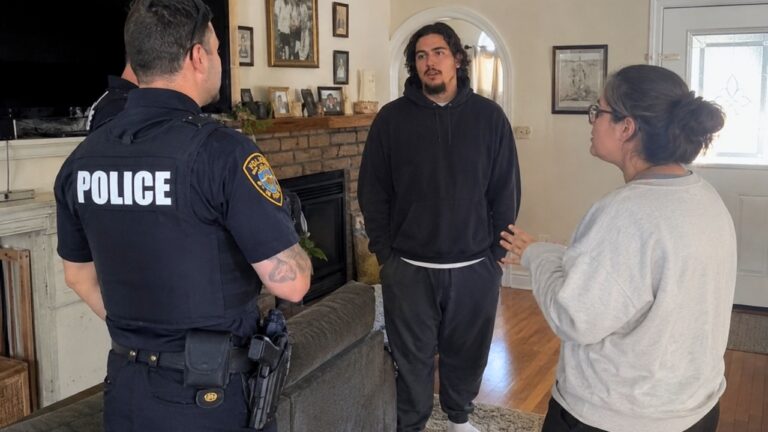
The man took that advice quickly. In the comments, he said he called his local agency. He also froze his credit with all three major credit bureaus and planned to report the fraud to IC3, the FBI’s Internet Crime Complaint Center.
That showed he was taking the right approach: stop new accounts from being opened, document the fraud, and create a trail with every agency or company that might matter.
Still, the frustration is obvious. He did not open the card. He did not spend the money. He did not create the mess. Yet he was the one making phone calls, filing reports, freezing credit, and trying to make sure this did not follow him.
That is the exhausting part of identity theft.
The thief may only need a few minutes to open an account. The victim can spend months proving the account never should have existed.
The post did not end with a big arrest or dramatic confrontation. It ended with something more familiar to fraud victims: documentation, freezes, calls, and the hope that acting quickly would keep the damage from spreading.
The credit card may have been fraudulent.
But the paper trail had to be very real.
Commenters overwhelmingly told him to file a police report. Most said it might not lead to an active investigation, but it could be essential when disputing the fraudulent account with the credit card company, credit bureaus, or collectors.
Several people said a report creates an official record showing he treated the account as identity theft from the beginning.
A lot of commenters also told him to freeze his credit so no more accounts could be opened in his name. He later said he froze his credit with all three major bureaus.
Others suggested following standard identity-theft steps, including FTC reporting and IC3 reporting if the fraud appeared to involve online activity.
The strongest advice was simple: do the police report even if nothing dramatic happens. In identity theft cases, documentation is often what protects the victim later.

Abbie Clark is the founder and editor of Now Rundown, covering the stories that hit households first—health, politics, insurance, home costs, scams, and the fine print people often learn too late.