Bride Replaced Her Best Friend as Maid of Honor 6 Weeks Before the Wedding — They Haven’t Spoken Since
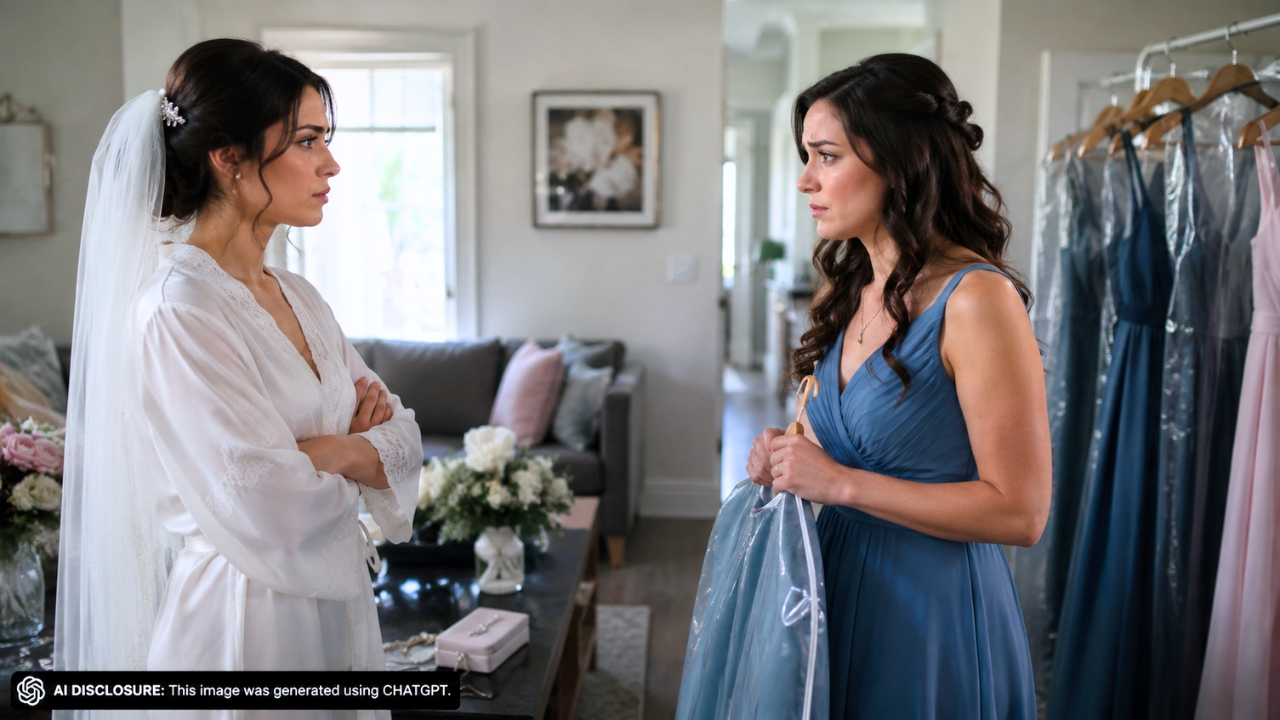
Photo credit: AI-generated image created using ChatGPT. Illustrative only.
By the time the bride’s wedding plans were supposed to be getting easier, the friendship at the center of her bridal party was unraveling fast. With the ceremony coming up in September, she says she ended up removing her longtime best friend from the maid of honor role after a fight over one purchase: the bridesmaid dress.
They’d known each other since fifth grade and were close through school, even if life had pulled them into different routines once the bride moved away for college. But when the bride laid out simple dress guidelines and asked everyone to cover their own outfits, she says her maid of honor pushed back hard—then escalated it into a demand that left the bride choosing between her budget and her wedding lineup.
The wedding plan sounded straightforward—until the dress bill landed
In her retelling in the original post, the bride explains that she’s in her mid-20s, along with her bridesmaids. Everyone is employed, and no one has children. The wedding is out of town for the maid of honor and a couple of other bridesmaids, so the bride says she’s already covering a hotel room for those traveling in.
Dress shopping happened a couple months ago, and it was a trip: out of town, with the bride paying for two hotel rooms and driving. Her mom transported the maid of honor and other bridesmaids from their hometown. The bride says her only rules were a specific blue color and no satin material—otherwise, bridesmaids could choose a dress that worked for them.
By the end of the shopping day, everyone had found something they liked, including the maid of honor. But the bride later learned the maid of honor had selected a dress priced around $350, while most other bridesmaids were choosing options in the $100 to $150 range.
The first complaint didn’t even reach the bride directly
The next day, while the group relaxed by the pool, the maid of honor started venting—just not to the bride. According to the bride, the maid of honor complained to another bridesmaid about having to pay for the dress at all, arguing that since it was the bride’s wedding, the bride should cover bridesmaid attire if she wanted anything specific.
The maid of honor also brought up a past grievance: when the bride had been in her wedding, the bride hadn’t paid for a bridesmaid dress. The bride’s explanation is that the maid of honor got married at 18, and the bridal party wore old prom dresses they already owned, making it a very different situation financially and logistically.
The bridesmaid who heard the poolside complaints told the maid of honor that the bride’s request was reasonable and that she could pick any dress she wanted within her own budget. The maid of honor reportedly disagreed. The bridesmaid dropped it in the moment, then later told the bride what had been said.
A month later, it turned into a direct demand
The issue might have stayed a grumble if it hadn’t taken a sharper turn. A month after the trip, the bride says the maid of honor called and asked her to buy the dress for her.
The bride refused, saying she couldn’t justify paying for one person’s dress and not everyone else’s, and she also couldn’t afford to buy the entire bridal party’s attire. That’s when the maid of honor, as described by the bride, argued that as maid of honor she deserved special treatment—and that others would understand it as a “privilege” that came with the role.
The conversation escalated into a heated argument. The bride says she ended it with a firm boundary: if the maid of honor would not get a dress, she couldn’t be in the wedding. Then, the maid of honor hung up.
Then the moms got involved, and the bride made a decision
After the phone call, the bride says the maid of honor’s mother called her to scold her for being “very rude” and for refusing to do “this one thing” so her daughter could stand beside her on the wedding day. The mother also argued that the bride didn’t understand what it was like to be short on money.
The bride pushed back, saying she has struggled financially before too. But she kept returning to the same point: paying for one dress, especially the maid of honor’s, wouldn’t be fair to the other bridesmaids who were paying for their own dresses.
With the standoff unresolved, the bride made a move that effectively reset the wedding party. She promoted another bridesmaid—someone she says had been helping heavily with planning—to maid of honor. She also says she still invited her former maid of honor as a guest and sent an invitation, trying to keep the door open in some form.
Even so, the personal fallout was immediate. The bride says some of her own family members told her she should have just paid for the dress. Meanwhile, she describes her ex–maid of honor as being tight on money, but also notes that the maid of honor had known she’d be in the wedding for nearly two years, which the bride believed was enough time to plan and save for the expense—or choose a lower-cost dress that still fit the color and fabric rules.
What people zeroed in on: budget choices, fairness, and expectations
The bride framed the problem as less about money in the abstract and more about choices and entitlement. She hadn’t demanded a specific designer dress, she says—just a blue dress, not satin. In that context, several practical questions jump out: if most bridesmaids found dresses in the $100–$150 range, why did the maid of honor select a $350 option and then insist the bride pay for it?
It also turned into a fairness issue within the bridal party. The bride’s stance was that covering one person’s dress would create resentment or at least a double standard, especially when the bride had already paid for lodging during the shopping trip and planned to cover hotel rooms for out-of-town bridesmaids for the wedding itself.
At the same time, the bride didn’t deny the possibility of real financial strain. She acknowledged that her former maid of honor is tight on money. But she viewed the demand for special treatment—rather than a request to pick a cheaper dress or find a compromise—as the moment where it stopped being a budgeting problem and became a respect problem.
Now there’s a wedding date on the calendar—and a friendship on ice
With the maid of honor role reassigned, the bride has effectively chosen stability over sentiment, at least for the ceremony itself. The practical pieces—dresses, planning duties, and who stands where—can be rearranged. The relationship is harder.
What’s left is an uncomfortable reality: even though the bride sent an invitation and says her former maid of honor is still welcome, the argument didn’t end with a compromise. It ended with a hang-up, a parental intervention, and a replacement. And with the wedding still ahead, there’s a real chance that the biggest lasting cost won’t be a $350 dress—it’ll be the silence between two people who used to call each other best friends.

Abbie Clark is the founder and editor of Now Rundown, covering the stories that hit households first—health, politics, insurance, home costs, scams, and the fine print people often learn too late.