Bride Charged Her Wedding Guest $200 for Bringing an Uninvited Plus-One
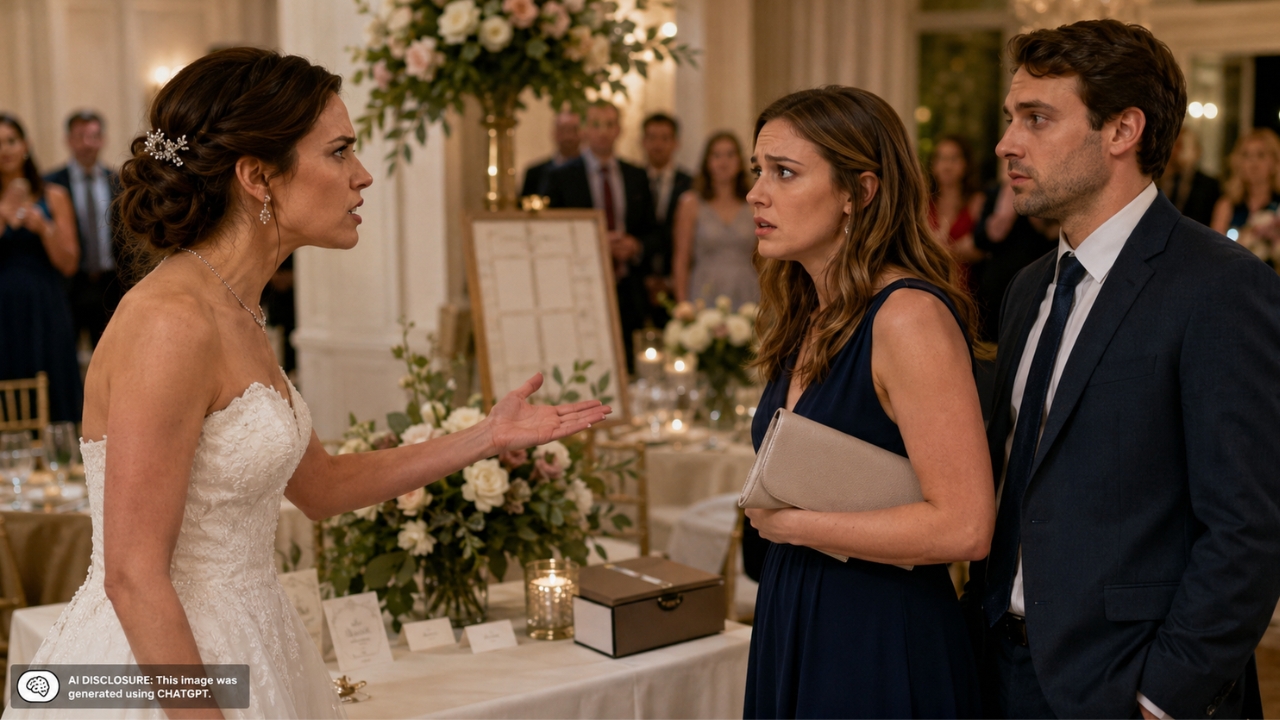
Photo credit: AI-generated image created using ChatGPT. Illustrative only.
A small wedding is supposed to make things simpler: fewer moving parts, fewer surprises, and a guest list you can actually picture in your head. For one newlywed, it did the opposite the moment a guest walked in with two extra people who hadn’t been invited—and then tried to claim seats that belonged to others.
By the end of the night, the couple wasn’t just dealing with awkwardness and reshuffled tables. They were staring at a venue bill that included a fine for going over capacity, and the bride decided to send that charge straight to the person who brought the unexpected tagalongs.
A tight guest list met a hard capacity limit
The wedding was intentionally small, held at a small venue with a strict headcount limit tied to fire codes. That detail mattered, because it meant the guest list wasn’t just about budget and preference—it was about staying within the rules of the space.
According to the original post, guests were invited, tracked through RSVPs, and accounted for in the seating chart. In other words, the couple had done the standard planning that keeps a reception running smoothly: names matched to chairs, meals, and tables.
Then one guest arrived with her two children. The kids were not invited, not listed on the RSVP, and not included in the seating plan. In a venue where every body counts, three people showing up under one invitation immediately put pressure on everything else.
The moment she walked in, the seating plan started collapsing
The bride described the guest coming in and simply deciding to seat her children at her assigned table, even though there were no spots for them. That choice didn’t just create a “pull up a chair” inconvenience—it displaced other invited guests.
In a small room, there’s nowhere to hide that kind of problem. The couple had other people who were supposed to sit there, and those seats were effectively taken. It’s the kind of domino effect that can spill into food service, table settings, and the general flow of a reception.
The night escalated when the guest refused to give the seats back. What might have been a quick fix—moving the kids elsewhere, finding an extra chair, or stepping outside to make a call—turned into a standoff that created a commotion noticeable enough to draw management into it.
Venue staff stepped in—and the fine became real
Once the venue manager noticed what was happening, the issue stopped being a private disagreement between the couple and one attendee. Management warned that the wedding would be charged a fine for exceeding capacity, pointing to the contract and the fire-code limit.
That’s the piece that raised the stakes. This wasn’t just a matter of etiquette or someone being inconsiderate. The venue treated it as a compliance problem—too many people in the room—and that meant money.
After the wedding, when the bill arrived, the bride saw that the over-capacity penalty had actually been applied. With an extra cost tied directly to the uninvited additions, she chose a direct approach: she sent the bill to the guest and asked her to pay it.
The guest’s defense: “I had no choice”
The guest didn’t accept responsibility. According to the bride, she argued that it wasn’t her fault and suggested the couple should have planned for “unforeseen charges” when budgeting for the wedding.
She also said she couldn’t find a babysitter, framing the decision as something she had to do rather than a choice she made. And she went a step further, telling the bride she should be grateful she made the effort to attend at all.
It’s a familiar clash of expectations: one side sees an invitation as a firm headcount commitment, especially in a small venue; the other treats attendance as a favor and assumes flexibility when childcare falls through. The problem is that flexibility is exactly what strict capacity rules don’t allow.
Most reactions centered on accountability—and the contract
The post was labeled “Not the A-hole,” and the overall reaction leaned heavily toward holding the unexpected-plus-two guest accountable for the cost she triggered. The reasoning was straightforward: the couple didn’t just prefer a small wedding; they were constrained by a venue limit with financial consequences.
People also focused on how the guest’s choices stacked up. She didn’t just ask ahead of time or give a heads-up. She arrived with two uninvited children, took seats intended for others, and then refused to give those seats back when challenged. In that version of events, the fine wasn’t a random surprise—it was the predictable outcome of ignoring a hard limit.
Commenters also tended to treat the venue’s role as a key detail. A fire-code capacity limit isn’t a “nice-to-have” guideline; it’s something the venue can be forced to enforce, and it can put the couple in a bind mid-reception. In that light, sending the bill to the person who caused the overage read less like pettiness and more like damage control after someone else took liberties.
After the bill, the relationship damage may be the lasting cost
Even if the guest pays, there’s the question of what happens next. Charging someone for a wedding-related fine is a direct move, and it’s hard to imagine the friendship—or family connection, if that’s what it was—snapping right back to normal afterward.
If she doesn’t pay, the couple is left deciding whether to eat the cost, keep pressing, or cut ties. And because the dispute is tied to a contract-backed venue penalty, it’s not the kind of disagreement that fades into “wedding drama” and disappears. It has a receipt attached.
The bride planned a small event to keep things under control. One guest treated the boundaries as optional, and the venue treated them as non-negotiable. Now the newlyweds are left with the kind of post-wedding task no one puts on a checklist: figuring out who should pay when an uninvited plus-one turns into an expensive problem.

Abbie Clark is the founder and editor of Now Rundown, covering the stories that hit households first—health, politics, insurance, home costs, scams, and the fine print people often learn too late.