My Manager Made My Coworker Pay Back an $80 Tip Out of Her Own Wages a Month After the Party Left
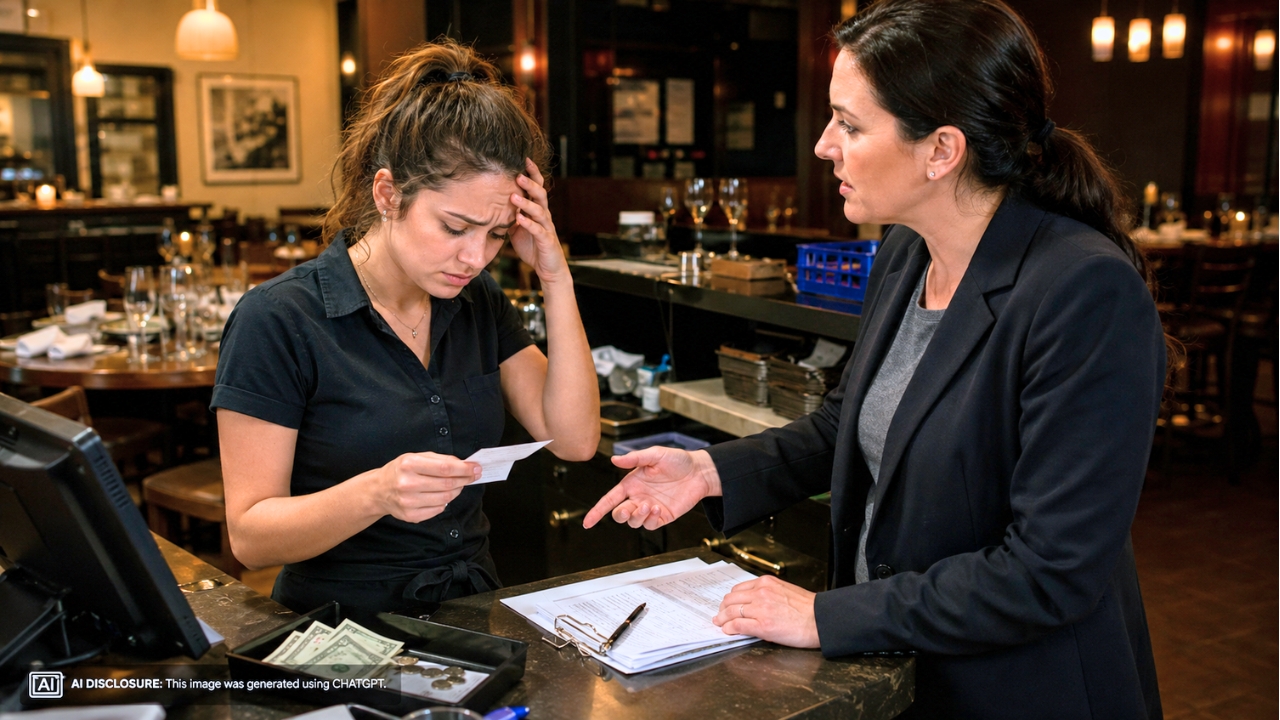
Photo credit: AI-generated image created using ChatGPT. Illustrative only.
It started as the kind of big-ticket event servers brace for: a large party, a blocked-off section of the restaurant, food and liquor packages, and multiple servers assigned to keep everything moving. The group’s bill included an automatic gratuity listed as a service fee, and when the event wrapped, the host signed the final check and left an additional tip on top.
Then, a month later, the money came back around—only this time it was headed in the opposite direction.
A polished private party, and a tip that looked straightforward
During the event, everything was structured the way many restaurants handle large groups. There was an auto-grat baked into the total and clearly labeled as a service fee. That part matters, because it’s designed to avoid exactly the problem of a big party taking up a section, requiring extra staff, and then leaving little to nothing behind.
On top of that, the party left an extra tip when the final bill was signed. The server who later described the experience said they weren’t present for the signing itself, which meant they didn’t see what was explained at the table, what questions were asked, or how the receipt was presented.
At the time, the extra tip didn’t come with alarms attached. It read like a simple “thank you,” something the staff likely took as a good ending to a demanding shift.
A month of silence, then a request to undo the extra tip
According to the account shared in the original post, the first time this became a problem was not the night of the event, not the next morning, and not when tips were distributed. It was a full month later.
A member of the party reached back out to management and said they didn’t realize the bill included an auto-grat. Because of that, they wanted the extra tip returned.
Whether the guest truly missed the service fee line or simply regretted the total later, the outcome was the same: the restaurant “presumably complied,” the server wrote, because management then told them that the portion of the extra tip they had been paid would be taken out of their next paycheck.
That’s the moment the story stops being about a customer misunderstanding and turns into a paycheck problem.
Management’s decision lands on the staff’s paychecks
There’s a particular sting to learning about a reversal after the money has already been processed and spent. Tips aren’t theoretical for servers; they’re rent, groceries, gas, and catching up on bills after a slow week.
In this case, management didn’t frame it as the restaurant absorbing the cost of a refund. The message was direct: the server would have the amount they received pulled from their next check.
It also raised a second issue that’s easy to overlook until it hits: taxes. The server questioned whether the restaurant would reimburse taxes that were initially withheld or charged based on that income. If a tip shows up in payroll systems, it can affect take-home pay and reported earnings even if the dollars are later clawed back.
The server’s post wasn’t just venting; it was practical. They asked whether others had encountered this and how it works when the “income” is effectively reversed long after the shift ends.
The timeline is what makes it feel so lopsided
Refunds and chargebacks happen in restaurants, but they usually come quickly—within days, not weeks. A month-long gap changes the whole dynamic.
By that point, the tip has been distributed among staff, recorded, and likely taxed. The event is no longer fresh enough for anyone to remember the exact conversation at the table or whether the service fee was verbally explained. And the staff member who posted about it wasn’t even present for the signing, making it harder to reconstruct what happened in that final moment.
The delay also means the guest had time to review statements, talk among themselves, and decide whether to ask for money back. Meanwhile, the staff’s ability to contest it shrinks with every passing week, because the paper trail gets harder to pull and the shift feels like ancient history to management.
That imbalance—slow customer regret versus immediate employee consequences—is the part that tends to make these disputes explode inside workplaces.
What people tend to focus on: receipts, pay stubs, and who should eat the refund
Even without a full comment thread included, the core questions raised by the server point to the same practical pressure points workers typically zero in on when something like this happens.
First: documentation. When a refund is requested long after the fact, workers want to know what management is using to justify it. Is there a signed receipt showing the additional tip? Is the auto-grat clearly printed and itemized? Was it labeled as a service fee, and is that language consistent with how the restaurant explains it to guests? Those details matter because they determine whether this was a true misunderstanding or simply sticker shock after the party.
Second: payroll accuracy. If money is pulled from a future check, the employee naturally wants to see it reflected correctly—especially if taxes were withheld on the original amount. Workers commonly look for clarity on whether the employer is adjusting reported tip income, correcting withholding, or just taking cash back while the employee stays on the hook for the tax impact until filing time.
And third: responsibility. A lot of service workers see it as unfair when a business chooses to satisfy a customer by shifting the cost onto hourly staff—particularly when the staff didn’t make the decision to refund, didn’t authorize it, and may not have been involved in the interaction that triggered the complaint.
The money is only part of what lingers afterward
Once management demonstrates it can reclaim tip money weeks later, it changes how safe tips feel. It makes every large-party payout seem temporary, like it can be revised after the fact if a guest complains loudly enough.
For the server, the immediate problem was the pending deduction from the next paycheck and the uncertainty about taxes. But underneath that was a bigger workplace reality: if a restaurant is willing to reverse a gratuity this far after an event, it sets a precedent for how future disputes will be handled.
In the short term, it’s $80 here, a slice of a tip there. In the long term, it’s trust—between staff and management, and between workers and the systems that track what they’re owed.
And for anyone who has ever counted tip money at the end of a long night and felt a rare sense of relief, the idea that it can be taken back a month later is the kind of surprise that sticks.

Abbie Clark is the founder and editor of Now Rundown, covering the stories that hit households first—health, politics, insurance, home costs, scams, and the fine print people often learn too late.