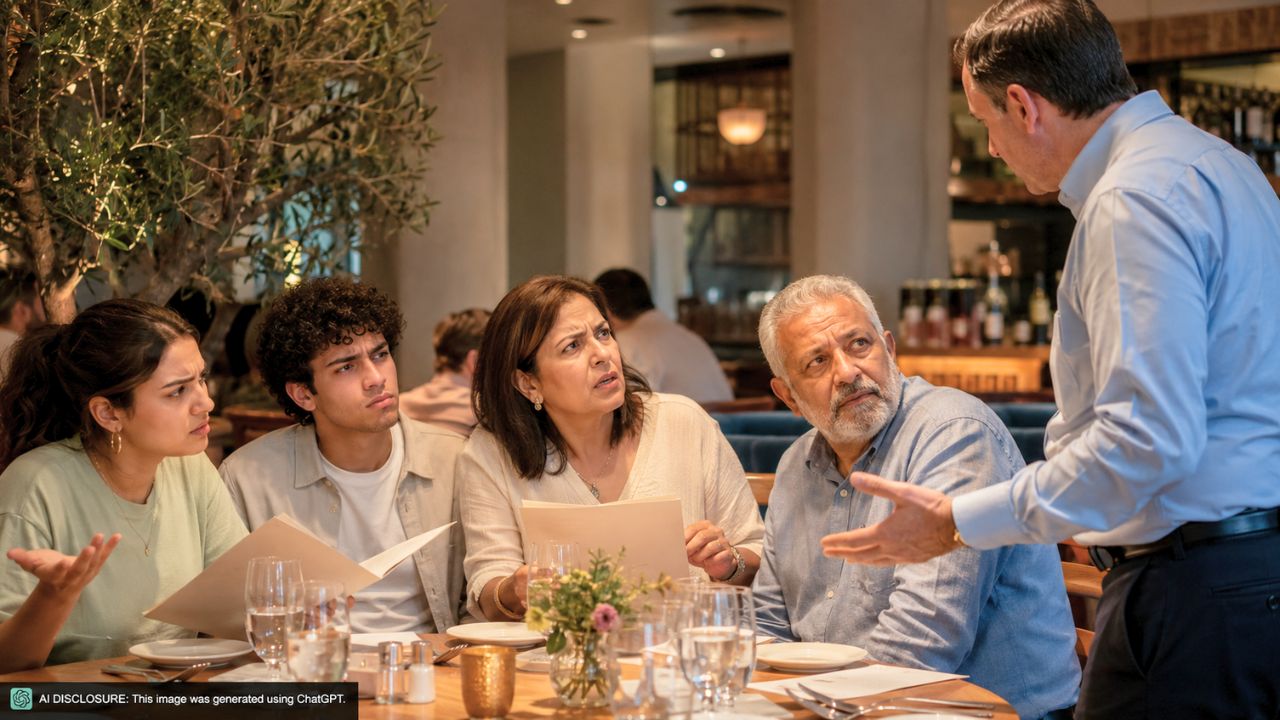
The Restaurant We Booked for Mother’s Day Cut Half the Menu Without Warning — Then the Manager Confronted Us
Photo credit: AI-generated image created using ChatGPT. Illustrative only.
It was supposed to be a simple Mother’s Day dinner: a reserved table, a menu with enough options for everyone, and one night where nobody had to negotiate every ingredient. Instead, the family sat down and realized the restaurant had quietly switched to a limited menu—one that slashed the vegetarian and vegan choices the reservation was built around.
The person who made the booking said the change wasn’t obvious ahead of time. And once the question was raised—politely, through the server—the real problem wasn’t the restaurant saying no. It was the way the manager handled it.
The plan was built around a menu that wasn’t there anymore
The reservation was made with a specific goal: pick a place with a “variety of options” that could work for an immediate family where everyone follows some form of vegetarian or vegan diet. For this group, it wasn’t about being picky—it was about being able to order a full meal without playing twenty questions at the table.
When they arrived, they found out the restaurant was running a limited Mother’s Day menu that evening. The options were “very limited” for vegetarian/vegan diners, which meant a celebration meal instantly turned into damage control.
The diner who booked the table said they felt blindsided because there was “nothing obvious” advertising the limited menu on the restaurant’s website or social channels. In other words, they didn’t knowingly walk into a special-event setup; they thought they were getting the regular lineup.
They asked one question—and expected a normal answer
Rather than arguing or demanding special treatment, the family tried what most diners would do in the moment: they asked if it might be possible to order from the main menu instead. The person who posted described the request as polite and framed it as a question, not a confrontation.
The server’s role mattered here. The waitress, described as “lovely the entire evening,” didn’t escalate things or act offended. She simply went to ask the manager or kitchen staff, which is the typical path when a table has a request outside the usual flow.
Importantly, the family said they were prepared for the restaurant to refuse. They acknowledged it was likely a busy night and that switching back to the full menu could mean extra prep work and complications. If the answer had been a straightforward “sorry, we can’t,” they said they would have accepted it.
The kitchen accommodated them, but the manager made it personal
The twist is that the kitchen staff actually agreed to accommodate the request—at least to some extent. The group said they “primarily ordered off the limited menu anyway,” and only wanted “some variety across 5 meals.” That detail undercuts the idea that they were trying to overhaul the whole service or derail the kitchen on a holiday rush.
But even with that compromise, the manager’s approach left the night soured. Instead of a calm explanation about what was feasible, the manager was described as “incredibly rude,” “passive aggressive,” and particularly harsh toward the poster’s mother—the person who asked the question in the first place.
That’s what stuck with them: not a boundary, but the attitude. On Mother’s Day, at a meal meant to honor their mom, the manager’s tone became the centerpiece of the memory.
The full account was shared in the original post, where the diner framed it as a vent but also a genuine check-in: did they do something explicitly wrong by asking?
The real stakes: special menus, dietary needs, and the “walk out” question
The poster’s questions weren’t just about manners. They were practical. Should they have done more—like calling ahead to confirm the full menu was available? Is it ever justified to leave once you realize the menu has been cut in half without warning?
On a night like Mother’s Day, walking out has real consequences. You risk not finding another table anywhere, you risk turning a celebration into an hour of driving around, and you risk making the guest of honor feel like the problem. Staying can also feel like swallowing an insult, especially if a manager makes the table feel unwelcome.
For this family, the limited menu created a values-versus-logistics squeeze. Dietary restrictions aren’t a preference you can ignore for one night. But restaurants also run limited menus to survive high-volume service. That’s why the poster emphasized they could accept “not feasible” as an answer—what they couldn’t accept was being spoken to like they’d done something wrong by asking.
What people tend to focus on in these restaurant blowups
Even without a full comment thread included in the source material, the fault lines are familiar in stories like this: communication and tone. Customers can usually understand capacity limits if they’re told clearly. The part that escalates dinners into grievances is when staff respond with defensiveness or sarcasm, especially in front of family.
On the diner side, people often point to the same prevention step the poster raised themselves: confirm holiday menus in advance. Restaurants commonly flip to prix fixe or limited options on major dates, and the safest move is calling and asking directly, particularly when dietary restrictions are involved.
On the restaurant side, managers who handle these moments well tend to do two things: they explain the “why” without blaming the customer, and they offer whatever workaround is realistic (even if it’s just pointing out the few dishes that can be adjusted). What the poster experienced sounded like the opposite—accommodation from the kitchen paired with hostility from the person in charge.
The meal ended, but the bad part lingered
In the end, the family ate there. The kitchen made accommodations, and most of the meals still came from the limited menu. But the manager’s confrontation changed the temperature of the entire night, leaving the person who planned the dinner replaying the exchange afterward.
That kind of aftertaste is hard to shake because it isn’t about one dish. It’s about feeling like you tried to do something thoughtful—book a place with options for everyone—and still ended up having to defend the request for basic consideration.
The poster’s remaining questions hang in the air for anyone who’s navigated a special-occasion meal: when a restaurant changes the rules without making it obvious, how much grace does the customer owe? And when the staff’s tone crosses a line, is finishing dinner the polite choice—or just the easiest one in the moment?

Abbie Clark is the founder and editor of Now Rundown, covering the stories that hit households first—health, politics, insurance, home costs, scams, and the fine print people often learn too late.