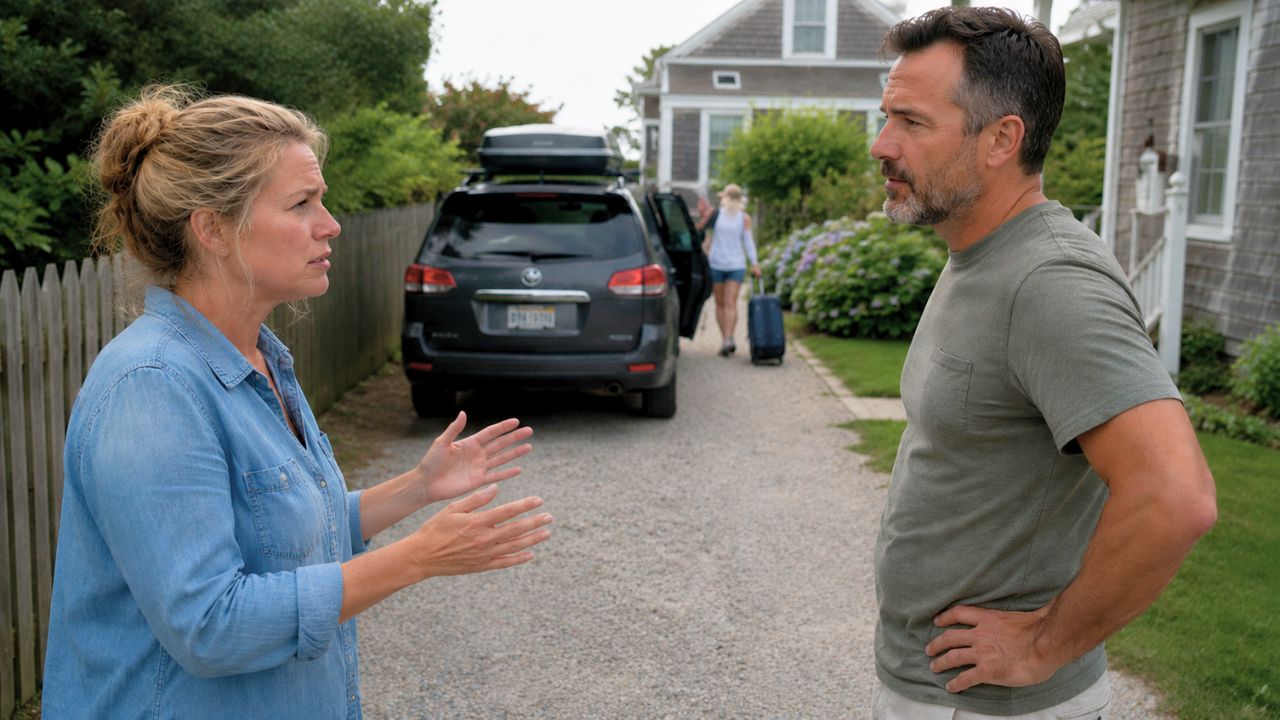
Neighbor’s Airbnb Guests Kept Using Her Driveway — He Said It Was Listed as a Perk
Photo credit: Nowrundown.com
By the third time a stranger parked across her mailbox, Maren stopped chalking it up to coincidence. She lived in a quiet cul-de-sac where everyone knew everyone’s cars, and suddenly there were unfamiliar SUVs showing up at odd hours, headlights washing across her living room window while she tried to get her toddler back to sleep.
At first, she did what most people do when they don’t want drama. She left a friendly note under a windshield wiper. She waved the next day and pointed to the street spots. She even asked her neighbor, Theo, if he could give his guests a quick heads-up.
Theo smiled like she was being adorable, not serious. Then he told her the reason the cars kept appearing on her concrete: he’d advertised her driveway as a perk.
The problem started before the big blowup
Theo’s house sat slightly higher than Maren’s, and his own driveway was steep and narrow. When he moved in, he mentioned the slope a few times, mostly as an excuse for why he didn’t want to shovel much in winter. Maren nodded and didn’t think about it again.
Six months later, Theo started renting his place out on weekends. It wasn’t a constant rotation, but enough that Maren noticed a steady parade of rolling suitcases and people asking her if the neighborhood had good coffee.
Maren didn’t love it, but she didn’t try to control what her neighbor did with his property. Her issue was the way the rentals spilled into her life—loud arrivals after quiet hours, a few cigarette butts that didn’t belong on her lawn, and the constant feeling that her porch was suddenly part of somebody else’s vacation.
The driveway situation turned it from annoying to personal. Maren needed that space. She had a stroller, a car seat routine, grocery runs, and a husband who left early for work. When the driveway was blocked, it wasn’t just inconvenient—it threw off the entire household rhythm.
Her first polite ask got brushed off
After the second weekend of driveway squatters, Maren walked over and caught Theo while he was mowing. She kept it simple: could he tell guests not to park in her driveway, and could he post a sign or message them in advance?
Theo didn’t argue at first. He shrugged, said he’d “mention it,” and kept mowing like she hadn’t just described strangers repeatedly using her private property.
The following weekend, it happened again. A couple arrived with coolers and a dog, and when Maren stepped out to speak to them, they acted genuinely confused. They apologized, but they also pointed at their phones and explained they’d been told it was included.
That was the moment Maren’s stomach dropped. This wasn’t guests being inconsiderate. This was a host giving them permission to use something that wasn’t his.
Then he admitted he’d marketed it like an amenity
Maren went back to Theo’s house, this time with less warmth in her voice. Theo came to the door holding a drink like it was his day off, because it was.
He didn’t deny it. He said people liked the idea of “easy parking,” and his listing did better when he could promise it. When Maren asked how he could promise her driveway, Theo said it wasn’t a big deal because she didn’t “use it that much” during the day.
Maren stared at him like he’d grown another head. She had a toddler and a husband with a long commute. She was in and out all day. Even if she wasn’t, it still wasn’t his to offer.
Theo’s tone shifted when she pushed back. He acted like she was ruining his side income over a minor favor, like being neighbors meant automatic access. He told her she was overreacting and suggested she “share” since they lived so close.
The situation escalated when her home stopped feeling like hers
That night, Maren’s husband, Ian, came home to find her pacing the kitchen. She explained everything—the repeated parking, the guests saying it was included, Theo openly admitting he was using their driveway as a selling point.
Ian marched over and knocked. Theo didn’t answer. The next morning, Ian left for work before sunrise and found a rental car already in their driveway. He couldn’t back out easily without risking a scrape, so he went and knocked on Theo’s door again, louder this time.
A sleepy guest answered instead, apologizing and moving the car. Ian got to work late, and his boss made a comment about “another kid emergency.” It wasn’t even a kid emergency. It was a neighbor emergency, and it was making them look unreliable.
Maren tried to stop it without turning it into a war. She put up a small “Private Drive” sign. Theo’s next guests parked there anyway, like the sign was decorative. When Maren asked them to move, one of them got snippy and said they’d paid for parking and didn’t want to hike luggage from down the street.
That was when Maren realized the listing wasn’t just misleading—it was setting her up to be the villain every single weekend. Theo got to be the generous host, and she got to be the cranky neighbor shooing tourists off her property.
When she drew a hard line, Theo played the victim
After one particularly messy Saturday—three cars rotating in and out, a late-night arrival, and someone dropping a bag of takeout on her side of the driveway—Maren finally called a towing company to ask what it would take to tow an unauthorized vehicle.
They told her she’d need clear signage and proof it was her property. So she took photos of the driveway, the cars, and her house number. She printed a larger sign and mounted it where nobody could pretend they didn’t see it.
The following weekend, a sedan parked there anyway. Maren knocked on Theo’s door. He didn’t answer. She gave the guests one warning, waited, and then called for a tow.
That’s when Theo suddenly appeared, sprinting across his lawn like the driveway was his rescue mission. He got in the tow driver’s way and demanded Maren stop. He said she was embarrassing him and threatening his business.
Maren told him, calmly and loudly enough for the guests to hear, that he’d been told multiple times to stop advertising something that didn’t belong to him. Theo turned to the guests and acted like she was surprising him, like he had no idea why she was being “so intense.”
The tow driver didn’t care about Theo’s performance. The guest paid a drop fee to keep the car, grumbling the entire time. Then they went back inside Theo’s rental with the kind of simmering resentment that usually ends up in a review.
Neighbors picked sides, and the street got awkward fast
Once the towing incident happened, the cul-de-sac became a little courtroom. People leaned over fences and asked what was going on. Maren’s next-door neighbor admitted she’d seen guests use Maren’s driveway and assumed it was some kind of arrangement.
Another neighbor quietly told Maren she’d been annoyed by Theo’s rentals too, but didn’t want to be the first to complain. A few people sympathized with Theo, mostly because they didn’t want the trouble to land on them next. It was easier to say Maren should “let it go” than to admit they’d hate strangers using their driveway, too.
Theo, meanwhile, started acting wounded. He posted passive-aggressive messages in the neighborhood group about “unfriendly attitudes” and people who “don’t understand sharing community space.” He never once said, plainly, that he’d offered someone else’s driveway to paying guests.
Maren’s mother-in-law even got involved after Theo chatted with her at a block event and framed it as Maren being controlling. Suddenly Maren was getting texts about being “neighborly” and “picking battles,” as if this was about a potted plant and not strangers blocking their car in.
In the end, Maren did the one thing that made it harder for anyone to twist the story. She sent Theo a written notice, polite but firm, stating her driveway was not available for his guests, and any unauthorized vehicles would be towed. She also sent a note to the property management contact listed online for his rentals, documenting the issue.
The driveway stopped being used almost immediately. Not because Theo apologized—he didn’t—but because he couldn’t pretend anymore that it was harmless.
The cul-de-sac stayed awkward, though. Theo stopped waving. His guests still came and went, but they parked on the street like everyone else. Maren got her driveway back, yet every time a suitcase wheel clacked over the sidewalk, she still felt that little flare of annoyance.
It wasn’t just about parking. It was the way Theo had decided her home was part of his business plan, then acted shocked when she refused to play along.
Check out more from Now Rundown:
- A Party of 12 Came Back a Month Later Demanding Their $80 Tip Refunded — My Restaurant Made Me Pay It
- Her Coworker Kept Filing the Same Complaint About Her After Being Warned — Then She Filed a Counter-Report With Every Email Documented
- Siblings Demanded Half of Their Sister’s $11 Million Inheritance — She Refused Because They Never Visited
- The Kid I Bullied in Middle School Just Interviewed for a Job on My Team — He Bombed It and I Didn’t Hire Him

Abbie Clark is the founder and editor of Now Rundown, covering the stories that hit households first—health, politics, insurance, home costs, scams, and the fine print people often learn too late.