Mom Redecorated Her Apartment While She Was in the Hospital
Photo credit: Nowrundown.com
By the time Kendra’s phone had enough signal to load a photo, she was already sweaty and annoyed in a hospital bed, trying to figure out why her mother had texted her a heart emoji at 6:12 a.m.
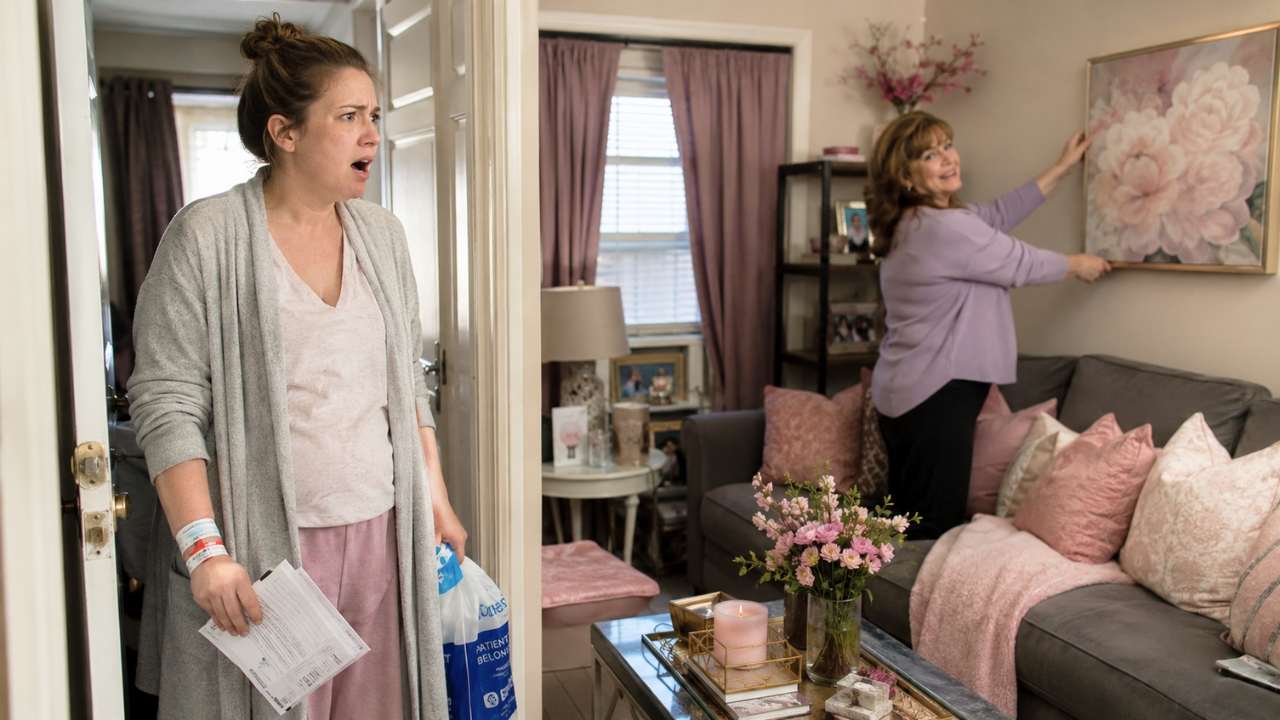
The picture finally popped up: Kendra’s living room, but not her living room. The gray couch she’d saved for was shoved against a different wall. Her gallery of thrift-store frames was gone. The rug looked like it had been rolled up and replaced with something bright and shaggy, like a kid’s playroom.
Then the second photo came through. Her kitchen. The counters were bare, the coffee station she’d set up was missing, and a line of matching glass canisters sat where her blender usually lived. A caption followed: “You’re going to love it. I fixed it for you while you’re resting.”
The hospital stay wasn’t supposed to be a family event
Kendra wasn’t in the hospital for something dramatic, but it was scary enough. A stubborn gallbladder issue had turned into an infection, and the doctors decided not to mess around. She needed surgery, then a few days of monitoring because her bloodwork was all over the place.
Her partner, Mateo, took off work to stay with their toddler during the day and swap shifts with Kendra’s sister at night. It was stressful, but it was manageable. Kendra’s biggest worry was getting home, sticking to the bland diet the nurse kept repeating, and not letting her two-year-old body-slam her stitches.
She told her mom, Darlene, about the surgery because she didn’t want her to hear it secondhand and spiral. Darlene reacted the way she always did: big emotions, big promises, big plans.
She offered to “take care of everything” at the apartment, which Kendra took to mean dropping off groceries or running a load of laundry. Kendra said yes to a little help, then asked Mateo to hide the spare key just in case Darlene got overly enthusiastic.
The “help” started as cleaning… and then it turned
Kendra had always had a complicated relationship with her mom’s version of kindness. Darlene didn’t bring soup; she brought a whole pantry reset. She didn’t offer to fold laundry; she decided your closet system was wrong and replaced it with color-coded bins you never asked for.
There were stories from Kendra’s childhood that sounded funny if you weren’t living them. Like the time Darlene “surprised” Kendra by redecorating her bedroom while she was at a sleepover, only for Kendra to come home and realize her favorite posters had been tossed because they “looked cheap.”
As an adult, Kendra tried to keep things simple. She and Mateo lived in a small apartment they made feel like theirs—secondhand furniture, mismatched lamps, toddler toys shoved into woven baskets so the place didn’t look like a daycare. It wasn’t Pinterest-perfect, but it felt like home.
That’s why the photos from the hospital hit like a punch. Kendra didn’t even know when Darlene had gotten inside. Mateo had the key on his ring, and Kendra’s sister only had access to the building, not the unit.
It clicked fast. Darlene had a spare key Kendra forgot existed—the one she’d made years ago “for emergencies,” back when Kendra still believed her mom understood the difference between emergency and opportunity.
The confrontation happened from a hospital bed
Kendra called her mom immediately. Darlene answered like she’d been waiting, cheerful and breathless, talking about how she’d stayed up late “making it cozy.”
Kendra didn’t yell at first. She asked, plainly, why her mom was moving furniture around when Kendra was in the hospital. Darlene brushed it off, saying she couldn’t stand the thought of Kendra coming home to “clutter” and “stress.”
Then came the part that made Kendra’s stomach drop harder than the infection had. Darlene mentioned she’d “cleared out” some things that “weren’t good for the baby,” including the old wooden rocking chair Kendra’s late aunt had given her. The chair was sentimental, scratched up, and absolutely not matching the new “clean aesthetic” her mom had apparently chosen.
Kendra asked where it went. Darlene said she’d donated it because someone else could “actually appreciate it.”
Mateo was on FaceTime by then, jaw tight, asking Darlene what else she’d thrown away. Darlene acted wounded. She kept repeating that she was only trying to help and that Kendra was being ungrateful while “everyone is worried about her.”
From the hospital bed, with IV tape on her hand, Kendra told her to stop. Stop touching anything. Leave the apartment. Put the key on the counter and walk out.
Darlene refused. She said she was “in the middle of it,” and it would be worse if she didn’t finish. She also said something that stuck with Kendra: that she’d paid for a lot of the “new stuff,” so it was basically a gift.
Mateo went home and realized how far it had gone
Mateo waited until Kendra’s sister could sit with Kendra, then drove home with their toddler in the backseat. He expected moved furniture and maybe a couple of new throw pillows.
Instead, he walked into an apartment that felt like a staged rental. Darlene had taken down their photos. She’d reorganized their kitchen, but in a way that made it impossible to find anything. Their toddler’s toy baskets were gone, replaced by a single lidded trunk the kid couldn’t open.
In the bedroom, Kendra’s nightstand was swapped with a different one, and her medications—post-surgery instructions included—had been shoved into a drawer “to reduce visual stress.” Mateo found their mail in a grocery bag. The toddler’s favorite blanket wasn’t on the bed, and when he asked Darlene where it was, she said she’d washed it with “a better detergent” because the old one smelled like “cheap perfume.”
It wasn’t just rearranging. It was control.
Mateo told Darlene it was done. She needed to hand over the key and leave. Darlene tried to argue that she couldn’t leave the place “half finished,” and that Kendra would “thank her once she calmed down.”
When Mateo insisted, Darlene started crying in that performative way Kendra had warned him about. She called Kendra from the living room, narrating the situation like Mateo was attacking her. Kendra listened for a minute, then told her mom she had one choice: leave now, or Mateo would change the locks and she wouldn’t be welcome back to “finish” anything.
Darlene finally left. Not quietly. She slammed the door hard enough that a picture frame on the wall tilted.
People around them didn’t see it as a cute makeover
At first, Kendra’s sister tried to smooth it over, saying their mom was just anxious and needed something to do. A couple of relatives chimed in with the classic line about how Kendra should be grateful to have a mom who cares.
But the more details Mateo shared—donated sentimental items, hidden medication, removed photos, changed the child’s routine—the less it sounded like helpful nervous energy.
Kendra’s neighbor, who’d seen Darlene hauling bags to her car, mentioned that Darlene had told her she was “rescuing the place from chaos.” That made it worse. It wasn’t a one-off burst of cleaning. Darlene genuinely believed the home belonged to her taste and her rules.
Even some of the family members who usually sided with Darlene got quiet when they heard Kendra might not be able to get her aunt’s rocking chair back. Donating someone else’s things while they’re in the hospital hit a different level, even for people who love to say, “That’s just how she is.”
The fallout didn’t end when Kendra came home
Kendra got discharged two days later and walked into an apartment that didn’t feel safe, emotionally or practically. She couldn’t find her own pain meds without asking Mateo. Their toddler melted down because nothing was where it usually was. Kendra ended up crying in the bedroom, not because she hated the new decor, but because it felt like her life had been rearranged while she was strapped to monitors.
Mateo changed the locks that afternoon. He didn’t warn Darlene. He just did it.
Darlene found out when she showed up with “finishing touches” and couldn’t get in. She called, furious, saying she was being treated like a criminal. Kendra didn’t fight about it. She told her mom she wasn’t allowed a key anymore, and she wasn’t welcome to drop by unannounced, especially while Kendra recovered.
Darlene tried to bargain. She offered to replace the rocking chair with a “nicer” one, which completely missed the point. When that didn’t work, she switched to guilt, telling Kendra she’d “always be the bad guy” and that Mateo was turning Kendra against her.
Kendra didn’t argue that either. She just repeated the new rule: visits by invitation only, and no touching their belongings. The next time Darlene wanted to help, she could bring groceries to the door and leave.
The apartment is slowly going back to normal. Some things are still missing, and Kendra is still trying to track down that donation drop-off. The bigger change, though, is that her mom is no longer treated like a harmless whirlwind. She’s treated like someone who will take an opening and turn it into a takeover.
And for Kendra, recovering from surgery came with a second kind of healing: accepting that if her mom needs access to feel important, then access is the one thing she can’t have.
Check out more from Now Rundown:
- A Party of 12 Came Back a Month Later Demanding Their $80 Tip Refunded — My Restaurant Made Me Pay It
- Her Coworker Kept Filing the Same Complaint About Her After Being Warned — Then She Filed a Counter-Report With Every Email Documented
- Siblings Demanded Half of Their Sister’s $11 Million Inheritance — She Refused Because They Never Visited
- The Kid I Bullied in Middle School Just Interviewed for a Job on My Team — He Bombed It and I Didn’t Hire Him

Abbie Clark is the founder and editor of Now Rundown, covering the stories that hit households first—health, politics, insurance, home costs, scams, and the fine print people often learn too late.