Disneyland Guest Signs A Little Girl’s Autograph Book, Then The Child’s Mother Accuses Her Of Getting Involved
Photo credit: Now Rundown
A Disneyland guest said a sweet moment with a little girl turned painfully awkward after the child’s mother confronted her over an autograph book misunderstanding.
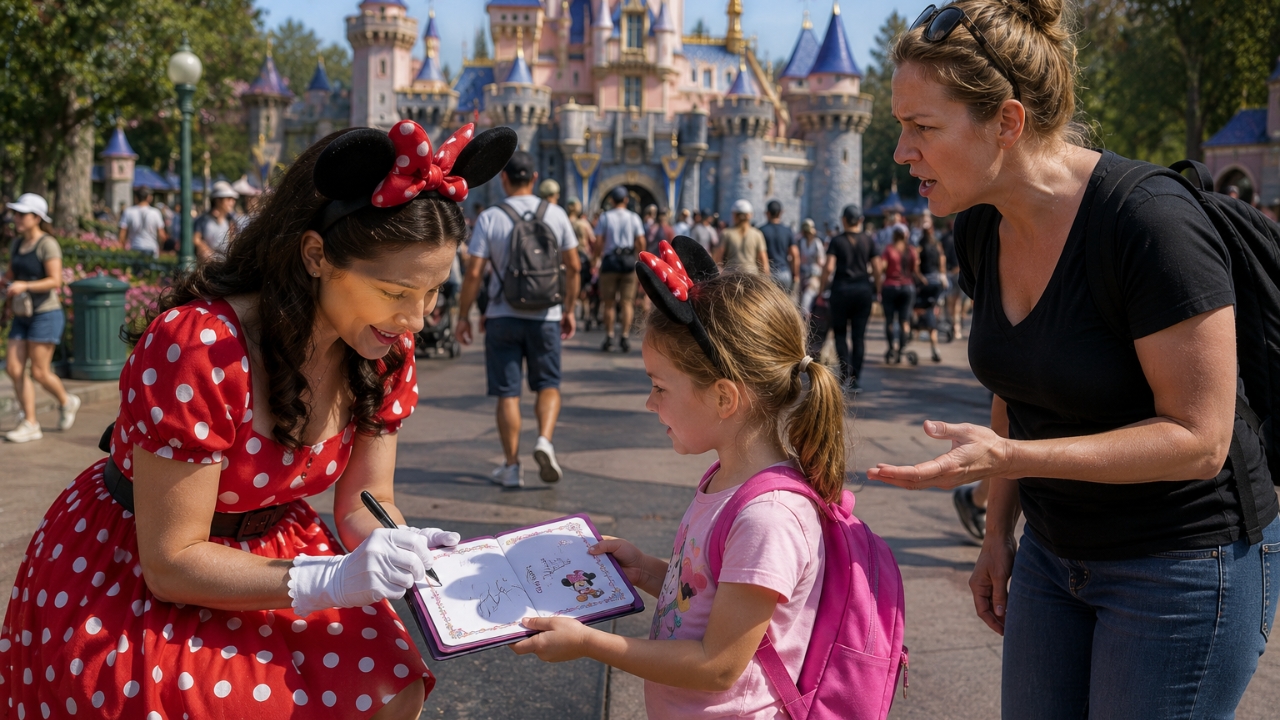
The woman explained that she was visiting Disneyland with her boyfriend. She had dressed up for the day, wearing a red polka-dot dress, yellow shoes, white gloves, and a big bow. It was a very Minnie Mouse-inspired outfit, even though she was not an employee and was not pretending to be one.
While she and her boyfriend were walking around the park, a little girl came up to her with an autograph book.
The child apparently thought she was a character or performer.
That could have been an easy moment to brush off. The woman could have corrected the girl and walked away. But instead, she tried to be kind. She did not want to embarrass the child or ruin the excitement, so she signed the autograph book.
She later explained in the original Reddit post that the interaction was brief and innocent. A child mistook her for someone magical at Disney, and she played along for a second.
But the girl’s mother did not see it that way.
After realizing what had happened, the mother allegedly became angry and told the woman she should not have signed the book. From the mother’s perspective, the guest had inserted herself into a Disney experience she had no right to be part of.
The woman was caught off guard. She had not approached the child, asked for attention, or claimed to be a real Disney character. She was simply dressed in a themed outfit at a theme park where guests often wear elaborate Disney-inspired clothing.
Still, the mother seemed upset that a stranger had signed her daughter’s autograph book.
That left the guest wondering if she had crossed a line.
On one hand, she understood that parents may not want strangers interacting with their children, especially in a crowded theme park. If the mother had been uncomfortable, that mattered. A stranger signing a child’s book could feel weird if a parent did not understand the context.
On the other hand, the child had approached her first, and the woman had only tried to spare the little girl’s feelings. She was not trying to lure the child away, take pictures, or create a long interaction. She gave a quick autograph and moved on.
Commenters were deeply divided, which made the situation more complicated than it first appeared.
Some people sided with the woman. They said the mother overreacted to a harmless moment and that the guest had done something sweet. In their view, the child had a little magical interaction, and the mother turned it into a problem.
Others said the woman should have gently corrected the child instead of signing the book. They argued that Disney has strict rules around costumes and character impersonation for a reason. Even if she had good intentions, signing an autograph could confuse children or create trouble with park staff.
Some commenters focused on the outfit itself. They said a red polka-dot dress, yellow shoes, gloves, and a big bow would obviously make children think of Minnie Mouse, especially inside Disneyland. If someone dresses that close to a character, they should expect confusion.
But others pointed out that Disneybounding is common. Adults often wear outfits inspired by characters without wearing full costumes. To them, the woman’s outfit was festive, not deceptive.
The real issue came down to what she should have done once the little girl approached.
Some said the better response would have been something like, “Oh, I’m not Minnie, but I love your book,” then pointing her toward an actual cast member. That would have protected the child’s experience and avoided the awkwardness.
Others thought that was asking too much in the moment. A small child came up excited, and the woman made a quick choice to be kind. It was not some elaborate scheme to impersonate a Disney character.
By the end, the moment that began as a tiny act of kindness had become a debate about boundaries, costumes, children, and theme park expectations.
The guest had thought she was preserving a little girl’s excitement. The mother saw a stranger stepping into a moment that did not belong to her.
And somewhere in the middle was a child with an autograph book, a woman in a Minnie-inspired outfit, and a theme park misunderstanding that got awkward fast.

Abbie Clark is the founder and editor of Now Rundown, covering the stories that hit households first—health, politics, insurance, home costs, scams, and the fine print people often learn too late.