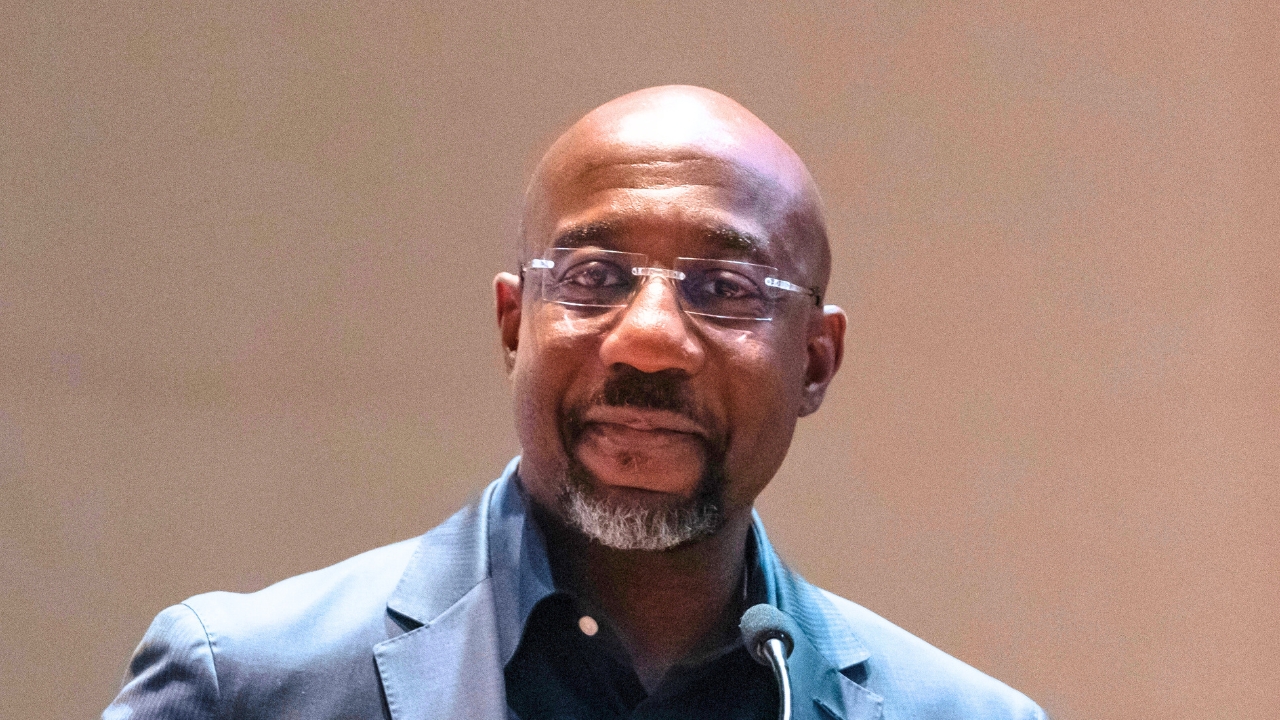
Jesus Christ is a victim of identity theft in American politics, says Sen. Raphael Warnock — commenters say Warnock doesn’t get “to speak for Jesus”
Sen. Raphael Warnock, the Georgia Democrat and longtime pastor, sparked a fresh political and theological pile-on this week after posting a blunt line about religion in public life: “Jesus is a victim of identity theft in American politics.”
Warnock’s post landed as tributes and news coverage circulated following the death of civil rights leader Rev. Jesse Jackson, who died at 84. In his message, Warnock framed his argument as a warning about politicians and activists using Christian language to sell agendas that, in his view, don’t match the teachings they claim to represent.
It’s not the first time Warnock has used the “identity theft” phrasing. The line has shown up in his broader messaging about what he sees as Christianity being repackaged into a cultural weapon, or reduced to a partisan label, instead of a set of moral commitments. But this time, the timing and the framing—coming from a sitting U.S. senator who is also known nationally as “Reverend”—hit a nerve online.
What Warnock appears to be arguing
The “identity theft” claim is essentially a rhetorical point: that Jesus’ name and image are being used as a political brand, sometimes to justify policies or behavior that Warnock argues are the opposite of what the faith teaches. It’s a familiar theme in American politics, where religious language can function as a shorthand for identity, tribe, and moral authority—especially in election years and culture-war fights.
Warnock’s own profile makes the clash sharper. He is both a politician and a pulpit figure, and that dual role tends to pull critics from both directions: some want him to stay in the church lane; others accuse him of being selective about which parts of Christianity get emphasized when politics are on the line.
Commenters turned it into a full-on religious argument
Within hours, the replies on social media spiraled into a debate that was only partly about Warnock’s original line. Many critics argued that Warnock shouldn’t be making sweeping statements about Jesus while holding political power, and several pointed to “separation of church and state” to argue that religious framing doesn’t belong in political messaging.
Others went straight at Warnock’s title and identity, criticizing his use of “Reverend,” debating the appropriateness of clergy language in government, and accusing him of trying to claim spiritual authority over political opponents. Some commenters also flipped Warnock’s argument back on him—suggesting that he is the one misrepresenting Christianity, not the politicians he’s criticizing.
A different slice of replies treated the post as a broader culture-war flashpoint, arguing about whether modern politics has “remade” Jesus into whatever people want Him to be—sometimes casting Him as a symbol of social justice, other times as a banner for nationalism, and often as a cudgel in online fights. The comment thread included Bible references, accusations of hypocrisy, and claims that politicians on both sides regularly use religious language to score points.
Why this keeps blowing up
The reason posts like this travel is simple: they combine two things that reliably detonate online—faith and politics—while using language that sounds like a moral verdict. “Identity theft” is also a phrase that feels modern and accusatory, which makes it easy for both supporters and critics to clip, quote, and argue about.
Warnock’s critics seized on the idea that a senator shouldn’t be “defining” Jesus for the country. Supporters, meanwhile, framed his point as a pushback against what they see as performative Christianity in politics—religious branding without religious conduct.
Either way, the reaction shows how quickly a single sentence about faith can become a proxy war over power, credibility, and who gets to claim the moral high ground—especially when the person saying it is both a national lawmaker and a pastor.