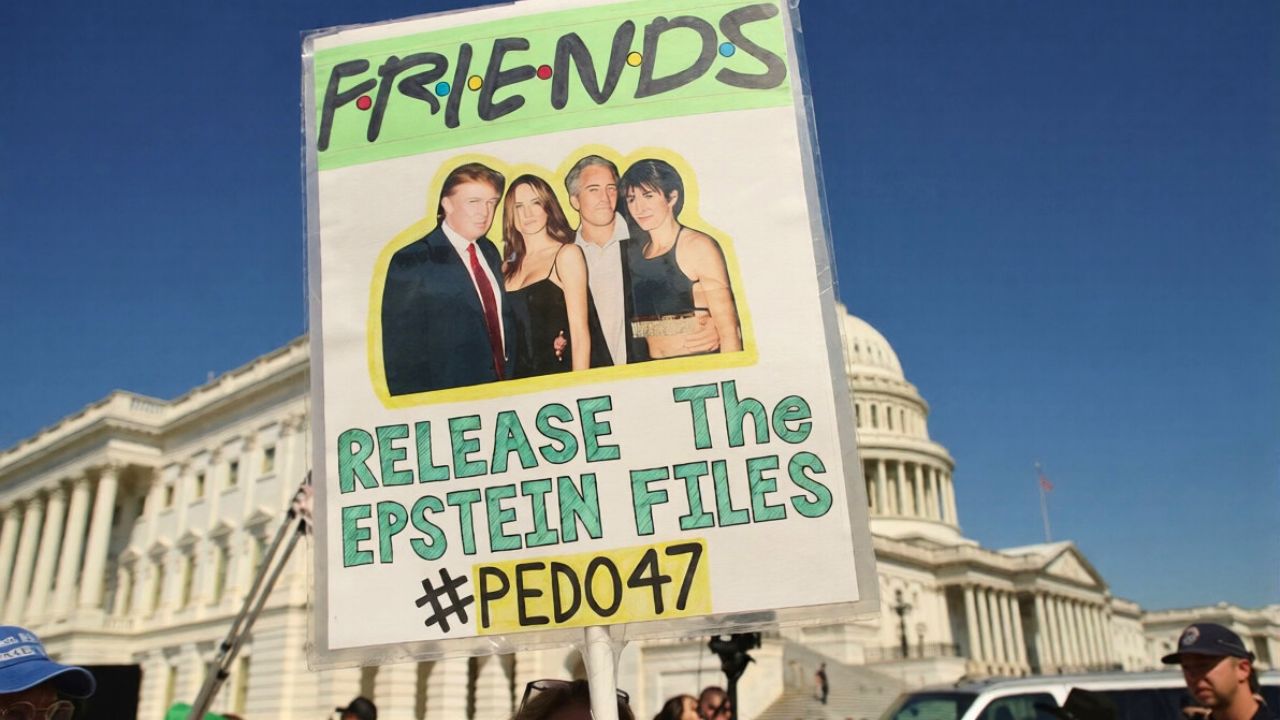
Epstein’s post-conviction social circle is getting exposed in writing—and the timelines don’t match the denials
Photo credit: Philip Yabut/Shutterstock.com
The latest cache of Jeffrey Epstein documents is doing what years of carefully worded statements could not: it is pinning powerful people to specific dates, meetings, and favors that unfolded after he was a convicted sex offender. As those timelines harden into the public record, the gap between what some of Epstein’s associates have long claimed and what the paper trail shows is getting harder to explain away. The result is a portrait of a post‑conviction social circle that stayed close, even as its members now insist they kept their distance.
What emerges from the files is not a single smoking gun but a dense web of calendars, emails, and travel records that collectively undercut the idea that Epstein was shunned after his first conviction. Instead, the documents show a man who remained plugged into politics, tech, and royalty, and whose relationships with the “smart, the rich, the powerful” continued well into the period when his crimes were widely known.
The scale of the files and what they actually show
The starting point for understanding these contradictions is the sheer volume of material now in public view. The Justice Department has released more than 3 million pages of records, a mass disclosure that includes internal memos, interview notes, and correspondence that map out Epstein’s network in granular detail. That release, which officials described as a response to long‑standing public pressure, shows how many of his relationships with prominent figures persisted even after he became a convicted sex offender, and it underscores how few of those figures have faced legal consequences for their proximity to him, despite the size of the release.
Separate from the Justice Department trove, a set of Epstein files has further illustrated how Epstein’s relationships with powerful figures did not end with his plea deal, but instead continued in the years that followed. These documents, which include references to meetings, travel, and financial arrangements, have fueled renewed scrutiny of politicians, business leaders, and royals, and they have prompted fresh denials from some associates who now find their past statements at odds with the written record.
Victims’ timelines versus elite denials
For survivors of Epstein’s abuse, the new disclosures are not just about who knew him, but when. Many of the documents released by the Department of Justice include detailed accounts from victims who describe a timeline of their alleged abuse that overlaps with the period when Epstein was still being welcomed in elite circles. One set of records, photographed on a Monday in February as part of the public release, shows how investigators worked to align those survivor narratives with flight logs and visitor lists, creating a chronology that often conflicts with the idea that Epstein was socially radioactive after his conviction, a point underscored by the release of millions of pages.
Those survivor accounts now sit alongside a separate tranche of 20,000 documents from Jeffrey Epstein’s estate that have been made available for public review. Analysts who have gone through those 20,000 records have highlighted how often the names of alleged victims appear in proximity to high‑profile guests in calendars and correspondence, suggesting that social and abusive dynamics were not neatly separated in Epstein’s world. The visibility of those names in the estate files, which explicitly identify Jeffrey Epstein as the central figure, makes it harder for associates to argue that they were unaware of the broader context in which they were spending time with him, a tension that becomes clear when examining the 20,000 documents.
Silicon Valley’s proximity problem
Nowhere is the clash between public denials and private schedules more striking than in the technology world. The newly surfaced records show that Billionaires and intellectuals attended events with Epstein years after he served time for a sex offense, including gatherings that drew some of the most recognizable names in Silicon Valley. These events, which took place in the period when Epstein was already widely known as a disgraced financier, suggest that his money and connections still opened doors in a sector that prides itself on data‑driven decision‑making, a reality laid bare by documents detailing how Billionaires and technologists interacted with him.
At the same time, the online reaction to these revelations has been clouded by misinformation. Over the weekend, viral posts on X circulated a screenshot of an email that appeared to show a direct connection between Epstein and billionaire Elon Musk, but closer inspection revealed that the image had been altered. Commentators who have actually reviewed the underlying records have stressed that the public has not yet gone through all 3 million files, and that cherry‑picked or fabricated screenshots risk distorting what the documents really show about tech leaders’ ties to Epstein. The episode, flagged in coverage that quoted FOWLER describing how “Over the weekend” the fake email spread, underscores how the rush to assign guilt by association can collide with the slower work of verifying what is actually in the files.
Royal entanglements and reputational damage
The British establishment is also confronting a widening gap between past assurances and present disclosures. The latest batch of Epstein‑related court records has reignited scrutiny of Jeffrey Epstein’s global network, naming politicians and members of the Royal Family in ways that complicate earlier efforts to distance the monarchy from him. In the United Kingdom, the documents have been described as part of a broader reckoning with how Epstein cultivated influence among elites, and they have raised fresh questions about who knew what, and when, within royal circles, a debate sharpened by new attention to Epstein related court records.
Individual figures are also being forced to revisit their own histories with Epstein. Sarah Ferguson, who was then the Duchess of York, made a public apology in March of 2011 for allowing Epstein to pay off some of her debts, a financial entanglement that has taken on new weight as more details of his operations have emerged. That apology, which acknowledged the role of Epstein’s money in her personal finances, now sits alongside documents that show how he used similar financial leverage with other public figures, including in the U.S. Virgin Islands and beyond, as highlighted in coverage that names Sarah Ferguson, notes that in March of that year she was the Duchess of York, and identifies Epstein as the source of those funds.
Trump’s orbit, political fallout, and the limits of accountability
In the United States, the political reverberations are centering on President Donald Trump’s circle. Newly surfaced records show that Epstein maintained close ties to Trump’s influential inner circle, with references to meetings and communications that extended into the period when Trump was a dominant figure in national politics. One detailed account, framed in coverage labeled Politics Feb and noting a time of 11:34 AM EST, describes how the latest tranche of files related to the late sex offender and disgraced financier Jeffrey Ep has drawn attention to the overlap between Epstein’s network and Trump’s advisers, raising questions about how those relationships shaped access and influence in Washington, as reflected in reporting on Trump’s influential inner circle.
The fallout is not limited to the president’s immediate advisers. One widely cited example involves a meeting on 16, 2019, just months before Epstein was charged with sex trafficking of minors, where Epstein met with figures such as Bannon, who was Trump’s chief strategist, and Thiel, a prominent tech investor. A spokesperson later insisted that the meeting was unrelated to any criminal activity and that the participants had no knowledge of Epstein’s impending investigation, but the timing has fueled skepticism about how insulated Trump’s world really was from Epstein’s. The episode, described in a post that notes how the fallout came just a day after the Justice Department began releasing a mass of records, underscores how references to Epstein, Bannon, Trump, and Thiel in the same context can reshape public perceptions of that meeting.

Abbie Clark is the founder and editor of Now Rundown, covering the stories that hit households first—health, politics, insurance, home costs, scams, and the fine print people often learn too late.