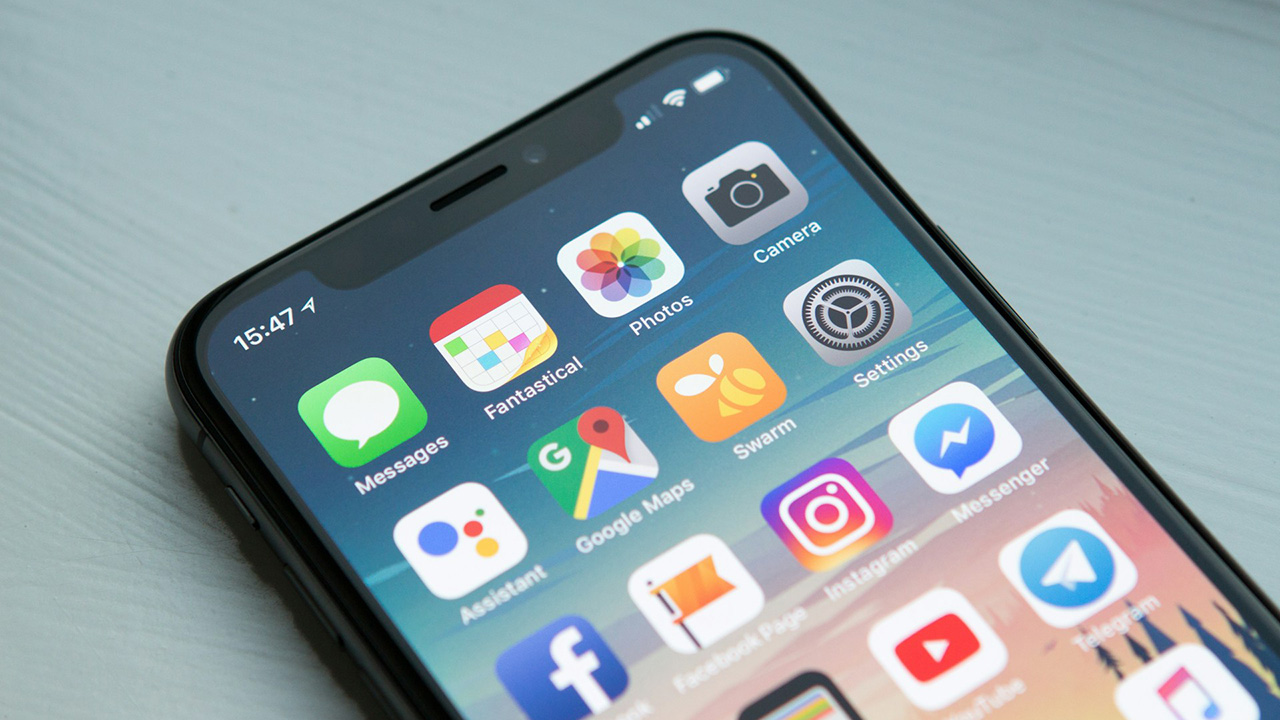
More apps are demanding ID checks—what that means for you
Photo credit: William Hook/Unsplash.com
Apps that once needed only an email and a password now want to see your government ID, your face, or both. What started with banking and crypto is spreading to social media, dating, gaming, and even app stores, turning identity checks into a routine part of going online. As that shift accelerates, you are being pushed to trade more of your most sensitive data for access to everyday digital services.
The stakes are not abstract. Stronger identity checks can cut fraud, keep kids away from explicit content, and satisfy lawmakers who want tighter control over online harms. At the same time, every new ID upload or selfie scan expands the amount of information that can be breached, misused, or quietly repurposed, and it can lock out people who do not have the right documents at all.
Why your apps suddenly care who you are
You are being asked to prove who you are because regulators, app stores, and big platforms have decided that anonymity is no longer an acceptable default for large parts of the internet. State lawmakers across the country have prioritized rules that make companies verify users’ ages, especially when apps host adult content, social feeds, or messaging. Those rules are colliding with long standing concerns about child safety, harassment, and scams, so product teams are building ID checks into sign up flows that used to be frictionless.
At the same time, app store providers are being pulled into the enforcement chain. New requirements mean that App store providers must collect a user’s age during account setup and use commercially reasonable methods to keep underage users away from restricted apps, while also ensuring developers comply with state and federal laws. That pressure is filtering down to you in the form of pop ups asking for your date of birth, prompts to scan a driver’s license, and requests to take a live selfie so automated systems can match your face to your documents.
The legal wave behind all those age gates
What feels like a sudden surge in ID prompts is really the visible edge of a legal wave. New Laws in Some States Require App Developers to Verify Users’ Ages, and those statutes are written broadly enough that they affect everything from video platforms to small chat apps that never expected to handle identity documents. When State lawmakers write rules that tie liability to “knowing” a user’s age, companies respond by collecting more proof, not less, because guessing wrong can mean fines or lawsuits.
That shift is not limited to developers. Across the United States, age verification laws are evolving in ways that worry both privacy advocates and businesses, in part because vague language leaves room for aggressive interpretations. One analysis notes that a privacy first alternative, device level assurance, is being floated as a way to avoid forcing every user to upload a government ID, but many laws still lean toward document based checks. The result is a patchwork where you might be able to browse freely in one state while being asked for a passport scan in another.
How app stores and Texas turned ID checks into a default
The onus of age verification is shifting away from individual websites and toward the platforms that distribute software. Industry tracking shows that, in a major regulatory turn, new legislation in multiple jurisdictions is putting responsibility on app marketplaces, a change that has businesses and consumers worried about how much data Apple and Google will need to collect. If the store itself must be confident about your age, it has a strong incentive to build a single, persistent identity profile that can be reused across every app you install.
Texas has become the clearest example of how far this can go. A new law about to take effect in Texas will force any company that distributes software applications or develops them to build in safety features, verify ages, and honor consent signals, according to a detailed assessment of the Texas rules. One viral explainer warned that starting January 1 Apple and Google are going to require your government ID to install a weather app thanks to this Texas law, highlighting how a measure aimed at explicit content can spill over into everyday utilities, as described in a widely shared Texas age verification video.
From credit cards to selfies: how apps actually verify you
Behind the scenes, there are several ways an app can decide whether to trust that you are old enough, or that you are the person you claim to be. Some services still rely on soft checks like entering a birthdate or using a credit card, but more are turning to document scans, biometric selfies, and third party identity providers that specialize in compliance. Privacy researchers note that access to such sensitive and identifying personal information can compromise your ability to remain anonymous, especially when the same data is reused across multiple platforms.
Some companies are experimenting with privacy preserving age checks that confirm you are over a threshold without revealing your exact birthdate or identity, but those systems are still emerging. A detailed playbook for privacy professionals recommends that Privacy leaders should favor threshold based checks and Run a Data Protection Impact Assessment, or Data Protection Impact Assessment, before rolling out new verification tools, in order to understand how much risk they are concentrating in a single database. For you, that means the experience can range from a quick, one time selfie to a full document upload, depending on how seriously the app takes both compliance and privacy.
Digital IDs in your phone: convenience with strings attached
One reason ID checks are spreading is that your phone is turning into a wallet for your legal identity. Apple has introduced a Digital ID feature that lets you create and present an ID in Apple Wallet, positioning your iPhone as a place to store government issued credentials. The company emphasizes that Digital ID in Apple Wallet is designed to be used in a Secure and Private Way Like other Wallet features, with controls that let you see what information is requested before it is shared, as described in its explanation of Presenting Digital ID in a Secure and Private Way Like Apple Wallet.
For you, that could mean tapping your phone to verify your age in a bar, unlocking a rental car, or confirming your identity inside an app without digging out a plastic card. But it also means that a single device now holds the keys to your financial accounts, your messages, and your legal identity, which raises the stakes if your phone is lost, stolen, or hacked. As more services integrate with these digital credentials, the line between logging into an app and presenting a government ID will blur, and you will need to pay closer attention to which apps you allow to see that information.
Payment apps, “safety,” and the expanding ID dragnet
Payment apps were among the first mainstream services to normalize identity checks, and their practices are now being used as a template for other industries. As more people use mobile payment apps to send money, split bills, or shop online, providers have adopted know your customer rules that require you to submit documents, selfies, or both. One detailed guide on whether Is Identity Verification on Payment Apps Safe explains that these checks are meant to reduce fraud and money laundering, but they also create large databases of personal information that must be protected.
Security experts note that, Generally speaking, yes, it is safe to share your ID with Major payment platforms because they invest heavily in encryption and access controls, but they also warn you to stay alert for phishing and impostor sites that mimic legitimate apps, as highlighted in the advice that Generally speaking, yes, it is safe. As social networks, dating apps, and gaming platforms borrow these verification models in the name of “safety,” you can expect more services to ask for the same level of proof that your bank already demands, even when the underlying risk is very different.
The privacy paradox: safer kids, riskier data trails
Supporters of strict age checks argue that they are necessary to keep minors away from explicit content and predatory behavior, but the way those checks are implemented can create new dangers. One analysis of online age verification warns that requiring you to show your ID to access websites could put particularly young users at risk by forcing them to hand over documents to a long tail of companies that may not be equipped to secure them, a concern captured in a critique of Age verification laws for app stores and Congress. The more places that hold copies of your ID, the more likely it is that one of them will be breached or misused.
Privacy advocates describe this as a data collection arms race, where every website is expected to individually secure massive repositories of sensitive information, a pattern that a detailed essay on The data collection arms race argues is bad for everyone’s data security. Another warning about the not so hidden dangers of age verification points out that Adults Without IDs Get Locked Out when Document based systems assume everyone has the same paperwork, and that the more places personal data is stored, the more it is exposed to identity theft, blackmail, and other privacy violations, as detailed in the critique that begins with Here is who gets hurt.
What this means for people on the margins
For many users, an ID check is an annoyance. For others, it is a hard stop. Document based verification assumes that everyone has a government issued ID, a stable address, and the ability to share those details without fear, which is not true for undocumented people, survivors of abuse, or those who have reason to keep their legal identity separate from their online life. Reporting on online age verification notes that, Aside from the ever present possibility of data breaches, digital IDs may also restrict undocumented individuals from accessing essential services if they cannot or will not enroll, a concern raised in an analysis that begins with Aside from the ever present possibility.
There is also a cultural cost when every interaction is tied to your legal identity. A widely discussed essay on how the internet wants to check your ID uses The Tea spillage as an emblem of what is at risk when we attach our real life identities to our online activities, warning that Yet the push for stricter verification can chill speech, discourage experimentation, and make it harder to create new, unrestricted new social media accounts, as explored in the reflection on The Tea spillage. If every app demands a passport, the internet becomes less of a public square and more of a gated community.
How to protect yourself when you are asked for ID
You cannot opt out of every ID check, but you can be strategic about when and how you comply. Start by deciding which apps genuinely need to know who you are, and which are asking for more than the risk justifies. When you do share documents, treat them like other high value assets: a practical guide to cyber resilience recommends that you Purchase a Physical Safe for Sensitive Information as your ultimate failsafe against compromise, advice that applies just as much to backup copies of IDs and recovery codes as it does to paper records, as outlined in the Securing Yourself into 2026: Practical Guide.
When possible, favor services that minimize what they collect and how long they keep it. Some providers are exploring a privacy first solution called Device level assurance, which lets your phone attest to your age without uploading a full ID, an approach described in detail in a review of Device level assurance. You can also look for platforms that publish clear data retention policies, undergo independent security assessments, and give you tools to delete your information. And when an unfamiliar app suddenly demands a passport scan, it is worth pausing, checking the developer’s reputation, and, if necessary, finding an alternative that respects your privacy.
What to watch next as ID checks become the norm
The trend line points toward more verification, not less. Major platforms are already tightening their policies, and one overview notes that Below are some of the major platforms that have recently implemented stricter age verification requirements, signaling that what starts with a few high profile services can quickly become a routine part of mainstream apps, as described in the analysis that begins with Below are some of the major platforms. As those systems spread, the debate will shift from whether to verify users at all to how to do it in ways that are less invasive and more equitable.
You will also see more experimentation from the tech giants that control your devices and app ecosystems. Apple is betting on Digital ID in Wallet, while Google is investing in account level safety tools that could eventually double as age and identity signals for third party apps. Privacy advocates, meanwhile, are pushing for standards that reduce the need to share raw documents at every turn, and for legal safeguards that limit how verification data can be reused. As those battles play out, your best move is to stay informed, read the prompts before you tap “Allow,” and remember that every new ID check is not just a hoop to jump through, but a decision about who gets to know you, and how well.

Abbie Clark is the founder and editor of Now Rundown, covering the stories that hit households first—health, politics, insurance, home costs, scams, and the fine print people often learn too late.