The year-end sports storylines people can’t stop arguing about
Photo credit: Bobak Ha'Eri, CC BY 3.0/Wiki Commons
Every sports year ends with trophies, but it is the arguments that linger long after the confetti is swept away. You replay controversial calls, question who really deserved a spot in the postseason, and relitigate greatness across generations. The closing stretch of 2025 has delivered a fresh batch of flashpoints that keep group chats buzzing and studio shows stocked with material.
From the new College Football Playoff format to the never ending GOAT wars, you are watching fans, coaches, and even entire programs draw lines in the sand. The debates are not just about who won, but about what you think sports should value: tradition or expansion, aesthetics or efficiency, loyalty or leverage.
1. The College Football Playoff was supposed to fix controversy, not multiply it
You were told the expanded postseason would calm the storm around selection Sunday, yet the first 12 team bracket has done the opposite. The College Football Playoff was sold as a way to include more contenders and reduce outrage, but instead it has created more anger as more fanbases feel snubbed. Miami’s inclusion and Ohio State’s position ahead of Georgia have become Exhibit A for critics who argue that the committee simply shifted the goalposts rather than clarifying them.
Even supporters of expansion are acknowledging that the new format has not ended the annual uproar. One detailed rundown of the season notes that College football’s postseason overhaul was the sport’s defining storyline, yet the arguments down the stretch in the regular season feel familiar. You still see fans parsing strength of schedule, conference titles, and late season injuries, only now the stakes are spread across more seeds and more perceived injustices.
2. Notre Dame, left out again, turns one snub into a national referendum
No program has turned this year’s bracket drama into a bigger identity fight than Notre Dame. When the committee left Notre Dame out of the CFP bracket in favor of Alabama and Miami, while Indiana, Ohio State, Georgia and Texas Tech secured first round byes, it reignited every old complaint about brand bias and independent scheduling. The decision to choose Alabama and Miami instead of the Irish has become a litmus test for how you think power programs should be evaluated in a crowded field.
Notre Dame’s response has only intensified the argument. In response to the snub, Notre Dame announced they are opting out of all non CFP bowl games this year, a move that has sparked debate about their independence, schedule, and relevance in the modern era. A separate breakdown of the controversy frames it the same way, noting that Notre Dame is effectively daring the system to either fully embrace or fully reject its unique status, and you are left to decide whether that stance is principled or petulant.
3. Fans are split: is Notre Dame’s bowl boycott bold or selfish?
Once Notre Dame chose to sit out every non CFP bowl, the focus shifted from the committee to the fanbase itself. Video from South Bend shows that Notre Dame fans are divided on the decision to skip the bowl game after being left out of the College Football Playoff, with some calling it a necessary stand and others worrying it punishes current players. You can hear former players and analysts like Jacob Hester wrestling with whether the move protects the program’s brand or undermines the sport’s broader ecosystem.
The backlash is not just emotional, it is philosophical. One columnist, in a piece framed as Random notes, dryly asks, “Aren’t we glad the new expanded College Football Playoff is free from controversy?” before pointing out that the old four team field at least limited the number of aggrieved parties. You are now watching a blue blood program test how far it can push its leverage in a landscape where the postseason is bigger, but the margin for perceived disrespect is just as thin.
4. Lincoln Riley, Notre Dame, and the end of an old rivalry
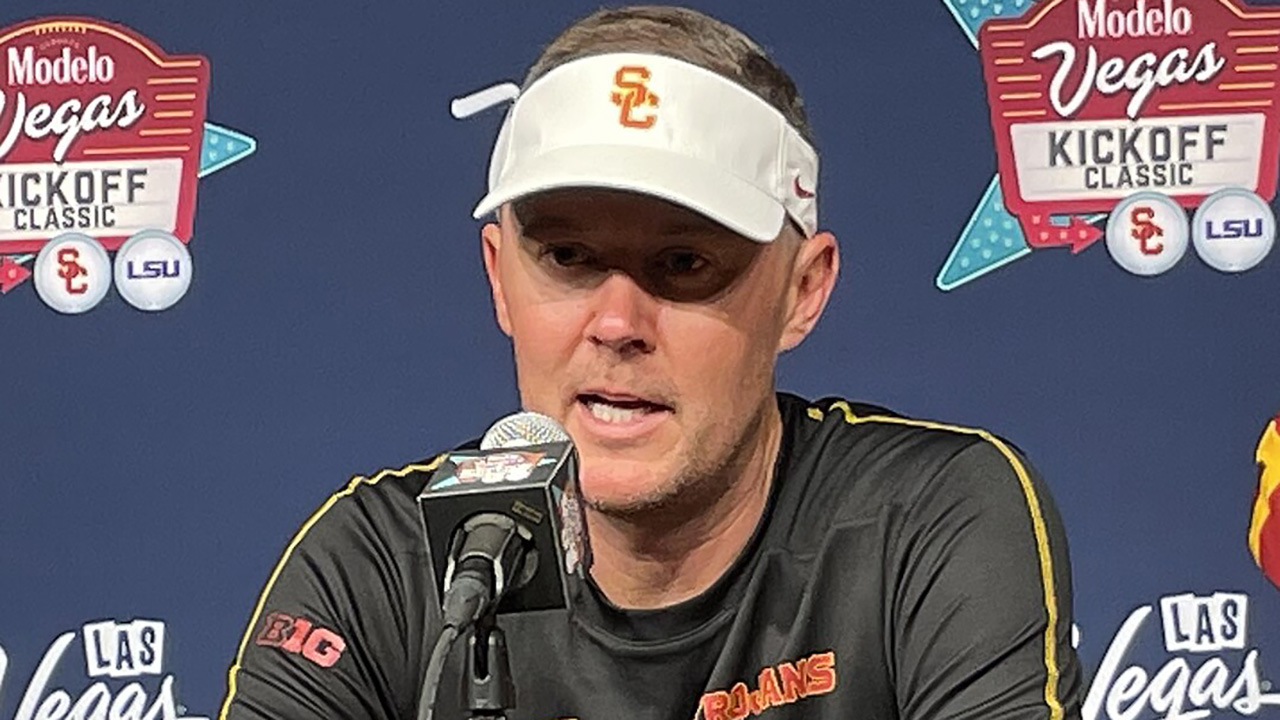
While the playoff bracket grabbed headlines, another Notre Dame storyline has been simmering on the West Coast. USC coach Lincoln Riley has drawn scrutiny for how he handled the end of the historic series between Notre Dame and USC, with critics arguing that his public comments revealed more about his priorities than he intended. The same report that details his remarks also folds in Recommended Stories about non CFP bowl matchups to watch, underscoring how intertwined rivalry politics and postseason positioning have become.
For you as a fan, the Riley debate is about more than one coach’s sound bites. It is about whether modern scheduling, driven by television money and playoff calculus, is eroding the traditional matchups that defined college football’s identity. When sources close to Sources the program frame the Notre Dame and USC split as collateral damage of the new era, you are left to decide if chasing the CFP justifies sacrificing the sport’s most familiar touchstones.
5. Expanded playoffs, same old outrage: why the format fight will not end
Step back from the Notre Dame drama and you see a broader pattern. Analysts who tracked the sport over the last two seasons note that The College Football Pl continued to evolve, but the arguments down the stretch in the regular season remained just as intense. Instead of debating only the top four, you are now parsing who deserves seeds five through twelve, which conference deserves multiple bids, and how to weigh late season injuries against full body of work.
Even those who once championed expansion are acknowledging the unintended consequences. A wry column that opens with “Aren’t we glad the new expanded College Football Playoff is free from controversy?” points out that the previous four team field, for all its flaws, at least contained the outrage to a smaller circle. Now, with more at large spots and more conferences in play, you are guaranteed a larger, louder chorus of fanbases convinced the committee got it wrong.
6. Gambling, “meaningless” games, and whether effort still matters
Beyond college football, you are also watching a deeper argument about how money and motivation intersect across sports. One wide ranging look at the year’s biggest stories warns that Last year, a lot of observers warned that the gambling fabric the sports world had wrapped itself in was starting to fray, and that concern has only grown. When every pitch, possession, and prop bet is monetized, you are left wondering how much competitive integrity can bend before it breaks.
At the same time, some voices are pushing back on the idea that late season or lower profile contests do not matter. One pointed column insists there are no “meaningless” professional games, arguing that Professional pride still drives players, that Pro sports are a competition, and that Just because your team has been eliminated from the postseason does not mean the athletes involved are coasting. For you, the tension is clear: gambling markets may treat some matchups as background noise, but the people on the field still see every snap and at bat as part of their livelihood.
7. GOAT wars, Nikola Jokic, and the fatigue of endless comparison
No year end sports argument list is complete without a fight over greatness, and 2025 has only intensified that cycle. One viral set of hot takes flatly declares that Nikola Jokic is the greatest offensive player in NBA history, a claim that instantly pits you against friends who ride for Michael Jordan, LeBron James, or Stephen Curry. The argument is not just about numbers, it is about aesthetics, era, and what you value in a superstar’s game.
At the same time, there is a growing pushback against the entire GOAT obsession. One thoughtful essay urges you to stop debating GOATs and respect their legacies, noting that the story written by Cole about constant comparison in another sport mirrors what you see in basketball and beyond. The piece argues that when every conversation is framed as a ranking, you flatten context and miss the joy of watching different styles and eras coexist, a challenge that resonates across all your year end barstool debates.
8. December’s overloaded calendar and the myth of “too much sports”
If you felt like you could not keep up with everything on television this month, you were not imagining it. One viral clip bluntly tells you to Stop scrolling because December 2025 is arguably the most stacked sports month in history, with overlapping football, basketball, and international events crowding the schedule. The sheer volume has sparked a new kind of argument: whether the calendar is thrilling or exhausting.
On one side, you have fans who love the buffet, flipping from bowl games to NBA doubleheaders without missing a beat. On the other, you hear complaints that the saturation makes it harder to savor any single moment, especially when marquee events are competing for the same primetime windows. The overloaded slate also feeds back into the “meaningless games” debate, as you decide which matchups deserve your full attention and which become background noise in a month that never seems to slow down.
9. Local heartbreaks, breakout stars, and why these debates never really end
Not every argument is national, and some of the most passionate ones are rooted in specific cities and fanbases. In Cleveland, for example, a year in review labeled “meh” still found room for deeply emotional stories, from Bernie Kosar’s life saving transplant to the ups and downs of local teams. When a season feels underwhelming on the field but unforgettable off it, you are reminded that sports debates are as much about community identity as they are about standings.
Elsewhere, individual performances have sparked their own arguments about value and sustainability. In one standout game, The Falcons intercepted Matthew Stafford three times on a night that Bijan Robinson racked up 229 yards and two touchdowns, a stat line that instantly fueled fantasy football legends and debates about workload. When you combine those breakout nights with the broader themes of gambling, playoff formats, and GOAT discourse, you see why the year end sports storylines people cannot stop arguing about are not going away when the calendar flips. They are simply evolving, ready to be re litigated with every new season, every new star, and every new perceived slight.
Supporting sources: Cleveland’s meh year in review: The top 10 sports stories in 2025.