Restaurant Group Paid $2 Million After Male Supervisors and Coworkers Harassed Female and Male Staff at a Las Vegas Location Since at Least 2018
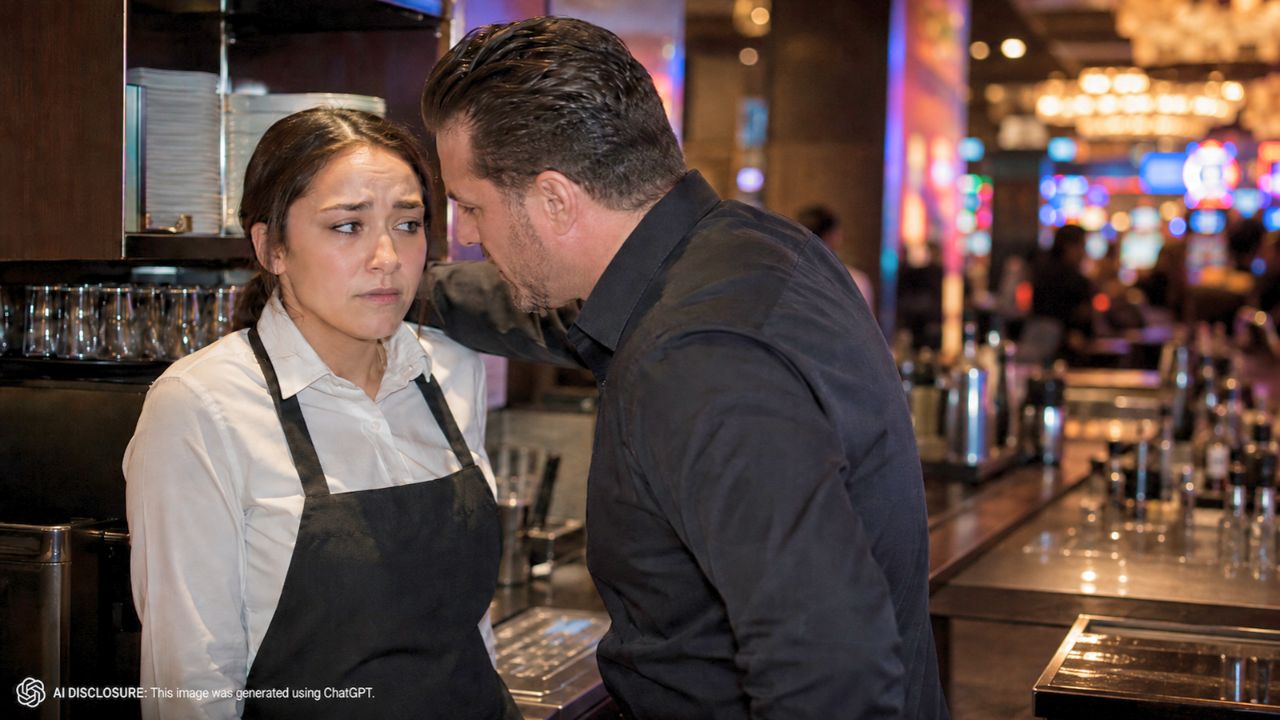
Photo credit: AI-generated image created using ChatGPT. Illustrative only.
A years-long pattern of workplace harassment at a high-end Las Vegas restaurant ended with a multimillion-dollar payout after federal investigators stepped in. The U.S. Equal Employment Opportunity Commission says employees at Bouchon in Las Vegas—both women and men—were subjected to repeated sexual behavior and comments on the job, and that the company didn’t do enough to stop it even after complaints started coming in.
The result is a $2 million settlement and additional requirements for the restaurant and its affiliated group, detailed in the source post from the EEOC. The agency said the conduct dated back to at least 2018 and included retaliation claims tied to workers who spoke up.
What workers say they were dealing with
The EEOC’s lawsuit describes a workplace where male supervisors and male coworkers allegedly targeted employees with unwanted sexual behavior. It wasn’t limited to one type of victim—female and male staff were both allegedly harassed, which is a detail that underscores how broad the alleged culture problem was.
The allegations include “unwanted and repeated sexual advances,” sexual comments, sexually offensive conduct, and unwelcome physical contact. In restaurant settings—fast-paced, close quarters, late nights—behavior can get excused as “jokes” or “that’s just how kitchens are,” but the EEOC’s description paints something far beyond awkward banter.
The agency’s lawsuit wasn’t just about what individuals did. It focused on what the employer allegedly failed to do after hearing about it.
The part that escalated it: complaints that didn’t stop the behavior
According to the EEOC, Bouchon and Thomas Keller Restaurant Group received complaints but did not take appropriate action to prevent the harassment. That’s the point where a bad actor problem becomes an employer liability problem—when warnings exist, and the workplace still doesn’t change.
The lawsuit says that failure left employees “vulnerable to ongoing harassment” at the Las Vegas location. In practice, that can mean the same people still being scheduled together, the same managers staying in power, and the same staff having to decide whether to endure it, leave, or risk fallout by pushing harder.
The EEOC also alleged retaliation against some employees who complained. Retaliation can be the quiet lever that keeps a workplace stuck: once workers see a coworker punished for speaking up, others learn to keep their heads down.
How this landed in federal court
The EEOC framed the case as a Title VII matter under the Civil Rights Act of 1964, which prohibits sex discrimination—including sexual harassment—and also bans retaliation against workers who complain or otherwise engage in protected activity.
The agency said it tried to resolve the issue before filing suit, using its administrative conciliation process. When that didn’t produce an agreement, the EEOC filed EEOC v. KVP, LP dba Bouchon Restaurant, et al., Case No. 2:23-cv-01308 in the U.S. District Court for the District of Nevada.
That procedural detail matters because it shows this wasn’t a quick headline-driven settlement. The agency is describing a multi-step path: complaints, attempted pre-litigation resolution, then federal court, and finally a negotiated settlement with a large dollar figure attached.
The $2 million settlement—and what it signals
Under the settlement, KVP, LP (doing business as Bouchon Restaurant) and KRM, Inc. (doing business as Thomas Keller Restaurant Group) will pay $2,000,000 and provide other relief. The EEOC’s announcement doesn’t list every non-monetary term in the text provided, but the structure is familiar: money plus workplace changes designed to keep the same pattern from restarting.
EEOC officials used the announcement to make a broader point about the industry. “Sexual harassment is illegal and continues to be a problem in the restaurant industry,” said Beatriz Andre, acting regional attorney for the EEOC’s Los Angeles District, which includes Las Vegas.
And the agency signaled it’s not treating this as an isolated fight. EEOC Las Vegas Local Office Director Michael Mendoza said the agency will continue efforts to stop workplace sexual harassment in restaurant and hospitality jobs and protect the right to report inappropriate conduct.
What people tend to focus on in cases like this
Even without a public comment thread attached to the announcement, cases like this reliably spark the same practical questions: what did workers document, who did they report to, and what happened after? The EEOC’s summary emphasizes a familiar breaking point—complaints were made, but the alleged harassment continued.
In real workplaces, the deciding factor is often whether complaints are treated like a problem to solve or a nuisance to manage. When an employer doesn’t act quickly and visibly, the burden shifts back to employees to protect themselves—by writing things down, bringing concerns up the chain, or leaving a job they may rely on for income and stability.
Another detail people fixate on is retaliation, because it changes the stakes. Sexual harassment can be humiliating and destabilizing on its own, but retaliation can threaten schedules, income, shifts, and references—the day-to-day pressures that make restaurant work possible or impossible.
The pressure test for the restaurant industry
The EEOC’s announcement makes clear it sees restaurant and hospitality workplaces as a continuing enforcement priority, not a one-off. Its Los Angeles District office—covering southern Nevada as well as multiple Pacific jurisdictions—put its name behind this case and used it to underline that harassment and retaliation are still showing up in dining rooms and back-of-house spaces.
For workers, the settlement is a reminder that the law doesn’t require someone to endure “the way it’s always been.” For employers, it’s a warning that ignoring complaints can turn a workplace problem into a federal case with a seven-figure price tag—and with the kind of public exposure that doesn’t stay contained to one location.
The money changes hands, policies get tightened, and life moves on. But the core issue—whether a workplace actually responds when someone says “this is happening to me”—is the part that employees remember long after a settlement number fades from the news cycle.
Check out more from Now Rundown:
- A Party of 12 Came Back a Month Later Demanding Their $80 Tip Refunded — My Restaurant Made Me Pay It
- Her Coworker Kept Filing the Same Complaint About Her After Being Warned — Then She Filed a Counter-Report With Every Email Documented
- Siblings Demanded Half of Their Sister’s $11 Million Inheritance — She Refused Because They Never Visited
- The Kid I Bullied in Middle School Just Interviewed for a Job on My Team — He Bombed It and I Didn’t Hire Him

Abbie Clark is the founder and editor of Now Rundown, covering the stories that hit households first—health, politics, insurance, home costs, scams, and the fine print people often learn too late.