Hair Braider Passed the Company’s Skills Test — Then the Owner Learned She Was Pregnant, Said He Already Had One Pregnant Employee, and Rejected Her
Photo credit: AI-generated image created using ChatGPT. Illustrative only.
She did what the job asked of her: showed up, proved she could braid hair, and cleared the skills test. Then, the story goes, the decision flipped the moment the owner learned she was pregnant.
That’s the core allegation behind a federal pregnancy discrimination case the U.S. Equal Employment Opportunity Commission just resolved with Dallas Barber and Stylist College, Inc., a company that operates multiple barber and hair styling locations and instructional campuses in the Dallas metro area. The agency laid out the details in the original post announcing the settlement.
She passed the test, then the conversation changed
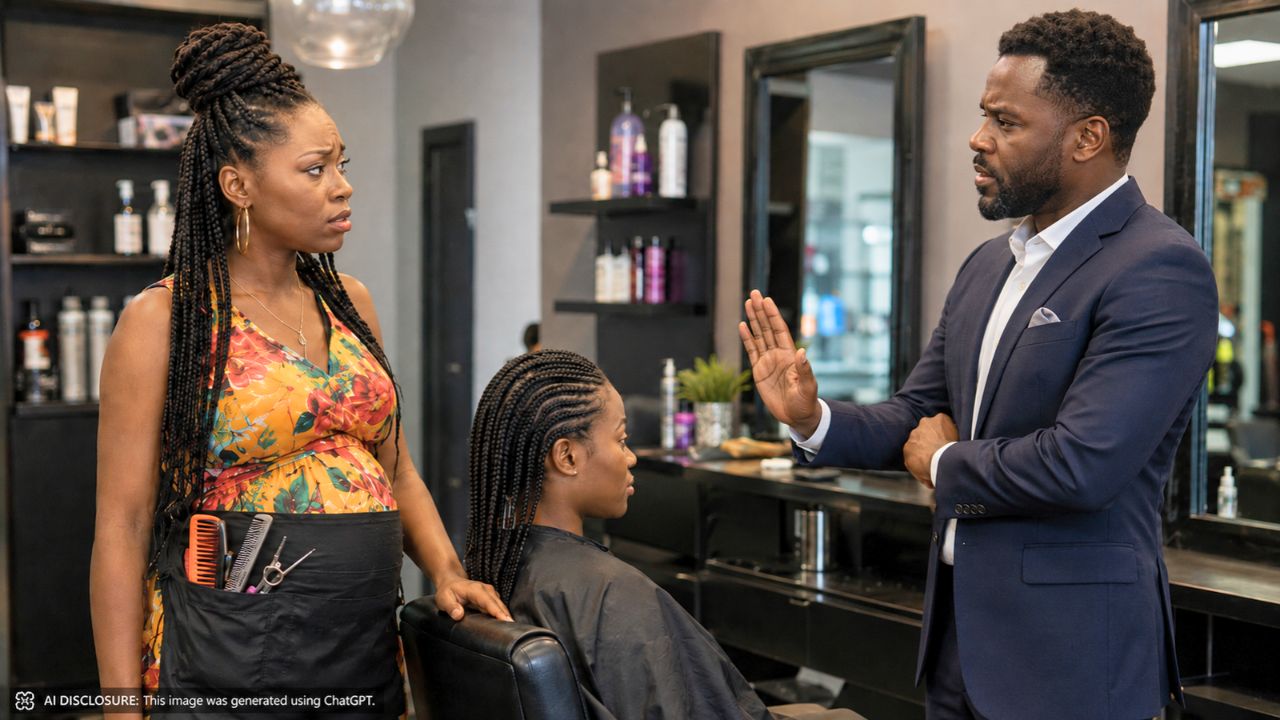
According to the EEOC, the applicant was seeking a hair braider position and satisfied the company’s skills test—basically the moment when a hiring process should get easier, not harder. The suit says that after she demonstrated she could do the work, the owner learned she was pregnant and rejected her anyway.
The reason, as described by the EEOC, wasn’t subtle. The owner allegedly told her the company already had one pregnant employee and didn’t want another. He also allegedly said he didn’t want to deal with her “condition,” referring to her pregnancy.
In other words, the allegation isn’t that she didn’t meet the bar. It’s that the bar moved as soon as her pregnancy became known.
What the EEOC says the law requires
The EEOC framed the case as a straightforward application of federal protections that have been on the books for decades. “Rejecting a qualified applicant because of her pregnancy is illegal,” said Marsha Rucker, regional attorney for the EEOC’s Birmingham District, in the agency’s statement.
The press release points to Title VII of the Civil Rights Act of 1964, as amended, which prohibits discrimination because of sex, including sex discrimination based on pregnancy. The alleged comments about not wanting “another” pregnant worker are exactly the kind of thing agencies look for because they connect the employment decision to a protected status.
There’s also a practical reality underneath that legal language: pregnancy isn’t supposed to function like a disqualifier. Employers can’t decide they’ve “hit their quota” on pregnant staff and shut the door on the next qualified person who walks in.
How it escalated from a hiring no to a federal lawsuit
The EEOC says it first attempted to resolve the matter through its administrative conciliation process—basically trying to reach an agreement before filing in court. When that didn’t produce a resolution, the agency moved forward with litigation.
The case was filed as EEOC v. Dallas Barber & Stylist College, Incorporated, Case No. 3:24-cv-02296-S, in the U.S. District Court for the Northern District of Texas. By the time a case gets that far, the dispute has usually hardened: the applicant is seeking a remedy, the agency is pushing enforcement, and the business is staring down legal exposure and public scrutiny.
This week’s announcement marks the end of that court fight—at least on paper—with a settlement rather than a trial verdict.
The settlement: money, plus changes that stick around
Dallas Barber and Stylist College agreed to pay “significant monetary damages” and provide other relief to settle the lawsuit, according to the EEOC. The agency didn’t specify the exact dollar figure in the press release, but the wording signals that this wasn’t a token payment.
Just as important, the resolution includes “other relief,” which in these cases often means changes in how the employer handles hiring decisions going forward. The EEOC’s announcement didn’t detail the specific terms, but the point of these settlements is typically twofold: compensate the person who was harmed and reduce the chance it happens again.
Acting EEOC Birmingham District Director Linda Sales-Long framed the outcome as a message to other employers: “If an employer rejects a qualified applicant because of her pregnancy, the EEOC stands ready to enforce federal law and remedy that unlawful conduct.”
What people tend to zero in on in cases like this
Even without a comment section attached, the pressure points are familiar in pregnancy discrimination stories, especially when the alleged facts include a direct statement by the decision-maker.
First, people focus on proof. The EEOC’s description includes alleged quotes—“already had one pregnant employee,” didn’t want another, and didn’t want to deal with her “condition.” In everyday terms, that’s the kind of remark that can turn a messy hiring dispute into something much cleaner to evaluate, because it ties the rejection to pregnancy instead of performance.
Second, there’s the timing. Passing a skills test and then being turned away right after the employer learns about the pregnancy creates a tight before-and-after sequence. That kind of timeline is often what pushes someone to file a charge and keep pushing when they’re told “no” the first time.
And third, people tend to talk about the ripple effect beyond one applicant. A company running multiple locations and campuses has a lot of touchpoints with workers—students, stylists, trainees. A hiring practice that treats pregnancy like a scheduling headache can travel quickly through an organization unless it’s confronted.
A hiring moment that turned into a public enforcement action
This started as one person trying to get a job braiding hair. It ended with a federal agency filing suit, citing Title VII, and securing a settlement that includes monetary damages and other relief.
The lesson from the EEOC’s account isn’t complicated: when a qualified applicant meets the skills requirement, “I already have one pregnant employee” isn’t a lawful reason to shut them out. And when employers say the quiet part out loud, it can turn what might have stayed an internal dispute into an enforcement case with real financial and operational consequences.
Check out more from Now Rundown:
- A Party of 12 Came Back a Month Later Demanding Their $80 Tip Refunded — My Restaurant Made Me Pay It
- Her Coworker Kept Filing the Same Complaint About Her After Being Warned — Then She Filed a Counter-Report With Every Email Documented
- Siblings Demanded Half of Their Sister’s $11 Million Inheritance — She Refused Because They Never Visited
- The Kid I Bullied in Middle School Just Interviewed for a Job on My Team — He Bombed It and I Didn’t Hire Him

Abbie Clark is the founder and editor of Now Rundown, covering the stories that hit households first—health, politics, insurance, home costs, scams, and the fine print people often learn too late.