Mother Took Her Teenage Daughter Out for a Special Korean BBQ Dinner and Left Her Husband and Other Kids to Fend for Themselves
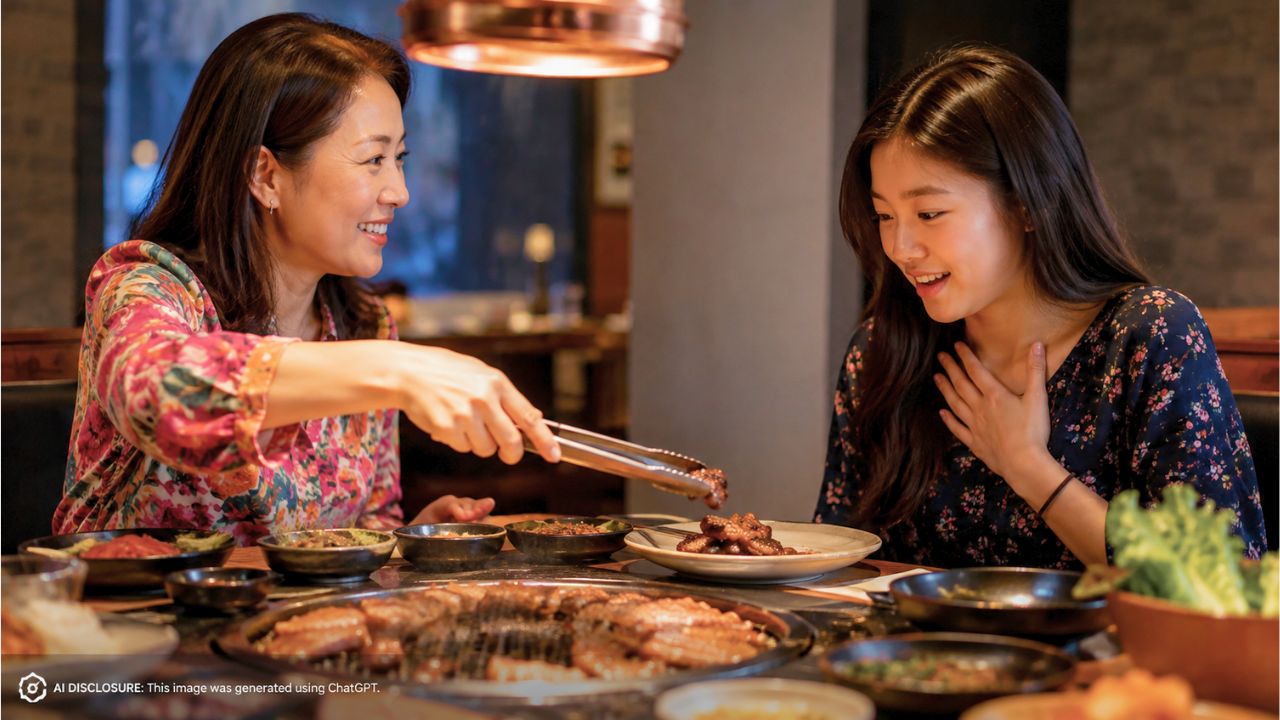
Photo credit: AI-generated image created using ChatGPT. Illustrative only.
It was supposed to be a simple pickup: a 12-year-old finishing a party at a Korean BBQ about 40 minutes from home. For one mom and her 16-year-old daughter, though, the drive turned into a rare chance to do something they genuinely enjoy—eating at authentic Asian restaurants—without having to negotiate everyone else’s preferences.
But by the time the family pulled into the plaza, dinner had already become a tug-of-war. In the original post, the 43-year-old mother described how her husband pushed for a full-family meal at the Korean BBQ, then criticized the menu and prices once they arrived—until she finally walked out and took her daughter to a different spot, leaving him and the other kids to figure out their own dinner.
A dinner plan that started out as a compromise
The mother said she tried to set expectations before anyone even got to the restaurant. Since her son’s party was already being held at the Korean BBQ, she suggested that her husband, 44, and their other two kids could pick any dinner they wanted while she and her daughter ate Korean food.
Her reasoning was practical as much as personal. She reminded him that he and the other kids “aren’t big fans” of Korean BBQ, and she figured splitting up would be cheaper than paying for a meal that half the group didn’t want in the first place.
Her husband rejected that idea and insisted they all go together “as a family.” So they did. And almost immediately, the cracks showed.
The complaints started as soon as the menu hit the table
Once they got inside and he saw the menu, the husband began complaining that he didn’t know what to order and that the prices were too high. The other kids, she said, started echoing the same frustration.
It’s a familiar dynamic for families: one person wants the “special” dinner, others feel dragged along, and the meal becomes a running commentary instead of something anyone enjoys. Still, she tried another workaround while they waited for a table.
With the plaza offering other options, she suggested her husband and the kids grab food somewhere else nearby while she and her daughter ate at the Korean restaurant. She noted how good it smelled, and they’d already been waiting about 20 minutes for a table.
But even then, he kept making comments about the cost. For her, the breaking point wasn’t just griping—it was being micromanaged before the meal even started.
“You better not order anything fancy” pushed it over the edge
While still waiting, she said her husband told her, “you better not order anything fancy.” That single line changed the tone from budget-conscious to controlling, at least in her eyes.
She got up, walked out to the van, and everyone followed. Then she laid out the new plan: she would take the family home, and afterward she and her daughter would go on their own to a local Korean BBQ.
That move did two things at once. It ended the public complaining before it could turn into a full scene at the host stand, and it put a boundary around what she saw as a special mother-daughter outing that was being spoiled in real time.
The mother and daughter went through with it. The rest of the family did not tag along.
McDonald’s for them, Korean BBQ for mom and daughter
Back home, the husband and kids ate McDonald’s and played Roblox, according to the mother. Meanwhile, she and her daughter went out for the Korean BBQ they’d wanted all along.
On paper, everyone got fed. The younger kids got a familiar, easy option. The daughter got a meal that felt like an experience rather than a compromise. And the mother got one dinner where she didn’t have to spend the whole time apologizing for the restaurant choice.
But the peace didn’t last past the front door.
When she returned home, she said her husband was “fuming” and insisted she owed everyone an apology. She refused, saying she had “zero remorse.” In her view, everyone seemed fine except him—so she went to bed and slept “perfectly fine.” He was still angry afterward.
Reactions centered on control, money, and what “family dinner” really means
Even without a full comment thread included, the pressure points are clear: this wasn’t only about Korean BBQ. It was about who gets to decide how the family spends money, what counts as “togetherness,” and whether complaining in the moment should override a plan.
People reading stories like this typically split into two camps. One side tends to argue that family outings sometimes require taking one for the team—and that leaving with one child can feel like punishment for everyone else. The other side usually sees it as a natural consequence: if you insist on coming, then derail the experience with nonstop negativity, you don’t get to be surprised when the person paying or planning decides to opt out.
The key detail here is that the mother offered multiple off-ramps. Before leaving home, she proposed separate dinners. At the restaurant, she suggested the husband and kids choose another spot in the same plaza. The final decision to leave didn’t come out of nowhere; it came after repeated complaints and a pointed remark about not ordering “anything fancy.”
There’s also a practical money thread running through it. The mother referenced cost more than once—first saying it would be cheaper to split up, then dealing with her husband’s repeated comments about the price. Underneath the argument is a basic question: if the concern is truly budget, why force a more expensive family meal at a place several people don’t even like?
The fight waiting at home is bigger than dinner
The unresolved part isn’t whether McDonald’s is an acceptable backup plan. It’s what happens the next time a family choice doesn’t fit everyone.
The husband framed it as disrespect and demanded an apology. The mother framed it as defending a rare, specific experience with her teenage daughter—one that was being undercut before it even began. Those are two very different interpretations, and neither is likely to fade just because everyone ate something.
For the mother, the evening ended with a satisfying meal and a quiet bedtime. For her husband, it ended with anger and the feeling that the family was split into winners and losers. Unless they can agree on how to handle “family dinner” expectations—especially when tastes and budgets don’t match—the next outing could turn into the same standoff, just with a different menu.
Check out more from Now Rundown:
- A Party of 12 Came Back a Month Later Demanding Their $80 Tip Refunded — My Restaurant Made Me Pay It
- Her Coworker Kept Filing the Same Complaint About Her After Being Warned — Then She Filed a Counter-Report With Every Email Documented
- Siblings Demanded Half of Their Sister’s $11 Million Inheritance — She Refused Because They Never Visited
- The Kid I Bullied in Middle School Just Interviewed for a Job on My Team — He Bombed It and I Didn’t Hire Him

Abbie Clark is the founder and editor of Now Rundown, covering the stories that hit households first—health, politics, insurance, home costs, scams, and the fine print people often learn too late.