Woman Reconnected With Her Biological Father and Took Money From Him After Her Mother Hid Him for 20 Years — It Nearly Broke Their Bond
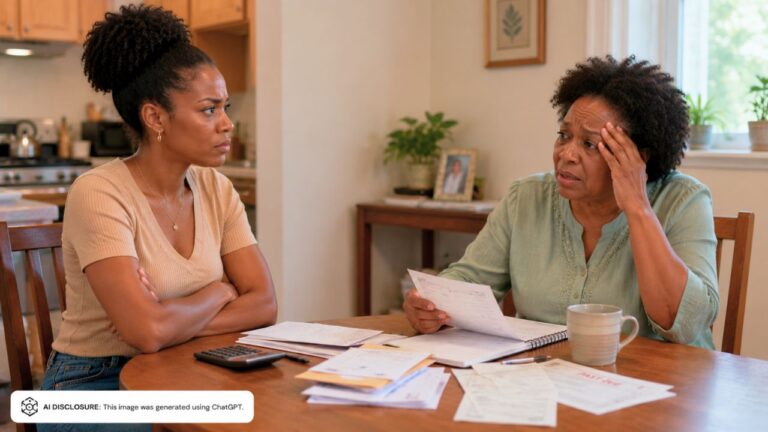
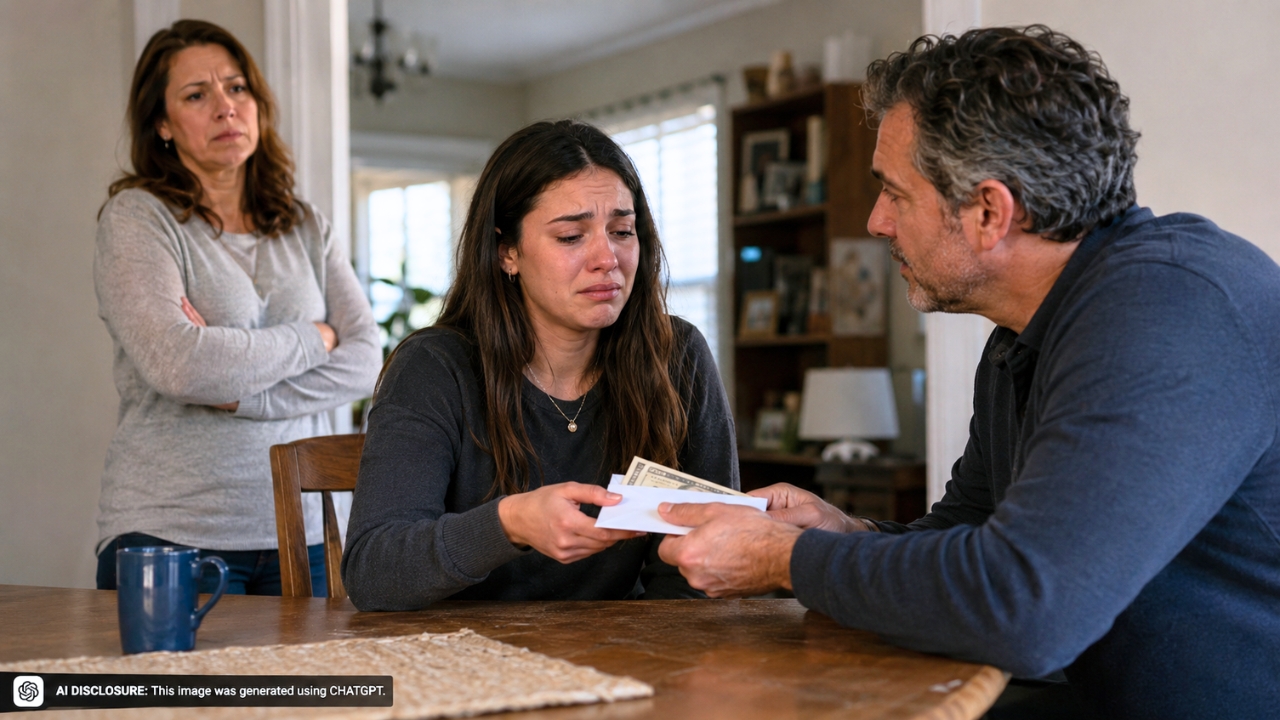
Photo credit: AI-generated image created using ChatGPT. Illustrative only.
For most of her life, a 20-year-old student believed the family story she’d been given: her parents were Cameroonian, and the man who’d raised her since she was 2 was simply her dad. But on her birthday in January, a message from a stranger cracked that narrative open—and the fallout at home turned immediate and personal, especially after money entered the picture.
In the original post, the woman—who lives in France with her mother, her adoptive father, and her siblings—described reconnecting with her biological father after her mother kept him hidden for two decades. She also admitted she accepted monthly financial help from him while she’s in school. When her mother found out, she threatened to kick her out, and the father who raised her went cold.
A secret that started shaping her life before she knew it
She was born in Germany and says her mother had always been intensely private about her biological father. It wasn’t just a vague “we don’t talk about him” rule—her mother refused to contact him even when it became a practical necessity.
At 17, she needed his signature for ID papers required to graduate high school. Her mother still wouldn’t reach out, and she says it nearly cost her diploma. Her mother insisted she was “protecting” her, but offered no details that made the secrecy make sense.
By the time she turned 20, that long silence had built up into a kind of pressure. She didn’t just want a name. She wanted an explanation for why something as basic as a parent’s identity had been treated like contraband in her own home.
A birthday message, a birth certificate, and a whole new identity
In January, a stranger contacted her claiming to be her biological father. Instead of dismissing it, she went looking for answers in the place she believed they’d be hidden: her mother’s private files.
There, she found her birth certificate and says it confirmed the man’s story. And with that confirmation came information that flipped her sense of self. Her biological father, she learned, wasn’t Cameroonian. He was a mixed-race German whose father had been an African American soldier.
It wasn’t just a genealogy detail. She described it as changing her entire understanding of her identity—what she’d been told to claim, what she’d been denied, and what had been decided for her without her consent.
Support money turned a reunion into a family emergency
As they spoke more, she learned her biological father is married with three kids and works in banking. He also told her there may be inheritance-related property in Texas tied to his late father—something he suggested she “technically” has a claim to.
Then he started sending her 300€ a month to help with her studies. He framed it as a way to support her even if he couldn’t make up for the time they lost. She accepted, explaining she’s a student and the extra money matters.
That decision became gasoline when she finally told her parents she’d been in contact with him. Her mother “exploded,” accused her of being “bought,” and threatened to kick her out. The man who raised her didn’t yell, but she says he became distant and cold, a quieter kind of punishment that still landed hard.
Suddenly, her curiosity and her budget weren’t separate issues. They were being treated like betrayal under the same roof where she still lived.
When her mother finally explained, it was a story of survival
After posting, she pushed harder for her mother’s side of the story, telling her she didn’t want to hear only her biological father’s version. That pressure worked. Her mother and adoptive father finally laid out what happened in Germany in the 1990s.
Her mother said she had been in a long-distance relationship with the man who later became the girl’s adoptive father. They were both studying in Germany, but her mother moved to another state for German classes. She described being young, isolated, and living in a small village where she faced intense racism.
That’s where she met the biological father near a U.S. military base. He was 19 and she was 23. She says she was at her lowest point—homeless and broke—and he took her in. At first, it sounded like a lifeline between two people of color trying to survive the same hostility.
But her mother described what came next as a nightmare. She said his parents were verbally and physically abusive, forcing her to do all the chores and even locking her outside. The detail that seemed to harden her anger was her claim that the biological father didn’t protect her while she was pregnant—because he was scared of his parents.
Eventually, she fled back to the man who would become the adoptive father. He initially refused to help, she said, but later forgave the affair and chose to raise the baby as his own. In her mother’s eyes, the biological father wasn’t just an ex. He was the coward who let her be abused.
His version: a teenager who lost control, then lost them
After hearing her parents out, the woman called her biological father to ask for his version—without telling him what she’d been told. He admitted he failed to protect her mother, but said he was 19 and fully dependent on his parents at the time.
He told her he’d been working long hours trying to save for an apartment so they could move out. He claims that by the time he secured a place, her mother had disappeared. He also said he tried to find them afterward, including hiring a private detective years ago, before eventually stopping because he believed she had built a new life and he didn’t want to cause more trauma.
He resents her mother for reaching out before the birth to have him placed on the birth certificate, then vanishing. Her mother, for her part, told her daughter the disappearance was about protecting the child—she wanted her to be German and not suffer the way she had.
What the daughter was left with wasn’t a clean villain. It was two people describing the same years through the lens of fear, power, and what they think they had to do to survive.
What people latched onto: the money, the paperwork, and the housing risk
While the post centered on whether she was wrong for reconnecting and taking financial help, the most concrete stakes were practical: her housing and her future. A threat to kick her out wasn’t just an emotional line—it could upend her studies overnight.
The other detail that pulled focus was documentation. Her mother’s earlier refusal to contact the biological father nearly derailed her diploma because of signature requirements for ID papers. Now there’s talk of inheritance and property in Texas—another paperwork-heavy issue where identity, parentage, and legal standing can collide fast.
Even without a courtroom in the story, the theme was clear: secrecy and control don’t stay emotional. They become administrative. And when money starts moving—300€ a month in support, potential inheritance in another country—the questions get sharper, and the consequences get harder to contain.
In her update, she said she reassured the man who raised her that he is her “only dad,” and that helped repair their relationship. With her mother, it’s not so simple. The threats “really did break something” between them, she wrote, leaving her trying to balance gratitude for being raised with anger over being kept from the truth for 20 years—and a tentative new bond with a father who wasn’t there, but is trying to be now.
Check out more from Now Rundown:
- A Party of 12 Came Back a Month Later Demanding Their $80 Tip Refunded — My Restaurant Made Me Pay It
- Her Coworker Kept Filing the Same Complaint About Her After Being Warned — Then She Filed a Counter-Report With Every Email Documented
- Siblings Demanded Half of Their Sister’s $11 Million Inheritance — She Refused Because They Never Visited
- The Kid I Bullied in Middle School Just Interviewed for a Job on My Team — He Bombed It and I Didn’t Hire Him

Abbie Clark is the founder and editor of Now Rundown, covering the stories that hit households first—health, politics, insurance, home costs, scams, and the fine print people often learn too late.