Mother Told Her Daughter She’ll Inherit Only Half of What Her Two Younger Half-Brothers Will Get When She Dies
Photo credit: AI-generated image created using ChatGPT. Illustrative only.
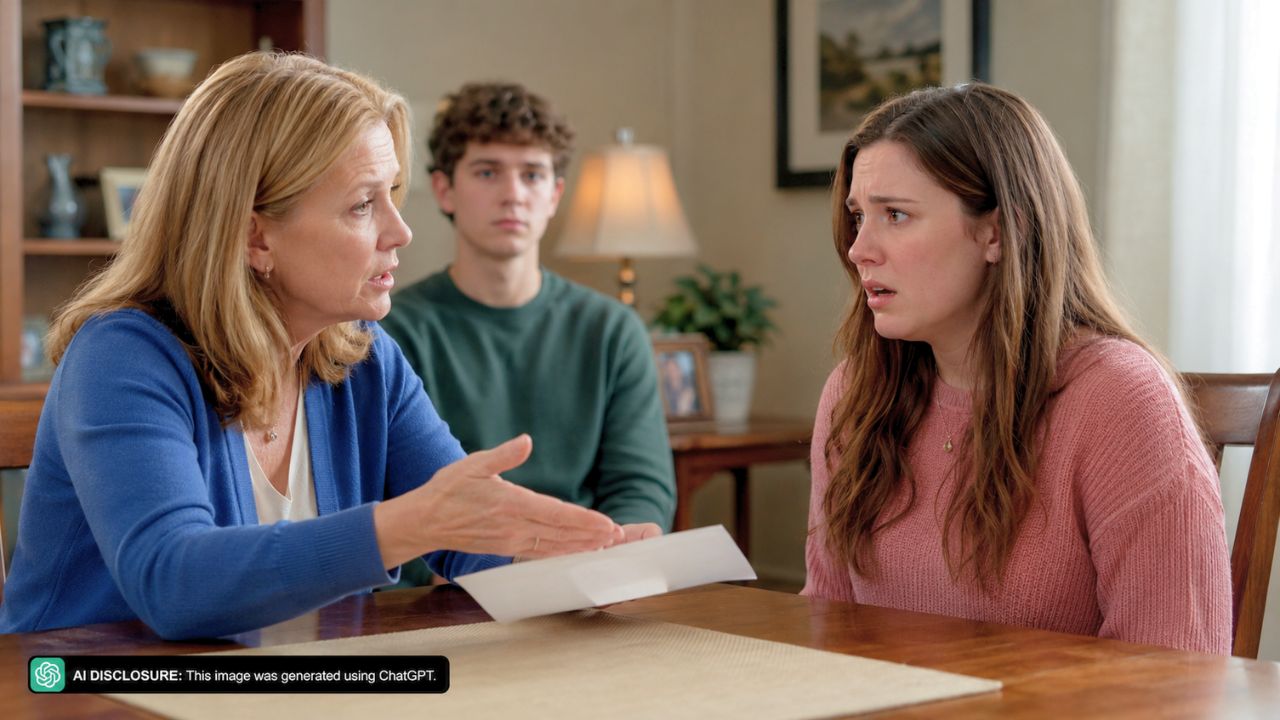
When a 26-year-old woman heard her mom was rewriting her will after a divorce, she expected an awkward conversation. She didn’t expect a breakdown that left her feeling like she’d been quietly ranked below her younger siblings.
In the original post, she explained that her mother told her two half-brothers—ages 11 and 12—would each receive 40% of her estate, while she would receive 20%. The house, she said, would be split among all three. Her mom’s reasoning was short: the boys are significantly younger.
A will update turned into a family reality check
The timing matters. Her mom and stepdad had “just recently got a divorce,” and with that came the practical cleanup—reconstructing a will, rethinking beneficiaries, and having those conversations nobody enjoys having while everyone is still alive and healthy.
But for the oldest child, it wasn’t the paperwork that landed hard. It was the math. She said she doesn’t care about the money itself and framed her reaction as a matter of principle, not greed.
Still, the numbers made her pause: 40/40/20. Equal shares of the house, but not of everything else. That split, she wrote, felt “weird” and not “normal,” especially without more explanation.
“They’re younger” was the only explanation she got
The mother’s justification, as described in the post, didn’t come with a long talk about goals or financial planning. The explanation was essentially one sentence: the two boys are a lot younger.
That left the daughter trying to interpret what “younger” is supposed to mean in a will. Is it an attempt to provide longer-term support for kids who won’t be established for another decade or more? Is it a way of acknowledging that the 26-year-old has already had more time to become independent?
Without more context, the daughter was left to sit with the part that stings most in families: the feeling that the relationship is being scored and recorded in percentages.
It wasn’t about the cash—until the percentages made it personal
She was careful to say her mom is “still very much here,” calling it a hypothetical scenario. But wills have a way of turning future fears into present-day tension, especially when they aren’t equal.
The daughter’s discomfort wasn’t just about getting less. It was about what the difference signals—whether her mother sees her as “already taken care of,” or as less in need, or simply less of a priority compared to the younger children still in school.
That’s the trap of inheritance conversations: even when someone genuinely doesn’t want the money, unequal planning can feel like a statement about belonging. And because it’s about after someone dies, it also feels impossible to “fix” later.
A casual workplace chat made her doubt herself
Not knowing whether she was overreacting, she brought it up to coworkers “randomly,” expecting maybe a shrug or a practical explanation. Instead, she said they looked at her like she was crazy—for not already being angry.
That reaction flipped the pressure back onto her. If neutral outsiders think it’s obviously unfair, then maybe she’s been trained to accept less. Or maybe her coworkers are reading it as a common pattern: older kids from earlier relationships getting treated differently once new, younger children enter the picture.
Either way, the daughter walked away more inside her own head than before. It’s one thing to have complicated feelings privately; it’s another to feel like everyone else thinks you’re missing an obvious red flag.
What people tend to focus on in unequal inheritance splits
Even without a long comment section included in the source material, the daughter’s workplace reaction points to what typically makes these splits blow up: not the will itself, but the lack of clarity around it.
When a parent says “they’re younger” and stops there, the adult child is left to imagine the unspoken reasons—punishment, favoritism, guilt from the divorce, pressure from the other parent, or a belief that the oldest child should be self-sufficient no matter what.
In practical terms, unequal shares can also create real-world problems later, even if everyone tries to stay calm now. Splitting a house three ways can become messy if one sibling wants to keep it, another wants to sell quickly, and the third can’t afford to wait. And if the remaining estate is divided unevenly, it can shape who has the resources to buy someone out or cover expenses.
The other thing people tend to focus on is documentation. If a will is being reworked in the open, it’s often because the parent wants fewer surprises later. But surprises can still happen when the reasoning isn’t made explicit—and when adult siblings are expected to “understand” without being told what the plan is supposed to accomplish.
The tension now is deciding whether to push back—or let it sit
The daughter’s post doesn’t describe a blowout fight. It reads more like a slow-burn resentment she doesn’t want to have, triggered by a conversation she didn’t ask for but can’t unhear.
If she pushes for a deeper explanation, she risks sounding like she’s bargaining for a bigger cut—even if her real goal is reassurance. If she stays quiet, she risks carrying a grudge for years, with the will sitting in the background like a scoreboard.
And because the brothers are 11 and 12, there’s another layer: they’re too young to be part of this conversation directly, but old enough that future family dynamics could be shaped by how the adults handle it now.
For the moment, the will is just paperwork and percentages. But the daughter’s reaction makes clear what inheritance decisions often do in real families: they turn quiet assumptions into numbers, and numbers into a message someone has to live with long before anyone is gone.
Check out more from Now Rundown:
- A Party of 12 Came Back a Month Later Demanding Their $80 Tip Refunded — My Restaurant Made Me Pay It
- Her Coworker Kept Filing the Same Complaint About Her After Being Warned — Then She Filed a Counter-Report With Every Email Documented
- Siblings Demanded Half of Their Sister’s $11 Million Inheritance — She Refused Because They Never Visited
- The Kid I Bullied in Middle School Just Interviewed for a Job on My Team — He Bombed It and I Didn’t Hire Him

Abbie Clark is the founder and editor of Now Rundown, covering the stories that hit households first—health, politics, insurance, home costs, scams, and the fine print people often learn too late.