Woman Told Her Mother-in-Law She Couldn’t Comment on Their Parenting Choices Anymore — After She Showed Up Unannounced While Their Toddler Was Sick
Photo credit: AI-generated image created using ChatGPT. Illustrative only.
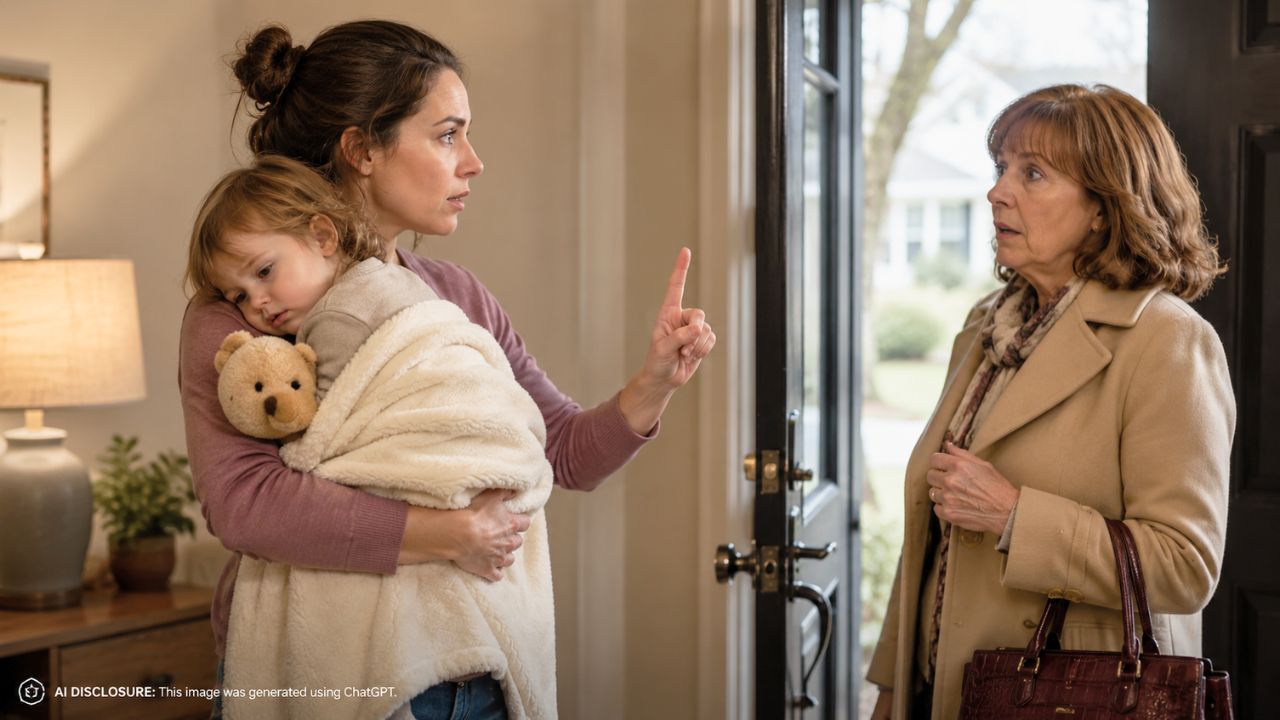
It was already one of those nights: a sick 3-year-old, an exhausted mom running on broken sleep, and a plan to finally sit down and watch a movie around 8 p.m. Then the front door became the problem. The woman at the center of the original post says her mother-in-law showed up unannounced, even though she knew the toddler wasn’t feeling well and that the child’s grandmother from the mom’s side was already there helping.
What could’ve been a quick drop-off turned into another round of friction over parenting boundaries—one the poster says has been building for a long time. This time, she decided she was done entertaining drive-by criticism, especially from someone who hadn’t even called first.
A sick toddler, a rare quiet moment, and an unexpected knock
The mom, 30, said the household had just settled in when her mother-in-law arrived without warning, carrying fruit. The toddler was sick, and the poster’s own mother was already in the home helping because the mom had been “really tired and sleepy” from being up meeting the child’s needs.
Her husband, 31, was confused too. He questioned why his mother came over without letting them know, and the mother-in-law bristled immediately, replying that “you don’t speak to your mother like that.”
From there, the night went from inconvenient to tense. The couple was about to start a movie, and the mother-in-law wanted to know what they were watching.
The movie question turned into a parenting lecture
When the mom told her they were going to watch a thriller, the mother-in-law pushed back, saying she hoped the toddler wouldn’t watch it. The poster says the child would be in the room but not focused on the screen—occupied in a play area while the poster’s mother kept an eye on him.
But the comment wasn’t taken as a casual concern. The mom responded that it was “only our business” and, as the mother-in-law continued, she laid down a rule: if she’s going to come over unannounced, she can’t comment on what they watch or what they allow their child to be around.
The poster also told her mother-in-law that their son is “allowed to watch whatever we allow him to.” The exchange ended quickly after that. The mother-in-law said “ok I’ll go,” and left in a way the poster read as offended and performative.
Why it hit a nerve: strict beliefs, control, and walking on eggshells
In the post, the mom explains that the mother-in-law is a strict Jehovah’s Witness, as is her husband. She describes a family culture where swearing is frowned upon and conflict is avoided—where her husband was raised, in her view, to fit an “image of a perfect son” who doesn’t challenge his mother.
The mom says she dislikes the way her husband was raised and has promised herself she won’t parent the same way. That’s part of why she prefers her own mother’s help: she says her mom doesn’t comment on what they watch or do around the child.
At the same time, she acknowledges she has tolerated some of her mother-in-law’s religious practices. The mother-in-law sometimes prays with the child at dinner, and the poster says she doesn’t mind it and even finds it cute when her toddler says “amen.” But she draws a line at what she sees as constant commentary and correction—especially in her own home, especially without notice.
The guilt trip landed, and even help in the house took sides
After the mother-in-law left, the fallout didn’t stop at the door. The poster says her own mother told her she was rude and “bitchy,” and the mother-in-law framed her exit as being pushed out: “it’s ok I’ll just go she doesn’t want me here,” the poster recalled.
That reaction is a big part of why she’s questioning herself. She says she hates being painted as the bad guy and admits she could have used a nicer tone. But she also describes a deep frustration with being told what to do, saying she “HAATE[s]” it and even wonders if she has oppositional defiant disorder.
In her telling, it’s not just one comment about a movie. It’s the pressure of having to manage another adult’s expectations in her own space—constantly adjusting behavior, avoiding triggers, and “walking on eggshells” so someone else feels satisfied.
It wasn’t just their kid: a park moment made it feel bigger
The poster included another example to show this isn’t limited to her household. She described a time at a park when her mother-in-law told a random child to stop climbing up a slide the “wrong way” and to stop putting sand over it, saying it wasn’t safe and referencing her experience as a primary school teacher’s assistant.
The mom says she intervened and told her mother-in-law not to comment on other people’s kids because it comes off as “weird and creepy.” Then the child’s mother approached and, within earshot, told the child not to listen to “the lady” and that the kid could play however they liked.
The poster said she felt bad and apologized to the mother. For her, that moment reinforced the pattern: her mother-in-law doesn’t stop herself, even when it crosses social lines and creates awkward public scenes.
Where reactions tend to land: boundaries, notice, and who sets the rules at home
While the post itself focuses on the mom’s perspective, the friction points are familiar: drop-ins that override a family’s routine, unsolicited advice framed as moral authority, and the power struggle that starts when someone treats parenting choices like an open forum.
People reading stories like this typically zero in on two practical questions: whether unannounced visits should be allowed at all, and how to enforce a rule without turning every interaction into a confrontation. In the poster’s case, her husband already signaled discomfort by questioning the surprise visit, but his mother’s response—“you don’t speak to your mother like that”—suggests she still expects deference over adult boundaries.
The mom’s response was blunt, but it was also specific: if you arrive without warning, don’t critique what’s happening in the home. It’s a boundary aimed at reducing repeat performances—less debating, less explaining, less defending every decision while trying to care for a sick child.
For now, the tension is still sitting in the living room, even after the mother-in-law walked out. The toddler is still sick, the household is still tired, and the next visit—announced or not—will test whether anyone is willing to treat the couple’s rules as rules, not suggestions.
Check out more from Now Rundown:
- A Party of 12 Came Back a Month Later Demanding Their $80 Tip Refunded — My Restaurant Made Me Pay It
- Her Coworker Kept Filing the Same Complaint About Her After Being Warned — Then She Filed a Counter-Report With Every Email Documented
- Siblings Demanded Half of Their Sister’s $11 Million Inheritance — She Refused Because They Never Visited
- The Kid I Bullied in Middle School Just Interviewed for a Job on My Team — He Bombed It and I Didn’t Hire Him

Abbie Clark is the founder and editor of Now Rundown, covering the stories that hit households first—health, politics, insurance, home costs, scams, and the fine print people often learn too late.